Netanyahu, the Global far-Right, and Building Solidarity with Palestine: In Conversation with Scott Campbell

Originally posted on It’s Going Down.

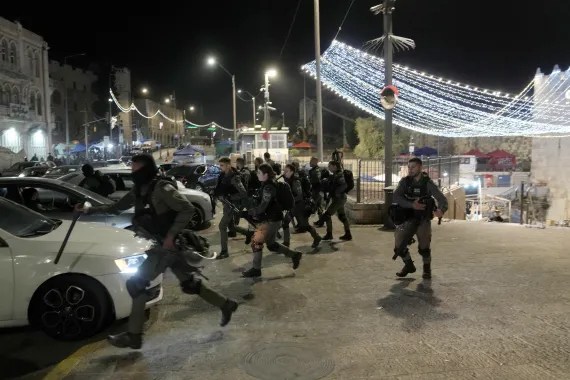
On this episode of the It’s Going Down podcast, we host a discussion with IGD contributor Scott Campbell, as we cover the current situation on the ground in Palestine, the Netanyahu government in Israel and its links to the global far-Right, the role of the US in the conflict, and what possible avenues social movements could take in the fight against apartheid and occupation.

During our discussion, Scott gives us a short history of the occupation of Palestine by the state of Israel, the political players on the ground, the role of the United States, and how Israel has worked to export its brand of ethno-nationalism and counter-insurgency around the world.

Over the course of our talk, we touch on the connections between settler-colonial regimes around the world, how we can use history as a tool to inform our struggles, and how we might go about building our capacity to act in solidarity.

More Info: Scott Campbell on Mastodon, Decolonization is Not a Metaphor, Movement Memos podcast, and Behind the 21st Century Intifada

photo: Ahmed Abu Hameeda via Unsplash

music: “Real Gaza Me Seh!” by Hanouneh ft. Promoe

A Letter to the President (of my university)

The president of the university I attend just sent out a lamentable statement to the entire school regarding the recent events in Palestine. For what it’s worth, here is my response:

Dear President Jessup,

I am sure you are receiving numerous responses to this email from a number of perspectives. Nonetheless, I feel I must contribute mine.

I understand your condemnation of the Hamas attacks. I am, however, disheartened by your failure to condemn Israel’s response to the attacks. What is happening in Gaza is more than a “humanitarian crisis,” as if it were struck by a natural disaster. Israel is carrying out war crimes, such as the forcible transfer of populations, a total siege and blockade of food, water and fuel, the use of white phosphorous, the bombings of civilian, media, and medical targets, and the killing thus far of at least 1,900 people, including 614 children.

Continue reading

The raids on Al-Aqsa in context

Some quick, brief thoughts on the ongoing repression and resistance in occupied Palestine:

The consecutive brutal raids on al-Aqsa during Ramadan by the fascist government of Israel shouldn’t been seen as isolated incidents. Nearly 100 Palestinians have been killed so far this year by Israeli forces, including massacres in Jenin and Nablus. Harsher conditions have been imposed on thousands of Palestinian political prisoners. Laws from banning the flying of the Palestinian flag to allowing Israel to strip Palestinian citizens of Israel of citizenship have been passed.

Relatedly, other measures, such as the revocation of the 2005 law removing settlements from the northern West Bank, to the loosening of gun ownership regulations, to the creation of a National Guard specifically designed to target Palestinians and under the control of Kahanist Itamar Ben-Gvir, all point to a government desiring and planning for conflict and escalation as a means to continue the Zionist settler-colonial project.

Continue reading

In Memory of Basil al-Araj

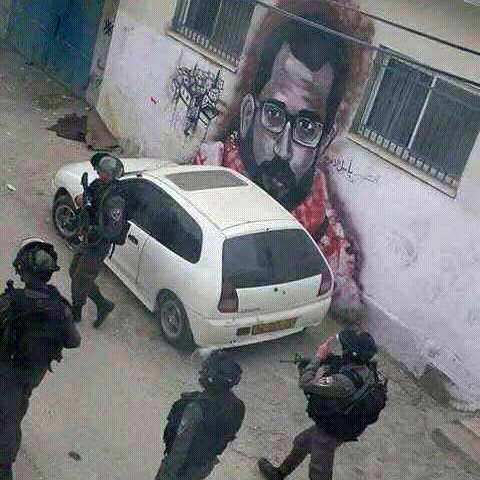
Israeli occupation forces walk past a mural of Basil al-Araj in al-Aroub refugee camp near Hebron.

Shortly after arriving in Palestine in 2012, a comrade invited me to a demonstration in front of al-Muqata’a in Ramallah, the seat of the Palestinian Authority in the occupied West Bank. It was a significant symbolic event, being the first protest against the PA directly in front of its headquarters with about 100 people holding signs on the sidewalk condemning PA President Mahmoud Abbas’ decision to hold negotiations with Israel. Nothing much happened, but that nothing much clearly irritated the PA.

Following the protest, several people met at a nearby café. That was the first time I met Basil al-Araj. Similarly, nothing much happened, but the more time I spent in Palestine, the more and more frequently I found myself in Basil’s company. He spoke passable English, and aside from translations by others, that was how we communicated given that I embarrassingly managed to live there for more than a year and not learn Arabic.

Continue reading