Gaza Solidarity Encampments on Occupied Land

The above map and following essay are from a project produced for a course I took last semester. As it may be of some relevance or utility, I have chosen to post it here. As always, thoughts, critiques, and feedback is welcomed.

The map accompanying this essay attempts to situate via multiple data points the location of Gaza Solidarity Encampments installed on the campuses of colleges and universities during April and May 2024 in what is demarcated as Los Angeles County. In particular, it seeks to raise the question of the implications of the taking of space in solidarity with an Indigenous struggle for liberation in Palestine on land that itself was ethnically cleansed and genocided of most of its Indigenous inhabitants. To do so, it first notes the identities and territories of the original populations of what is now Los Angeles County: the Tongva, Kizh, and Chumash peoples. Upon that is layered the colonial infrastructure and place designations to orient the gaze from a settler lens with the intention of inspiring reflection on the imposition of settler colonialism and belonging in space. If the colonial place names were absent, would the viewer’s familiarity with the area change? Finally, using tent icons, the map indicates the approximate location of the five Gaza Solidarity Encampments in the area that were erected in April and May 2024, along with the identification of the college or university, the name given to the encampment by those involved, and the Indigenous lands upon which the encampment was placed. The intention of the map is not to condemn nor to celebrate, but to problematize the conception of space in the context of resistance and to encourage the incorporation of a decolonial perspective in the work of protest.

Continue reading
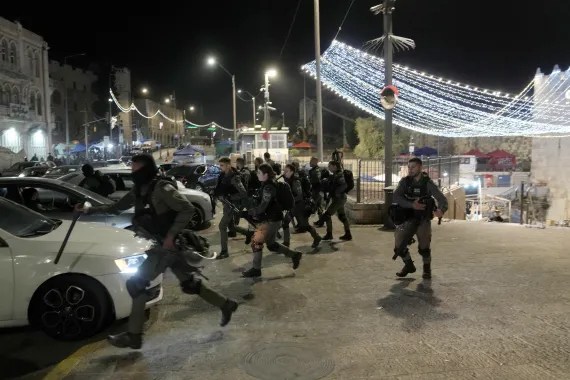
The raids on Al-Aqsa in context

Some quick, brief thoughts on the ongoing repression and resistance in occupied Palestine:

The consecutive brutal raids on al-Aqsa during Ramadan by the fascist government of Israel shouldn’t been seen as isolated incidents. Nearly 100 Palestinians have been killed so far this year by Israeli forces, including massacres in Jenin and Nablus. Harsher conditions have been imposed on thousands of Palestinian political prisoners. Laws from banning the flying of the Palestinian flag to allowing Israel to strip Palestinian citizens of Israel of citizenship have been passed.

Relatedly, other measures, such as the revocation of the 2005 law removing settlements from the northern West Bank, to the loosening of gun ownership regulations, to the creation of a National Guard specifically designed to target Palestinians and under the control of Kahanist Itamar Ben-Gvir, all point to a government desiring and planning for conflict and escalation as a means to continue the Zionist settler-colonial project.

Continue reading

In Memory of Basil al-Araj

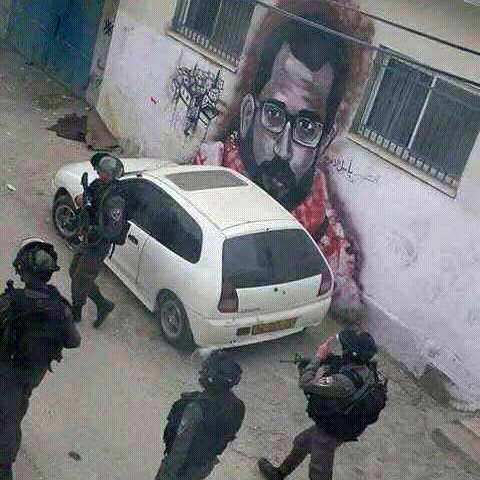
Israeli occupation forces walk past a mural of Basil al-Araj in al-Aroub refugee camp near Hebron.

Shortly after arriving in Palestine in 2012, a comrade invited me to a demonstration in front of al-Muqata’a in Ramallah, the seat of the Palestinian Authority in the occupied West Bank. It was a significant symbolic event, being the first protest against the PA directly in front of its headquarters with about 100 people holding signs on the sidewalk condemning PA President Mahmoud Abbas’ decision to hold negotiations with Israel. Nothing much happened, but that nothing much clearly irritated the PA.

Following the protest, several people met at a nearby café. That was the first time I met Basil al-Araj. Similarly, nothing much happened, but the more time I spent in Palestine, the more and more frequently I found myself in Basil’s company. He spoke passable English, and aside from translations by others, that was how we communicated given that I embarrassingly managed to live there for more than a year and not learn Arabic.

Continue reading