

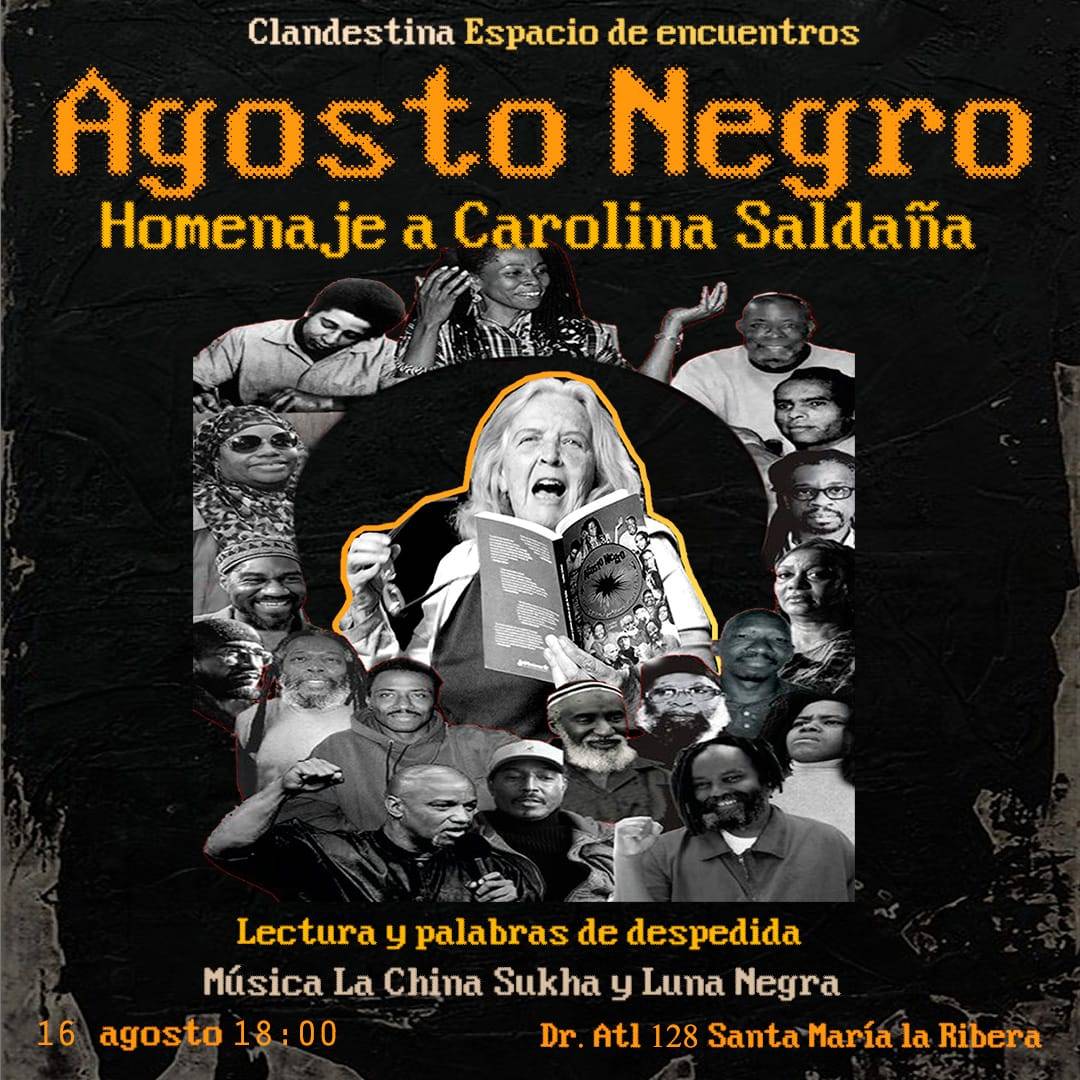
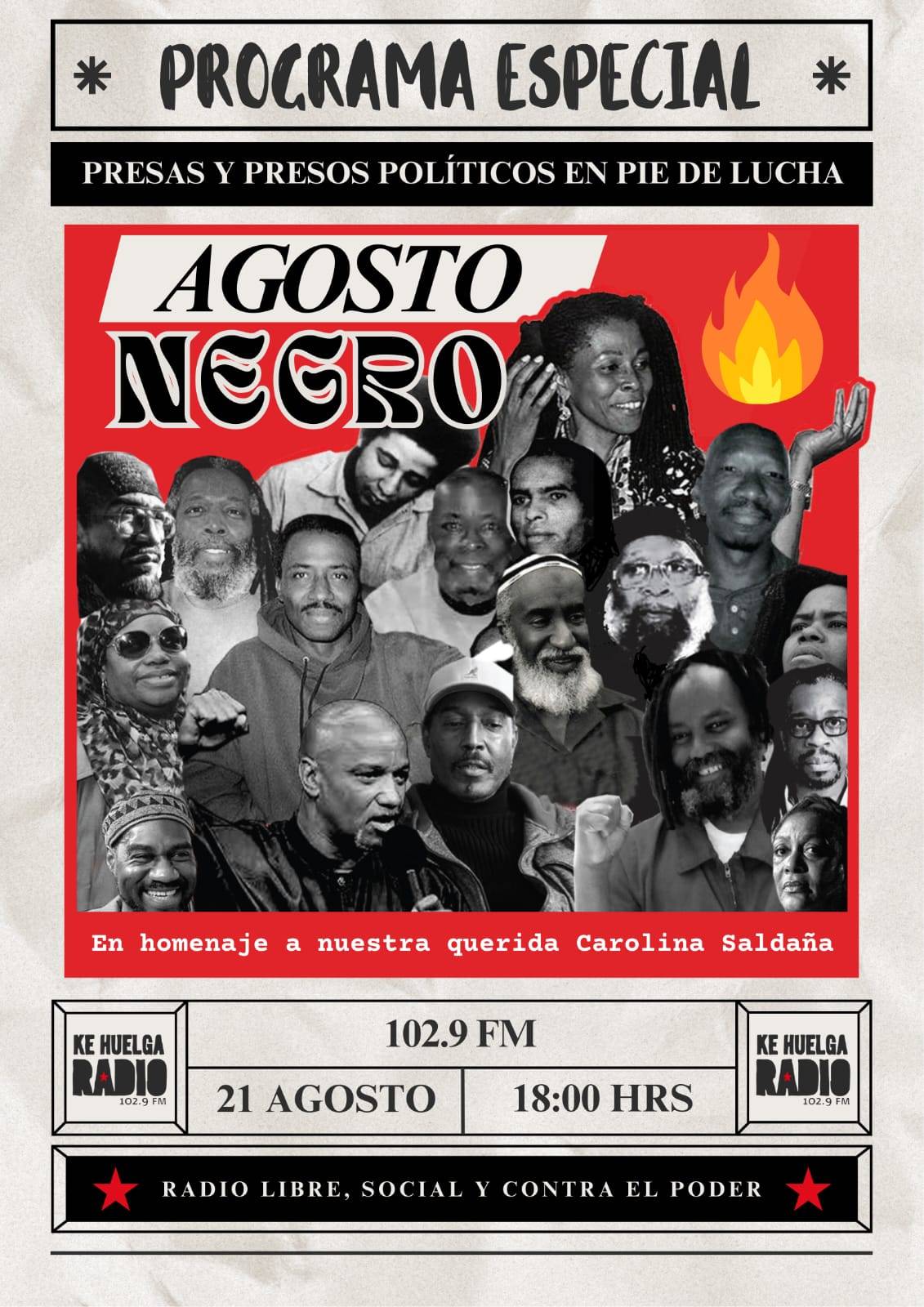
On August 1, I was looking for resources to share about Black August and naturally thought of Carolina. She’d written a book on it in Spanish, after all. For many years, she had organized events in Mexico commemorating Black August, seeking to lift up the legacy and ongoing struggle of the Black liberation movement and its political prisoners and prisoners of war. While I didn’t end up using any of her work that day in what I shared, remembering her called forth a wave of fond recollections. I made a mental note to reach out to her, as we hadn’t been in touch in a couple of years. Sadly, a few hours later, I heard from compas in Mexico that she passed away that morning.
Common adjectives that have been used to remember Carolina Saldaña include relentless, tireless, and unceasing. They are all accurate and true. Carolina was truly a force, guided by a commitment and passion for solidarity and freedom that compelled her work over the years that I had the honor to know her. We first connected in 2008, when I began working with the now-defunct website El Enemigo Común. Carolina was already involved – unsurprisingly – as she seemed to be active with most independent media projects in Mexico. Our communication originated over email until we had the opportunity to meet in person a couple of years later during one of my trips to Mexico.
I recall the first time I met her, my ageist self was surprised at how old she was. In my head, radicals were young people, but here was someone who could have been my grandmother (I estimated). She may not even have known it, but her mere presence challenged preconceptions of mine and helped me grow. I don’t recall what we talked about, but I remember her energy. She had a sharp and clear political analysis but also a compassionate smile that extended to her eyes when topics veered toward the personal.
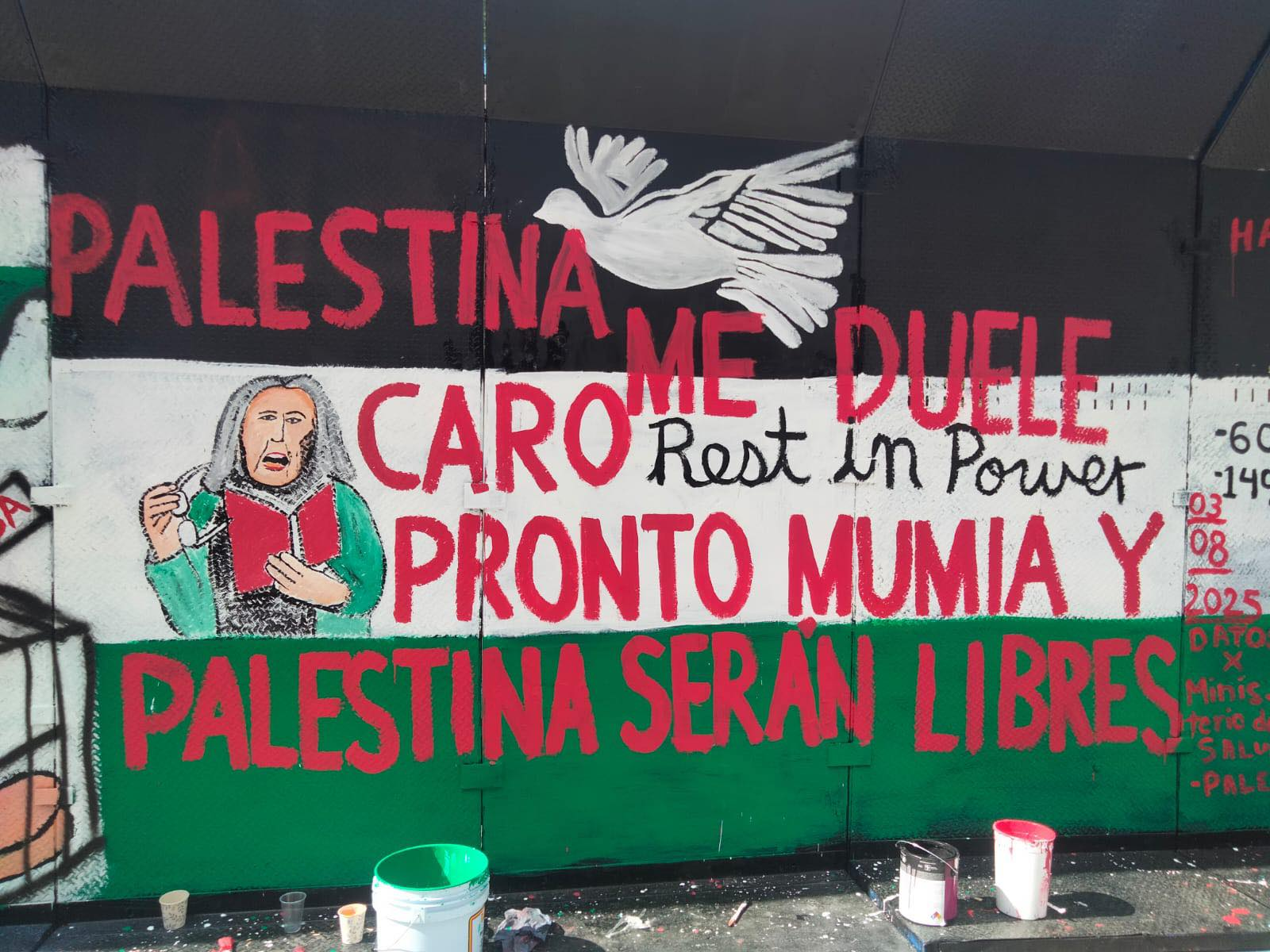
Another time we got together she brought me to the Okupa Che and introduced me to folks there. What would seem discordant on the surface – an elderly woman kicking it with young anarcho-punks – was far from that. Indeed, that was what Carolina did. She built connections, networks, community. If anything, she was a translator of struggle, that crucial, unsung node of communication and information that turns what seem to be disparate fights into mutually reinforcing ones through the act of rendering them legible to one another. As such, she translated the fight for the freedom of Mumia Abu-Jamal or the MOVE 9 into a language that brought hundreds into the streets of Mexico City to protest at the U.S. Embassy. In turn, social movements in Mexico gained international attention among those dedicated to the freedom of Black liberation movement prisoners, largely through her work, as exemplified by Mumia discussing Ayotzinapa in his farewell to Carolina.
The most notable aspect of all of Carolina’s efforts was her selflessness. She wrote and translated furiously. She organized incessantly. She was a mainstay of movements that ran the gamut from fighting for the freedom of political prisoners to Atenco to Ayotzinapa to Ostula to Oaxaca. Yet she never did so in an effort to call attention to herself. Again, more like a translator than an author, she always put the cause front and center. She was immensely private about her life but gregarious and open with her time. What hits the hardest for me about the loss of Carolina is the loss of the whole being, not just the political partisan. With her, I shared much pain, confusion, difficulty, and joy. She always lent an open ear, a compassionate heart, and wise advice. She was never condescending, patronizing, or too busy for a friend who needed support. When I think of her, I think first of those conversations where I felt seen, heard, and cared for. I will miss that. I will miss my friend who was also a compa. We didn’t always see eye to eye on everything. I wouldn’t even know how to label her politics. But the foundation was one of respect, love, and solidarity.
I am not alone in missing Carolina, as hopefully the images accompanying this piece can attest. There is much more to say about her, but it is not my story to tell. This place is emptier without her presence and her fire. Journey well, my friend. You are missed and you are loved. Thank you for your example. Thank you for all you gave.
En memoria de Carolina Saldaña
El 1 de agosto, estaba buscando recursos para compartir sobre Agosto Negro y, naturalmente, pensé en Carolina. Después de todo, ella había escrito un libro sobre el tema en español. Durante muchos años, había organizado eventos en México para conmemorar Agosto Negro, con el objetivo de dar a conocer el legado y la lucha continua del movimiento de liberación negra y sus presxs políticxs y de guerra. Aunque ese día no utilicé ninguno de sus trabajos en lo que compartí, recordarla me trajo una oleada de recuerdos entrañables. Me propuse mentalmente ponerme en contacto con ella, ya que llevábamos un par de años sin hablar. Lamentablemente, unas horas más tarde, mis compas de México me informaron de que había fallecido esa mañana.
Los adjetivos más comunes que se han utilizado para recordar a Carolina Saldaña son “implacable”, “incansable” e “incesante”. Todos ellos son precisos y ciertos. Carolina era verdaderamente una fuerza, guiada por un compromiso y una pasión por la solidaridad y la libertad que impulsaron su trabajo a lo largo de los años en los que tuve el honor de conocerla. Nos conocimos en 2008, cuando empecé a trabajar con la ya cerrada página web El Enemigo Común. Carolina ya estaba involucrada, como era de esperar, ya que parecía participar activamente en la mayoría de los proyectos de medios libres de México. Nuestra comunicación comenzó por correo electrónico hasta que tuvimos la oportunidad de conocernos en persona un par de años más tarde, durante uno de mis viajes a México.
Recuerdo la primera vez que la conocí, mi yo discriminatorio por la edad se sorprendió de lo mayor que era. En mi cabeza, lxs radicales eran gente joven, pero aquí había alguien que podría haber sido mi abuela (según mis cálculos). Puede que ella ni siquiera lo supiera, pero su mera presencia desafió mis prejuicios y me ayudó a crecer. No recuerdo de qué hablamos, pero recuerdo su energía. Tenía un análisis político agudo y claro, pero también una sonrisa compasiva que se extendía a sus ojos cuando los temas se desviaban hacia lo personal.
Otra vez que nos reunimos, me llevó al Okupa Che y me presentó a la gente de allí. Lo que a primera vista podría parecer discordante —una anciana pasando el rato con jóvenes anarcopunks— estaba lejos de serlo. De hecho, eso era lo que hacía Carolina. Construía conexiones, redes, comunidad. En todo caso, era una traductora de la lucha, ese nodo crucial y desconocido de comunicación e información que convierte lo que parecen ser luchas dispares en luchas que se refuerzan mutuamente, al hacerlas legibles entre sí. Como tal, tradujo la lucha por la libertad de Mumia Abu-Jamal o lxs MOVE 9 a un lenguaje que llevó a cientos de personas a las calles de Ciudad de México para protestar ante la embajada de Estados Unidos. A su vez, los movimientos sociales en México ganaron atención internacional entre quienes se dedicaban a la libertad de lxs presxs del movimiento de liberación negra, en gran parte gracias a su trabajo, como lo ejemplifica Mumia al hablar de Ayotzinapa en su despedida a Carolina.
El aspecto más notable de todos los esfuerzos de Carolina era su desinterés. Escribía y traducía sin descanso. Organizaba sin cesar. Era un pilar fundamental de movimientos que abarcaban desde la lucha por la libertad de lxs presxs políticxs hasta Atenco, Ayotzinapa, Ostula y Oaxaca. Sin embargo, nunca lo hacía con el fin de llamar la atención sobre sí misma. Una vez más, más como traductora que como autora, siempre puso la causa en primer plano. Era muy reservada sobre su vida, pero sociable y abierta con su tiempo. Lo que más me duele de la pérdida de Carolina es la pérdida de todo su ser, no solo de la militante política. Con ella compartí mucho dolor, confusión, dificultades y alegrías. Siempre me escuchó con atención, me trató con compasión y me dio sabios consejos. Nunca fue condescendiente, paternalista ni estaba demasiado ocupada para unx amigx que necesitaba apoyo. Cuando pienso en ella, lo primero que me viene a la mente son aquellas conversaciones en las que me sentí visto, escuchado y cuidado. Echaré de menos eso. Echaré de menos a mi amiga, que también era una compa. No siempre estábamos de acuerdo en todo. Ni siquiera sabría cómo etiquetar su ideología política. Pero la base era el respeto, el amor y la solidaridad.
No estoy solo en extrañar a Carolina, como espero que lo demuestren las imágenes que acompañan este artículo. Hay mucho más que decir sobre ella, pero no me corresponde a mí contarlo. Este lugar está más vacío sin su presencia y su energía. Que tengas un buen viaje, amiga mía. Te extrañamos y te queremos. Gracias por tu ejemplo. Gracias por todo lo que nos diste.
 Falling Into Incandescence