Empathy amid extermination

In Israel’s ongoing genocide against the Palestinian people, the numbers are appalling: almost 31,000 dead, including 12,300 children; more than 72,000 wounded; more than 8,000 missing under the rubble. Eight-five percent of the population of 2.3 million internally displaced. Nearly half of Gaza’s homes destroyed or damaged. Dozens of hospitals and hundreds of schools and religious sites attacked. Children starved to death. Thousands made orphans. The list of atrocities, cruelties, and indignities goes on and on.

It feels like too much because it is too much. Even one death, one injury is too much. It has been too much for more than 75 years. Israel’s eliminationist campaign against the Palestinian people, aided and abetted by the United States and others, is intolerable and reprehensible. It is a preannounced genocide and an intentionally imposed famine, broadcast in real time. We are all spectators to the apocalypse; it is no longer possible to say that we didn’t know. What does it mean to consume the wholesale destruction of a people and their land?

Continue reading →

The Blue Agave Revolution – Book Release from Oso Blanco

I’m honored to be participating in this upcoming event, speaking on Magonismo in the context of the Mexican Revolution and its legacy. See the full post on Philly ABC’s site for info on how to attend in person or remotely. Hope to see you there!

Join us at 3:30pm ET on Sunday, January 28th at Iffy Books for the premier release of freshly published The Blue Agave Revolution: Poetry of the Blind Rebel. Collaboratively written by indigenous anarchist political prisoner Oso Blanco and Michael Novick, The Blue Agave Revolution is a joint work of speculative/magical realist fiction containing tales of the Mexican Revolution, analyses of contemporary Indigenous struggle, engagement with the work of other political prisoners including Leonard Peltier, Mumia Abu-Jamal, and Jessica Reznicek, art, poetry, and meditations about what struggles for freedom may look like in the future.

Continue reading →

Notes on the EZLN’s Latest Announcement from Chiapas

Originally posted on It’s Going Down.

It’s Going Down contributor Scott Campbell reflects on a recent announcement from the EZLN in Chiapas, Mexico.

Several people have asked my thoughts on the recent announcement by the Zapatista Army of National Liberation (EZLN) that the Zapatista autonomous municipalities (MAREZ) and Good Government Juntas (JBG) have been “disappeared” or dissolved. I’m firmly of the opinion that it doesn’t matter what I think, and what I have to say would just be speculation, but I figured I’d have a go at it. There are numerous, complex factors to take into consideration when trying to understand this decision and the motivations behind it.

The primary one is that, as the EZLN has finally recognized in this statement, Chiapas is in crisis. There are wars playing out between the Jalisco New Generation Cartel and the Sinaloa Cartel along the mountains and borderlands of Chiapas. There are other paramilitary groups active in the interior of Chiapas. While the EZLN has not acknowledged it, all these armed groups have impacted Zapatista support territories, creating internally displaced Zapatistas, along with other civilians.

Continue reading →

Afro-Pessimism and Palestinian Liberation

5/18/25 Update: Rather than these rambling thoughts, I encourage interested readers to check out my lengthier essay examining this topic.

As part of a reading group, for our last meeting I selected the following texts: “Mama’s Baby, Papa’s Maybe: An American Grammar Book,” by Hortense Spillers; “Afro-Pessimism: The Unclear Word,” by Jared Sexton; and, “The Social Life of Social Death: On Afro-Pessimism and Black Optimism,” also by Jared Sexton. As part of our meetings, those who choose the readings for the week have to do a written response as to how the readings incorporate into their research interests in general. In discussion with the reading group crew, I’ve decided to publish my response publicly in an effort to move our endeavor forward. If you’re interested in joining our group, reach out to me. The only requirements being that you’re bilingual (Spanish/English) and that you’re down to burn this all to the ground.

As I grapple with the three texts we read for this week, I cannot but help view them – as I am currently viewing everything – through the lens of Palestine. Therefore, I’m interested in doing what Frank Wilderson firmly disavows: a comparative reading of Palestine through the lens of Afro-Pessimism. I believe that doing so can offer insights on the current situation in Palestine and also on the arguments put forward by Spillers and Sexton. I want to acknowledge that to do so does great injustice to both narratives and subjects. Despite appreciable claims of Black-Palestinian solidarity, they cannot be conflated along the lines of historical experience nor ontological construction. At least not linearly nor literally. I believe metaphorically, however, there are openings or sites for exploration that I wish to delve into here.

Continue reading →

Netanyahu, the Global far-Right, and Building Solidarity with Palestine: In Conversation with Scott Campbell

Originally posted on It’s Going Down.

On this episode of the It’s Going Down podcast, we host a discussion with IGD contributor Scott Campbell, as we cover the current situation on the ground in Palestine, the Netanyahu government in Israel and its links to the global far-Right, the role of the US in the conflict, and what possible avenues social movements could take in the fight against apartheid and occupation.

During our discussion, Scott gives us a short history of the occupation of Palestine by the state of Israel, the political players on the ground, the role of the United States, and how Israel has worked to export its brand of ethno-nationalism and counter-insurgency around the world.

Over the course of our talk, we touch on the connections between settler-colonial regimes around the world, how we can use history as a tool to inform our struggles, and how we might go about building our capacity to act in solidarity.

More Info: Scott Campbell on Mastodon, Decolonization is Not a Metaphor, Movement Memos podcast, and Behind the 21st Century Intifada

photo: Ahmed Abu Hameeda via Unsplash

music: “Real Gaza Me Seh!” by Hanouneh ft. Promoe

A Letter to the President (of my university)

The president of the university I attend just sent out a lamentable statement to the entire school regarding the recent events in Palestine. For what it’s worth, here is my response:

Dear President Jessup,

I am sure you are receiving numerous responses to this email from a number of perspectives. Nonetheless, I feel I must contribute mine.

I understand your condemnation of the Hamas attacks. I am, however, disheartened by your failure to condemn Israel’s response to the attacks. What is happening in Gaza is more than a “humanitarian crisis,” as if it were struck by a natural disaster. Israel is carrying out war crimes, such as the forcible transfer of populations, a total siege and blockade of food, water and fuel, the use of white phosphorous, the bombings of civilian, media, and medical targets, and the killing thus far of at least 1,900 people, including 614 children.

Continue reading →

Colonialism and Yaqui Resistance

Family members of ten community members of Loma de Bácum who were disappeared on July 14, 2021, hold up images of their missing loved ones.

The following is an English-language translation of a brief essay I wrote for a course I am taking called Epistemologías del Sur. As I dislike the academic practice of creating work that doesn’t go beyond the classroom, I’m publishing it here in case it might be of any use or interest. For the latest information on Fidencio Aldama and his case, see this recently published statement.

For the past several years, part of my work has been as a member of the Fidencio Aldama Support Group. A small, binational collective of individuals in what they call the United States and Mexico, we work through a variety of means to advocate for the immediate release of Yaqui political prisoner Fidencio Aldama and to support him and his family during his imprisonment. Currently serving a 14-year sentence for a homicide he did not commit, Fidencio’s incarceration is rooted in his and his community of Loma de Bácum’s steadfast resistance to the imposition of a natural gas pipeline through their territory. Echoes of the arguments put forward by the epistemologies from the South in this course can be easily identified through the lenses of Fidencio’s case and the centuries-long tradition of Yaqui resistance and self-defense.

Continue reading →

April Reading

I feel repetitive in noting I didn’t read as much as I’d hoped to this past month, but April was truly one for lite reading. In part, due to an overall lack of motivation and, more importantly, the precedence of a wonderful family visit. Nonetheless, a few things did get read, and for those interested, here they are.

  • Bartleby, the Scrivener: A Story of Wall Street, by Herman Melville
  • Dawn, by Octavia E. Butler
  • Not a Nation of Immigrants: Settler Colonialism, White Supremacy, and a History of Erasure and Exclusion, by Roxanne Dunbar-Ortiz
  • The City Inside, by Samit Basu
Continue reading →

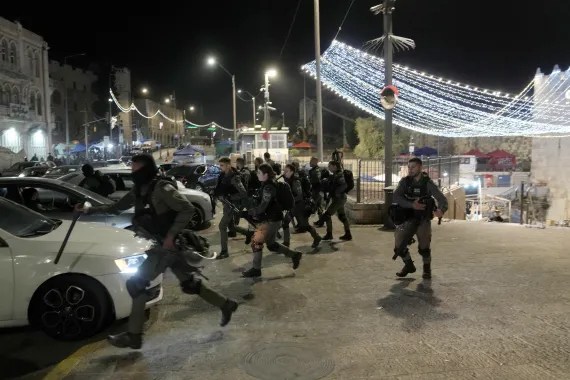
The raids on Al-Aqsa in context

Some quick, brief thoughts on the ongoing repression and resistance in occupied Palestine:

The consecutive brutal raids on al-Aqsa during Ramadan by the fascist government of Israel shouldn’t been seen as isolated incidents. Nearly 100 Palestinians have been killed so far this year by Israeli forces, including massacres in Jenin and Nablus. Harsher conditions have been imposed on thousands of Palestinian political prisoners. Laws from banning the flying of the Palestinian flag to allowing Israel to strip Palestinian citizens of Israel of citizenship have been passed.

Relatedly, other measures, such as the revocation of the 2005 law removing settlements from the northern West Bank, to the loosening of gun ownership regulations, to the creation of a National Guard specifically designed to target Palestinians and under the control of Kahanist Itamar Ben-Gvir, all point to a government desiring and planning for conflict and escalation as a means to continue the Zionist settler-colonial project.

Continue reading →

March Reading

I blame this month’s lack of reading on the U.S. government. In particular, preparing documentation for our appointment at the U.S. embassy to obtain a Consular Report of Birth Abroad (CRBA), which perhaps I’ll write about at another time, but probably won’t. The good news is at least all that work/not-reading paid off and our little one is now a U.S. citizen.

But in between cursing profligate bureaucratic obtuseness and the absurdity of citizenship, a few books got read, along with a series of fascinating academic essays, which I’ll be sharing more about below. This month’s round-up includes:

  • Becoming an Ally to the Gender-Expansive Child: A Guide for Parents and Carers by Anna Bianchi
  • The Terraformers by Annalee Newitz
  • Gender Born, Gender Made: Raising Healthy Gender-Nonconforming Children by Diane Ehrensaft
  • The Adventures of Amina al-Sirafi by S.A. Chakraborty
  • Polarización y transfobia: Miradas críticas sobre el avance de los movimientos antitrans y antigénero en México por Julianna Neuhouser, et al.
  • Unapologetic: A Black, Queer, and Feminist Mandate for Radical Movements by Charlene Carruthers
  • The Midnight Library by Matt Haig
Continue reading →