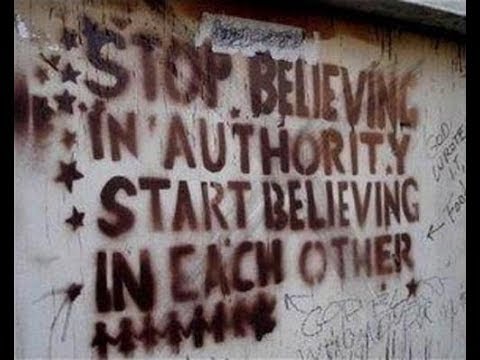
Statement on the Occasion of the 15th Anniversary of the Murder of Bety Cariño and Jyri Jaakkola

Originally posted on It’s Going Down.

On April 27, 2010, a solidarity and mutual aid caravan to the besieged autonomous Triqui municipality of San Juan Copala left the city of Oaxaca. Along the way, it was ambushed by government-backed paramilitaries belonging to UBISORT (Union for the Social Well-Being of the Triqui Region). The paramilitaries killed Mixtec organizer Bety Cariño and Finnish solidarity activist Jyri Jaakkola and wounded several others. The following statement marks 15 years since the murders. It was translated by Scott Campbell.

To the media
To national and international public opinion
To social, solidarity, and human rights organizations
To the National Indigenous Congress and the Indigenous Governing Council
To the Zapatista Army of National Liberation
To the Indigenous peoples of Mexico and the world

On the occasion of the 15th anniversary of the murder of Bety Cariño and Jyri Jaakkola:

Today marks 15 years of impunity. Fifteen years since the murder of Bety and Jyri. And, faithful to custom – and the necessary stubbornness of keeping memory alive – we return to this date with the same wounded but unshakeable dignity.

In this digital era, our compañeros have been converted into a QR code, a WhatsApp message, an app, a song, a video that travels the world, a worn photo, a graphic exhibition. But they are not only that: they are a voice that resists in time, in the memory of those of us who refuse to forget.

In these 15 years, we have traveled the entire alphabet – from A to Z – going to every corner where it was possible for us to be, asking for justice. Sometimes we found a warm space, a friendly face that knew how to listen to what should be Justice; but most of the time we only found the eternal bureaucracy, the lie, the indifference. The sidewalks were our place of dialogue, our classrooms, our public plazas: in hunger strikes, in marches, in blockades, in endless waits before public officials and “authorities” of any level. We never expected anything from them. And time has only confirmed that institutional justice in Mexico is a failure.

Continue reading
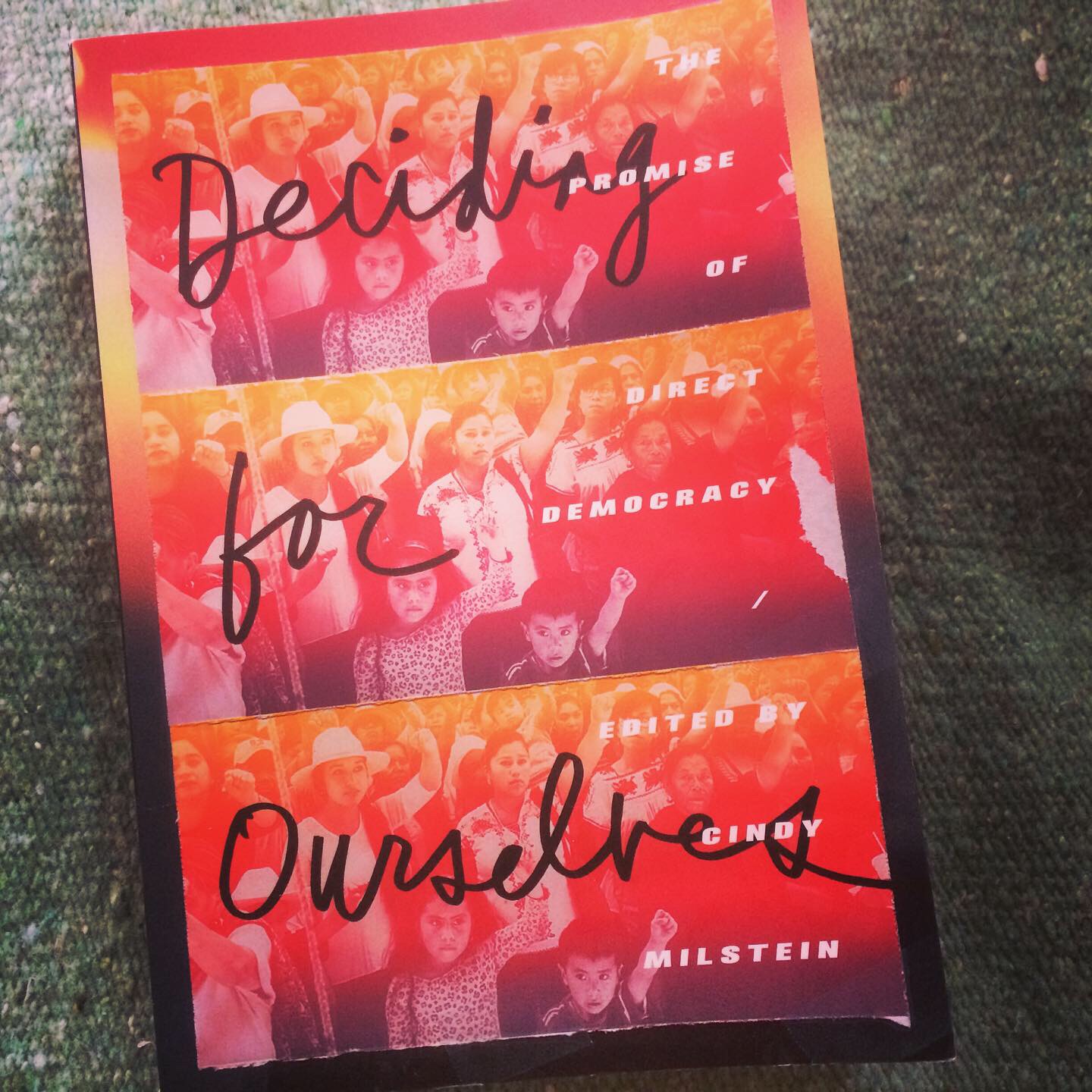
Out Now: “Deciding for Ourselves: The Promise of Direct Democracy”

While it emerges in the midst of tragic and difficult circumstances, I am excited for the release of the anthology Deciding for Ourselves: The Promise of Direct Democracy, edited by Cindy Milstein and to which I contributed the chapter “The Bonfires of Autonomy in Cherán.” As we make our way through this time of loss and uncertainty and begin to think about what comes next, I hope it may offer some insight and inspiration.

It’s now available for a short time on a “Pay What You Can” basis from AK Press.

As the book description reads, “A better world through self-determination and self-governance is not only achievable. It is already happening in urban and rural communities around the world.” This is what Deciding for Ourselves dives into, a theme that couldn’t feel more pressing and necessary.

My contribution looks at the indigenous P’urhépecha municipality of Cherán, located in Michoacán, Mexico. For the past nine years, Cherán has operated under a form of autonomous communal government after a popular uprising removed cartels, local police, politicians and political parties from the area. While the story of the rebellion and its immediate aftermath have been well documented, the chapter takes an in-depth look at how the communal government functions and meets the daily needs of Cherán’s residents, why the government took the form that it did, and how life has changed and is experienced in a place where community and government are woven into a shared communal fabric.

If mutual aid, solidarity, autonomy, self-determination and collective liberation are ideas that interest or resonate with you, this book is worth picking up. And at up to 75% off, it’s a great deal that also helps support an independent radical publisher.

The Disease of Modernity: Coronavirus and the Myth of Institutional Failure

Originally posted on It’s Going Down

Last week, in a class I teach, we were discussing the concept of “posthuman suffering,” which can be understood in two different ways. In the mundane sense, it is the experience of a negative emotion resulting from our dependence on technology and especially when a technology fails. For example, if you must complete an online task for work or school and the internet goes out, you may feel frustrated, irresponsible, or inadequate, despite the fault of the situation and your resulting emotional experience of it lying completely with the technology and not with you. In a deeper sense, posthuman suffering manifests as “ontological angst” brought on by the awareness that we are biological entities dependent upon technology in order to survive, to know ourselves, and to know the world around us. This awareness has implications for the construction of our sense of self as human beings when simply to be is contingent on a technological other distinct from us. As class was ending on that point, a student shared that the college just announced a temporary halt to in-person classes due to the coronavirus.

It is not difficult to see posthuman suffering play out in the face of this pandemic. In the US, we have seen test kits that don’t work or don’t exist, systems of technology that spread misinformation or fear, access to medical technologies denied to those who are or may be sick, etc. This is amplified by the emphatic, ever-present reminder of our biological fragility, the gaze toward technoscience to save us, and the worry and helplessness upon realizing that it might not – indeed, that it already has not for thousands of people.

Continue reading