In Memory of Carolina Saldaña

En español a continuación.

On August 1, I was looking for resources to share about Black August and naturally thought of Carolina. She’d written a book on it in Spanish, after all. For many years, she had organized events in Mexico commemorating Black August, seeking to lift up the legacy and ongoing struggle of the Black liberation movement and its political prisoners and prisoners of war. While I didn’t end up using any of her work that day in what I shared, remembering her called forth a wave of fond recollections. I made a mental note to reach out to her, as we hadn’t been in touch in a couple of years. Sadly, a few hours later, I heard from compas in Mexico that she passed away that morning.

Common adjectives that have been used to remember Carolina Saldaña include relentless, tireless, and unceasing. They are all accurate and true. Carolina was truly a force, guided by a commitment and passion for solidarity and freedom that compelled her work over the years that I had the honor to know her. We first connected in 2008, when I began working with the now-defunct website El Enemigo Común. Carolina was already involved – unsurprisingly – as she seemed to be active with most independent media projects in Mexico. Our communication originated over email until we had the opportunity to meet in person a couple of years later during one of my trips to Mexico.

Continue reading

Afropessimism and Palestinian Liberation: An Essay

In October 2023, at the beginning of an ever-escalating genocide against the Palestinian population of Gaza, I wrote some rambling, rather perfunctory, thoughts on Afropessimism and Palestinian Liberation. I have since attempted to elaborate my thinking into a more structured argument, the result of which is the below essay. Declined for publication by several academic journals, I have decided to post it here, unsure of its merits but hoping amidst the words there may be a useful contribution to the conceptualizations of our collective struggles for liberation and the centrality of the Palestinian cause. I welcome feedback, critical or otherwise. As it is a lengthy essay, I have also made it available as a PDF.

Abstract: This paper draws upon Black feminist theory and Afropessimism to interrogate Palestinian demands for liberation. In doing so, it figures Zionism as a project of modernity and evaluates its epistemology through Sylvia Wynter’s formulation of the “genre of Man.” Subsequently, it picks up Afropessimism’s extension of Wynter’s thought to critique the ontology of the Human. As Zionism, a modern endeavor, knows itself through the othering of Palestinians, an Afropessimistic reading of Palestinian demands is examined. It is argued that Palestinian liberation is an impossibility in the current ordering of knowledge and being, demanding the end of the Human and this world.

In the face of genocide, the question of Palestinian liberation has never been more salient. Yet what liberation looks like and how to obtain it is a matter of debate. Formations such as the Palestine Liberation Organization and the Palestinian National Authority have accepted a two-state solution framework that would see a State of Palestine established alongside the State of Israel. Others have called for one binational state, where Israelis and Palestinians would live side by side under a secular, democratic government.[1] For its part, Palestinian civil society has focused less on a specific solution and more on the implementation of rights guaranteed under international law. This approach can be seen in the 2005 call for Boycott, Divestment, and Sanctions against Israel, which demands an end to the Israeli occupation of Palestinian territory, equal rights for Palestinian citizens of Israel, and the right to return for Palestinian refugees.[2] In a similar manner, scholars such as Rashid Khalidi have called for a focus on the inequality present in the Zionist project, proposing that a just solution in Palestine should be premised on equal rights for all inhabitants of the region: “Absolute equality of human, personal, civil, political, and national rights must be enshrined in whatever future scheme is ultimately accepted by the two societies. This is a high-sounding recommendation, but nothing else will address the core of the problem, nor will it be sustainable and lasting.”[3]

On the surface, appeals to equality and international law hold a certain resonance. They are aspirational yet practical, fitting within the current discourse regarding the fair and just organization of societies. At the same time, such approaches are hindered by unquestioned assumptions regarding the origins and intentions of constructs such as equality and international law, as well as the possibility of obtaining true or absolute justice within the current world paradigm. This paper argues that the present ontological and epistemological foundations of human being in this world – on which claims to equality or international law are based – impede the realization of Palestinian liberation. It posits that Palestinian freedom necessitates the creation of new worlds and, rather than the legislating of equality, the jettisoning of constructs such as modernity and the Human.

To make its case, this paper will place questions of Palestinian liberation into conversation with Black feminist thought and Afropessimism. It will first demonstrate the Zionist project to be one firmly rooted in modernity and loyalty to whiteness. Subsequently, it will draw upon the critiques of modernity formulated by Black feminist theorists, primarily Sylvia Wynter, arriving at a problematization of Man, or the current supremacy of the white, Western bourgeois male. Afropessimism will extend Wynter’s judgment of Man to encompass that of the Human, showing that Humanity itself is contingent upon anti-Blackness. Having troubled the construct of the Human, this paper will apply an Afropessimistic reading to Palestinian liberation, asking if total freedom means destruction of the Human, and Palestinians have been rendered as not-Human by Zionism, how can Afropessimism inform Palestinian liberation? I argue that Afropessimism not only assists in descriptively generating a theoretical reading of the Palestinian plight as the anti-modern Other, but also can prescriptively aid in conceptualizing resistance. My culminating argument, as mentioned above and built off the frameworks offered by Afropessimism and the Black feminist theory from which it emerged, is that true Palestinian liberation necessitates the end of modernity, the Human, and therefore, this world.

Continue reading

Gaza Solidarity Encampments on Occupied Land

The above map and following essay are from a project produced for a course I took last semester. As it may be of some relevance or utility, I have chosen to post it here. As always, thoughts, critiques, and feedback is welcomed.

The map accompanying this essay attempts to situate via multiple data points the location of Gaza Solidarity Encampments installed on the campuses of colleges and universities during April and May 2024 in what is demarcated as Los Angeles County. In particular, it seeks to raise the question of the implications of the taking of space in solidarity with an Indigenous struggle for liberation in Palestine on land that itself was ethnically cleansed and genocided of most of its Indigenous inhabitants. To do so, it first notes the identities and territories of the original populations of what is now Los Angeles County: the Tongva, Kizh, and Chumash peoples. Upon that is layered the colonial infrastructure and place designations to orient the gaze from a settler lens with the intention of inspiring reflection on the imposition of settler colonialism and belonging in space. If the colonial place names were absent, would the viewer’s familiarity with the area change? Finally, using tent icons, the map indicates the approximate location of the five Gaza Solidarity Encampments in the area that were erected in April and May 2024, along with the identification of the college or university, the name given to the encampment by those involved, and the Indigenous lands upon which the encampment was placed. The intention of the map is not to condemn nor to celebrate, but to problematize the conception of space in the context of resistance and to encourage the incorporation of a decolonial perspective in the work of protest.

Continue reading

Panel at the 8th International Conference of the Anarchist Studies Network

If you can’t sleep, or live in a different time zone, you can get a dose of anarchy with our online panel “Conflict and affinity at the borders of anarchism” as part of the 8th International Conference of the Anarchist Studies Network, tomorrow, Monday, September 2, at 5:30am PDT.

Register for free here.

I’ll be presenting alongside comrades Ryan Knight and Imuris Valle. My talk is entitled “Toward the destruction of the Human.” Below is the abstract. Hope to see you there!

In recent decades, Black feminist and Afropessimist thinkers have problematized the notion of the “Human,” arguing that this construct of modernity is rooted in and necessitates an ontological and epistemological anti-Blackness. As an intellectual and socio-political movement, anarchism has come far in its analysis of race as a hierarchical social construct. Nonetheless, an unresolved tension within anarchism remains its origins in modernity and thus raises the question of how does a movement navigate and understand race if said origins are premised in anti-Blackness? This paper will offer a problematization of the Human drawing on theories of power, administrative violence, Black feminism, and Afropessimism. It will then propose that calls for the destruction of the Human and lines of flight from the Human inherently present a challenge to anarchist thought by forcing anarchism to reckon with its roots and its understanding of race from a perspective that, will be argued, is more radical than anarchism itself.

January Reading

For those who don’t know, one thing I love to do is read. And while the Occidental calendar of months and years are rather arbitrary, one thing I have started doing in 2023 is writing brief reviews of what I’ve been reading and sharing them on a couple social media sites. I figured I might as well share them here as well. Instead of publishing each review as its own post, I’ve decided to just do a one-off round-up of every book I’ve read this month. I have no idea if this will be a regular feature of the blog, we’ll see what next month brings.

A major reason for doing this is that along with reading books, I love talking about books. So if you’ve got thoughts on any of the books or reviews below, or have your own recommendations, please do share! I’m always looking for new reads to add to my list.

Here’s a list of the books reviewed in this post:

  • Foundation’s Edge by Isaac Asimov
  • Critique of Black Reason by Achille Mbembe
  • The Intuitionist by Colson Whitehead
  • A Map to the Door of No Return: Notes to Belonging by Dionne Brand
  • Home: Habitat, Range, Niche, Territory by Martha Wells
  • The Memory Librarian: And Other Stories of Dirty Computer by Janelle Monáe
  • Ontological Terror: Blackness, Nihilism, and Emancipation by Calvin L. Warren
  • Machinehood by S.B. Divya
  • Cannibal Metaphysics by Eduardo Viveiros de Castro
Continue reading

Encounters with Complimentary Racism

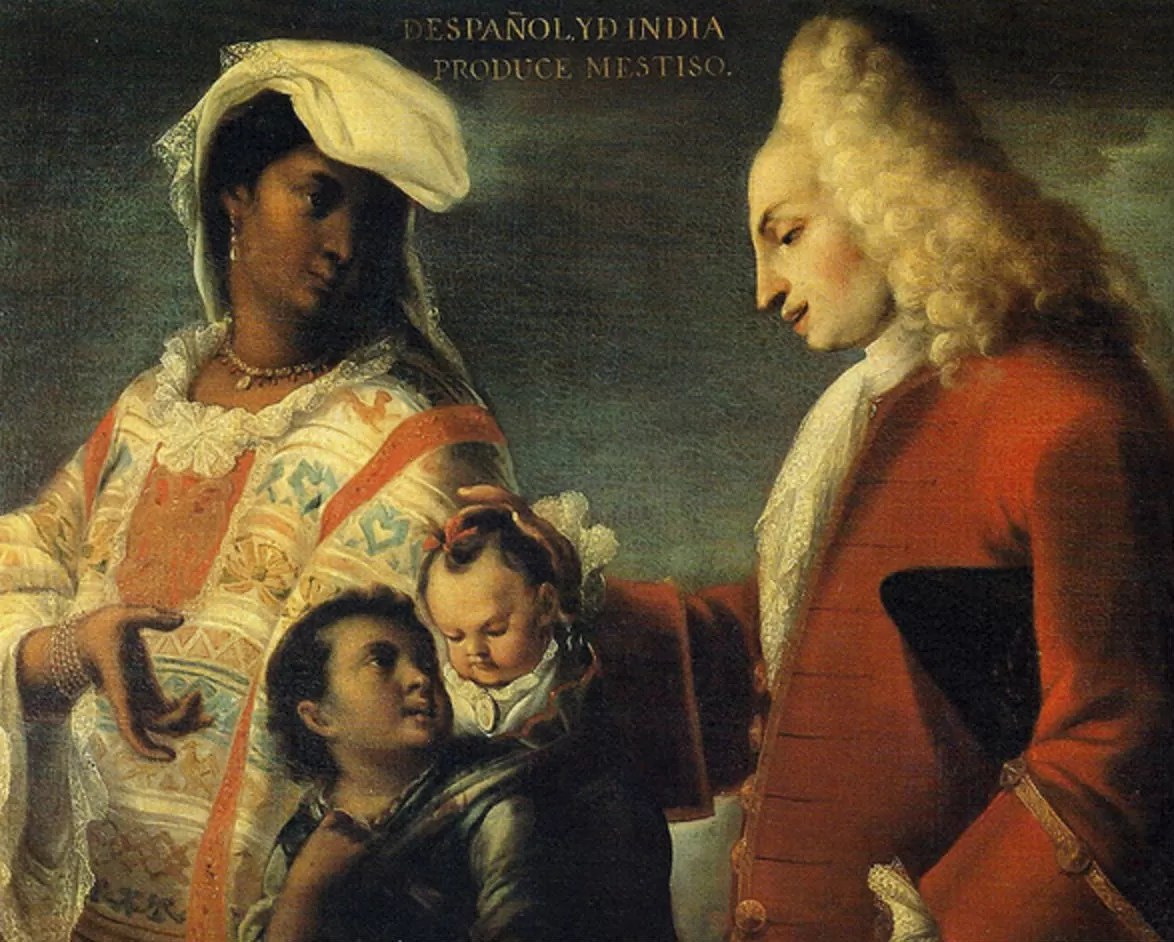
Spaniard and Indian Produce a Mestizo by Juan Rodríguez Juárez, 1715

Near the end of last year, I became a father. As expected, it’s been full of ups and downs, joys and frustrations, precious moments and sleepless nights. But one thing I didn’t expect to encounter was racism. More specifically, racism in the guise of compliments.

My partner is Mexican and currently we are living here as we wait an eternity for the US immigration system to process her visa request. During this time, we’ve been inundated by visits from her family members and friends. And I’ve been consistently taken aback by how many have pointed out the color of our child’s skin and complimented us on it – as if we somehow genetically modified our baby to meet their racialized expectations. “How light-skinned he is!” or “Oh, what a good color! Congratulations!” are some of the more frequent comments.

To be certain, our child is light-skinned and at this moment can easily pass as white. But the phenomenon of an individual telling my partner that she had “chosen well” by reproducing with me and as a result was “improving the race” was not a response we had been anticipating. Nor the other range of comments, such as our child being smart because “first-world babies are more advanced.” One wonders what words would have been (un)spoken if our child had different skin pigmentation.

Continue reading

Interview on Fidencio Aldama, Settler Colonialism, and Extractivist Capitalism

Above is an interview/conversation I had with Daniel for his D Report podcast. We discussed the case of Yaqui political prisoner Fidencio Aldama, the history of Yaqui resistance in defense of their territory, settler colonialism, and racialized neoliberal extractivist capitalism. For more details on the podcast, please see Daniel’s post here.

At the End of the World: Afrofuturism, Black Speculative Futures, and Black Transhumanism

On the most recent episode of the It’s Going Down podcast, I had the opportunity to speak with Clay Colmon, who teaches in the Cultural Studies Department at Claremont Graduate University and is the Associate Director of Instructional Design at UPenn’s School of Arts and Sciences. A shorter version also aired on KPFA (Bay Area, Santa Cruz, and Fresno) on April 30. That version can be heard here.

We discussed the potential and meaning of change, the growing capaciousness of Afrofuturism, the power of Black speculative futures, the significance of vision and story in social struggle, the construction of the human, the possibilities of Black transhumanism and posthumanism, and the implications of all of the above.

Clay can be found on Twitter at @warmclay.

The interlude track is “Soul of the Sea” by Drexciya, accompanied with audio clips of Octavia Butler, N.K. Jemisin, Wanuri Kahiu, Nnedi Okorafor, Octavia Butler, and N.K. Jemisin, respectively.

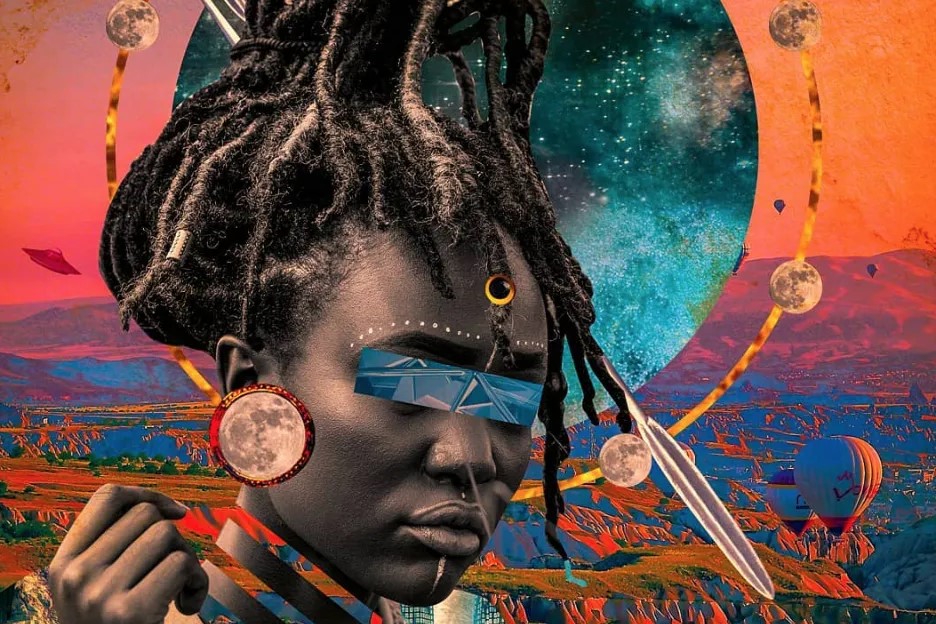
Collage by Kaylan Michael

No Good Options: Navigating an Acute Mental Health Crisis in the Home

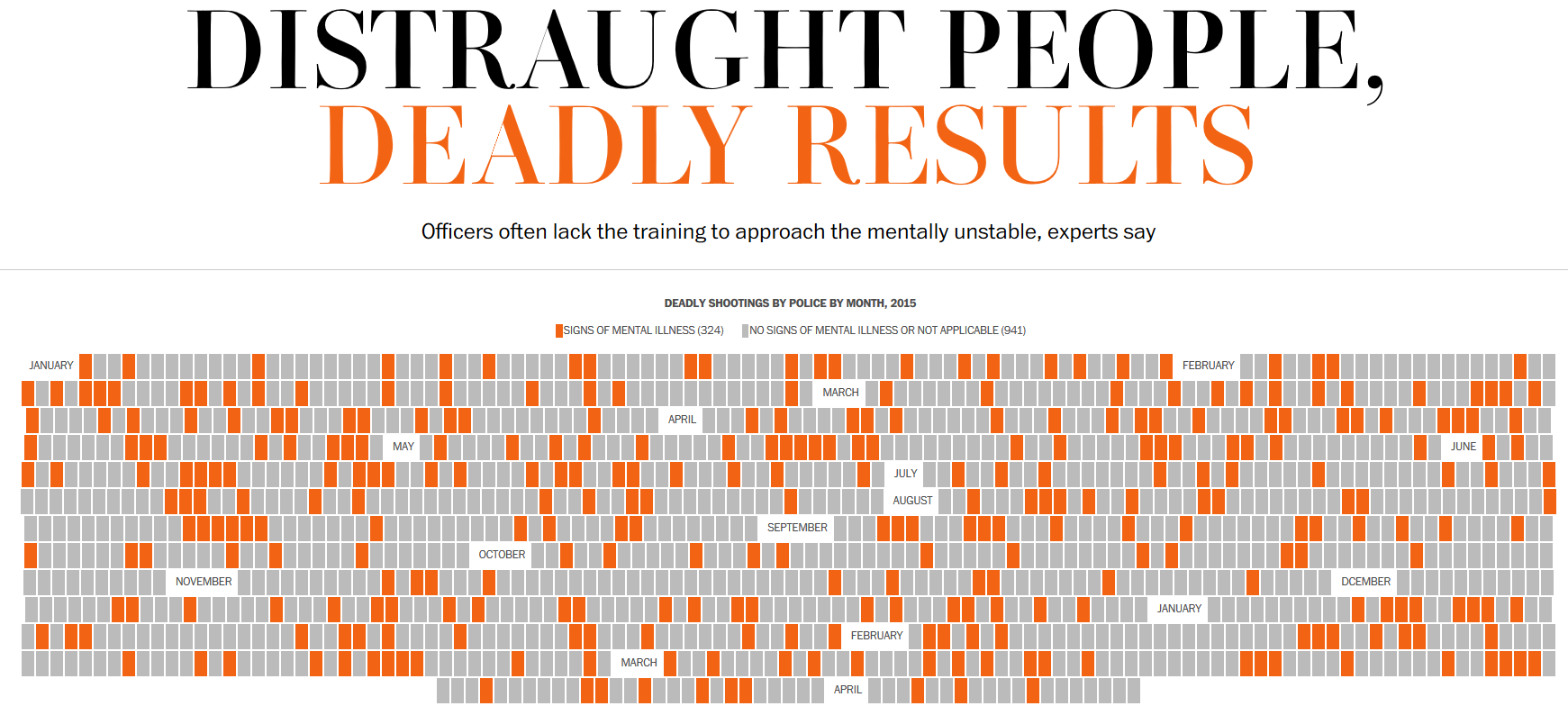
Borrowed from The Washington Post.

Borrowed from The Washington Post.

As I came home from work on Thursday, I could see one of my roommates on the phone at the other end of the house, waving me towards him, a look of concern and distress in his eyes. We went outside, where he shared what had happened a few minutes prior. He, who I’ll call L, had just had a bizarre interaction with our other roommate, who I’ll call M. (I’ve changed the identities, left out specifics and received M’s permission before posting this.)

M had all of the sudden begun speaking incoherent non-sequiturs to L and locked herself in her room. He didn’t know what was going on and didn’t know what to do. What followed was a four-hour series of events where I tried to assist someone experiencing a severe mental health crisis while encountering my own unfitness to do so and the frustration at a lack of safe options available.

Continue reading

Locating and challenging racism

paulo-freire-quoteIn a recent post – Racism, privilege, guilt and social justice – I say a couple of times that “I was racist,” in relating my process of becoming aware of white supremacy and white privilege. That realization was a powerful moment for me that I’d like to unpack a bit more. In part, I said it for effect, to put myself out there in no uncertain terms, to bring the issue home to self, because that is where it resides. Racism is not something that happens “out there” but inside of me and everyone else in this society. (This is clearly not an exact formulation and obviously racism plays out very differently internally and externally for people of color than it does white people.)

It is easy to find racism in the most heinous of acts, such as the Emanuel AME Church shooting or the burning of Black churches. To point to something outside and identify and judge it as racist also provides a false sense of separation and distance between the ordinary white person and racism. But what of the seemingly inconsequential, mundane racism that daily insinuates and reinforces itself in our society and culture? The type of racism that truly sustains the system of white supremacy and is the cornerstone upon which is based the fanaticism that leads to atrocities such as the one in Charleston? That is the racism that is reproduced societally but also impacts individually, as I encountered at age 17 and what led me to realize that I was/am racist.

Continue reading