Statement on the Occasion of the 15th Anniversary of the Murder of Bety Cariño and Jyri Jaakkola

Originally posted on It’s Going Down.

On April 27, 2010, a solidarity and mutual aid caravan to the besieged autonomous Triqui municipality of San Juan Copala left the city of Oaxaca. Along the way, it was ambushed by government-backed paramilitaries belonging to UBISORT (Union for the Social Well-Being of the Triqui Region). The paramilitaries killed Mixtec organizer Bety Cariño and Finnish solidarity activist Jyri Jaakkola and wounded several others. The following statement marks 15 years since the murders. It was translated by Scott Campbell.

To the media
To national and international public opinion
To social, solidarity, and human rights organizations
To the National Indigenous Congress and the Indigenous Governing Council
To the Zapatista Army of National Liberation
To the Indigenous peoples of Mexico and the world

On the occasion of the 15th anniversary of the murder of Bety Cariño and Jyri Jaakkola:

Today marks 15 years of impunity. Fifteen years since the murder of Bety and Jyri. And, faithful to custom – and the necessary stubbornness of keeping memory alive – we return to this date with the same wounded but unshakeable dignity.

In this digital era, our compañeros have been converted into a QR code, a WhatsApp message, an app, a song, a video that travels the world, a worn photo, a graphic exhibition. But they are not only that: they are a voice that resists in time, in the memory of those of us who refuse to forget.

In these 15 years, we have traveled the entire alphabet – from A to Z – going to every corner where it was possible for us to be, asking for justice. Sometimes we found a warm space, a friendly face that knew how to listen to what should be Justice; but most of the time we only found the eternal bureaucracy, the lie, the indifference. The sidewalks were our place of dialogue, our classrooms, our public plazas: in hunger strikes, in marches, in blockades, in endless waits before public officials and “authorities” of any level. We never expected anything from them. And time has only confirmed that institutional justice in Mexico is a failure.

Continue reading

How many autonomies fit in a community?

The following text by Leonardo Toledo, translated by Scott Campbell, takes a critical look at various autonomous processes in so-called Chiapas, Mexico. The original Spanish-language article is accompanied by a photo essay by Isaac Guzmán.

What do we imagine when we say “autonomy”? There are many disparate possible scenes. From an official invoicing a table dance in the name of his autonomous organization to a community self-defense member ambushed by police, soldiers, narcos, and former self-defense members.

Another image of autonomy could be the man with three positions in autonomous institutions who telephones his best friend to make fun of the way a group of Indigenous people speak, but it can also be an Indigenous community meeting in assembly, deciding upon their next local government together.

Perhaps we imagine a prosecutor who, instead of solving pressing cases for society, dedicates his time to litigating against his own family and fighting for a prestigious state scholarship. Or perhaps an entire community that, after a thousand fiascos, decides to expel political parties from local government.

My favorite imaginary image of autonomy is that of a man who, from a cubicle in an autonomous university (which would collapse without public funding), writes an article arguing that autonomy for the people is only possible if they refuse to accept public funding.

Autonomy can be many things. Philosophers will tell us that its existence depends on the “categorical imperative,” sociology will unthinkingly turn to “agreement in assembly,” some lawyers will probably lecture us about the indivisibility of territorial sovereignty and the concurrence of the law, while anthropology will offer to walk with us to reflect together on justice and dignity. How, then, does one look at and live autonomy?

Let’s look at the autonomous experience of the peoples of Chiapas.

Continue reading

Communal Government of Chilón, Chiapas: For the Defense of Life and Mother Earth

Originally posted on It’s Going Down.

A statement shared by the Communal Government of Chilón, Chiapas, following a march in the municipality, outlining their activities, concerns, and demands. It was published on Radio Zapatista and translated by Scott Campbell.

Chilón, Chiapas, on March 9, 2024

To the national and international organizations
To the original peoples of Mexico and the world
To the defenders of Indigenous and human rights
To the independent media
To the people in general 

We are the Communal Government of the municipality of Chilón, belonging to the original Tzeltal people. Our struggle began more than six years ago with the objective of creating an alternative path to that of the system of political parties. Today we conclude the visits to our 11 Attention Centers distributed throughout the municipality: Bachajpon, Palma Xanahil, Patwits, San Antonio Bulujib, Ch’ich’, Ahlan Sac Hun, Lázaro Cárdenas, Pamanabil, Sacun Palma, San Jerónimo T’ulih’a and Chilón, where we held 11 assemblies in which we had the opportunity to listen to our people and to inform them about our proposal for struggle and for life.

With pain and indignation, we listened to the various problems that the communities continue living through, and how our brothers and sisters are facing them. We note that the clandestine sale of alcohol and drugs has increased in the communities, which has caused the deaths of innocents and the destruction of families. We warn with concern about the increase in organized crimes cells and their collusion with the political party system. Election year has begun and the political campaigns have already shown their corrupt ways, going so far as to hand out alcohol at their events, intoxicating and manipulating the public. We said it from the start and we repeat it: political parties split, divide, and subjugate the people.

Continue reading

Interview with Freed Indigenous Political Prisoner José Antonio Arreola of Nahuatzen

Originally posted on It’s Going Down.

La versión original de esta entrevista en español puede encontrarse aquí.

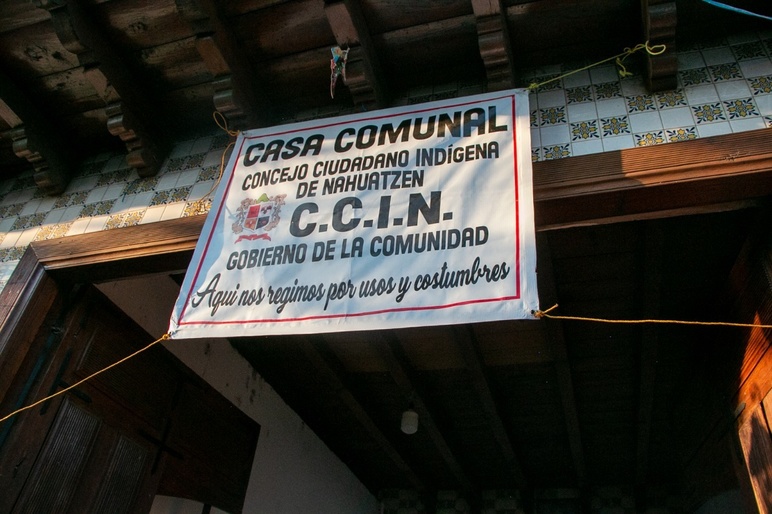
The following is an interview with José Antonio Arreola, a former political prisoner released after serving more than three years of a seven-year sentence based on trumped-up charges. He is a member of the autonomous Indigenous Citizens’ Council of Nahuatzen, a P’urhépecha community in Michoacán. A previous interview with José Antonio can be read here.

After more than three years in prison, you won your freedom on February 9, when the Supreme Court ordered your immediate release. Congratulations on this victory. How are you doing? How does it feel to be back home?

I feel very happy, I feel very glad to now be with my children, with my wife, with all my family there in my community of Nahuatzen.

For those who are unfamiliar with your case, can you share some background on the struggle in Nahuatzen and the events that led to your political imprisonment?

The reason why I ended up in prison, being a political prisoner, is because of the following. In 2015, Nahuatzen rose up against the insecurity that the municipal government had been causing since its inception. An insecurity throughout the entire community. The residents, when they saw that organized crime came for some compañeros and took one of them, got together. We all gathered in the main square in our community and decided at that moment that the plan to follow was to meet with the entire municipal government in the municipal president’s office and to be able to ask for information about our compañero. The situation ended, thank God, with us recovering our compañero.

We called for a plebiscite through a statement read through the public address system in our community, where each person was asked to voluntarily come and sign sheets of paper with their name and a copy of their ID. I can tell you that nearly 5,000 signatures were collected out of the 5,000 photocopies. That is why, in 2017, we won a ruling from the Supreme Court, order 035, which resolved that we are an Indigenous community, that gave us our autonomy, our self-government, our self-determination. Subsequently, we filed another lawsuit to obtain the resources directed to our community, which was also granted to us by the Supreme Court through the Toluca regional court.

Continue reading

“Autonomy is Everything”: Interview with Indigenous Political Prisoner José Antonio Arreola of Nahuatzen

Originally posted on It’s Going Down.

La versión original de esta entrevista en español puede encontrarse aquí.

The following is an interview with Indigenous political prisoner José Antonio Arreola Jiménez, one of three political prisoners from the P’urhépecha community of Nahuatzen, Michoacán, currently serving seven-year sentences based on trumped-up charges. The interview was conducted in late November by IGD contributor Scott Campbell.

Can you introduce yourself and tell us a little about yourself?

Yes, my name is José Antonio Arreola Jiménez. I’m from the Indigenous community of Nahuatzen, Michoacán. Nahuatzen is an Indigenous community nestled in the heart of the Meseta Purépecha. I have my wife and five children.

Can you share with us some details about Nahuatzen, its struggle, and your role in that struggle?

The struggle in Nahuatzen began in 2015, when the last municipal president was imposed on us by the state government, by [then-governor] Silvano Aureoles Conejo. Then, this Miguel Prado Morales, which is his name, arrived with more than twenty or thirty armed individuals from outside the community, claiming to be his private police, his bodyguard. We, as community members, thought this was bad, because within the town there is no need to bring weapons, we’re not people who fight, we’re not armed people. We’re working people, peaceful people. So that was, more than anything else, the main issue.

Then, one day we asked for a meeting with the municipal president, which was granted, and we told him that we wanted his police to leave the community of Nahuatzen. It turns out that he said yes, but later on he didn’t want to. The next day, he summoned us in front of his police, and we were attacked by them, his entire family, the entire town government. So, there was a revolt, there was a conflict, there were people who had their heads cracked open and people who were beaten. But at that moment, the community decided to hold a meeting, a general assembly, and to remove recognition of the town government. So, in a public meeting in the main plaza, we held this assembly.

Continue reading

Rebellion, Autonomy, and Communal Self-Government in the Indigenous Municipality of Cherán, Michoacán

Originally posted on It’s Going Down.

La versión en español de este podcast y la transcripción se puede encontrar aquí.

On this episode of the It’s Going Down podcast, IGD contributor Scott Campbell interviews Yunuen Torres, a community member from the autonomous P’urhépecha municipality of Cherán, Michoacán. More than nine years ago, on April 15, 2011, the residents of Cherán rose up and removed from their community illegal loggers linked to cartels, the municipal authorities, and the police. In the time since, they created an autonomous communal government where political power rests in the hands of the community and that has been designed to meet the needs of the more than 20,000 inhabitants of Cherán.

The conversation discusses the uprising and its context, how the communal government was formed and how it functions, the changes and challenges experienced in the community as a result of nine years of autonomy, as well as how Cherán is facing the COVID-19 pandemic, and what lessons and inspiration the community’s struggle may offer to other struggles and social movements in other locations.

The interview was conducted in Spanish and rerecorded in English. Many thanks to the comrade who offered their voice for this recording. The two music tracks included in this podcast are both from Cherán. The first is by Colectivo Aho and the second composed by music teacher Mario López and performed by the young musicians of the Banda Sinfónica Infantil y Juvenil Cherán K’eri. A transcript of the interview can be found below.

Continue reading

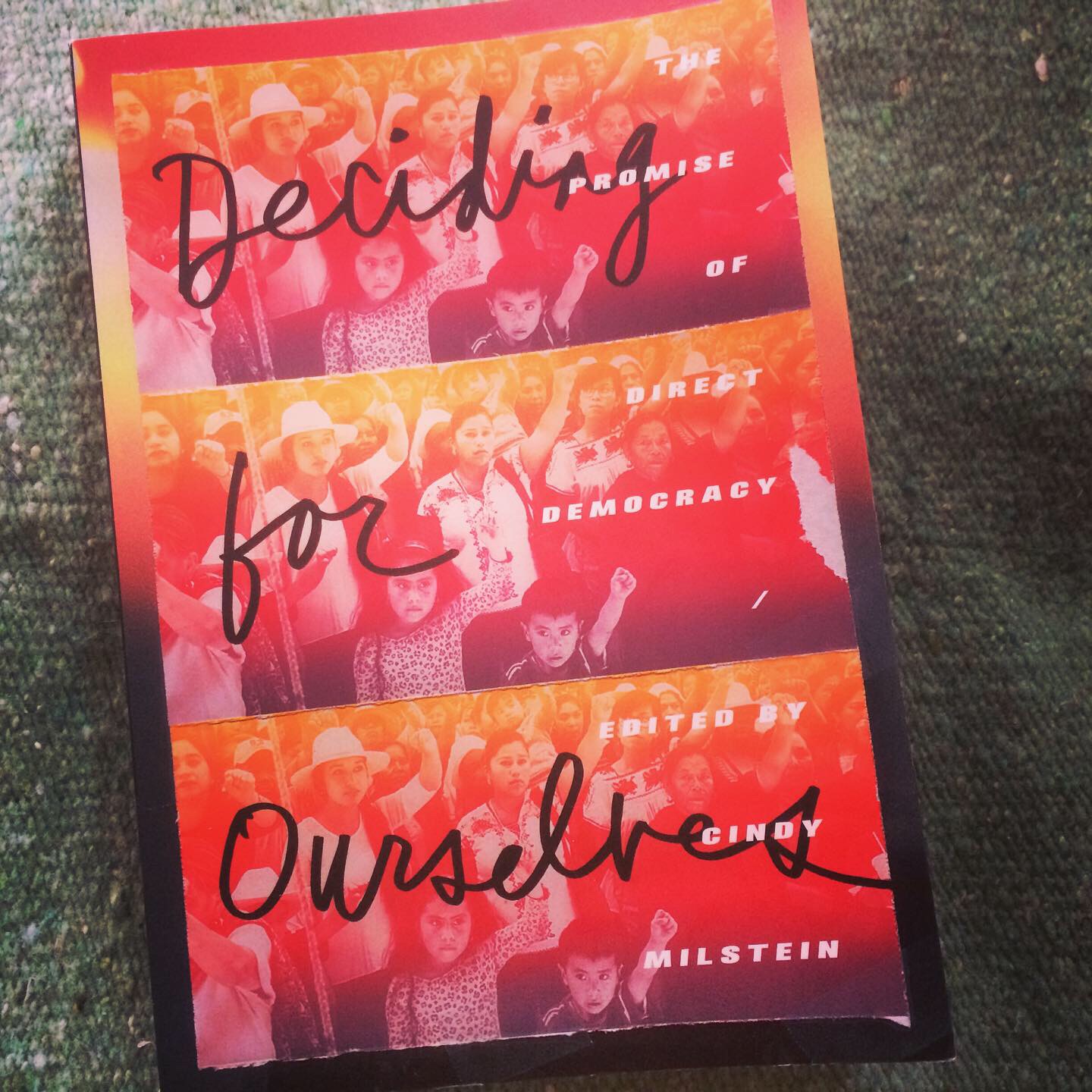
Out Now: “Deciding for Ourselves: The Promise of Direct Democracy”

While it emerges in the midst of tragic and difficult circumstances, I am excited for the release of the anthology Deciding for Ourselves: The Promise of Direct Democracy, edited by Cindy Milstein and to which I contributed the chapter “The Bonfires of Autonomy in Cherán.” As we make our way through this time of loss and uncertainty and begin to think about what comes next, I hope it may offer some insight and inspiration.

It’s now available for a short time on a “Pay What You Can” basis from AK Press.

As the book description reads, “A better world through self-determination and self-governance is not only achievable. It is already happening in urban and rural communities around the world.” This is what Deciding for Ourselves dives into, a theme that couldn’t feel more pressing and necessary.

My contribution looks at the indigenous P’urhépecha municipality of Cherán, located in Michoacán, Mexico. For the past nine years, Cherán has operated under a form of autonomous communal government after a popular uprising removed cartels, local police, politicians and political parties from the area. While the story of the rebellion and its immediate aftermath have been well documented, the chapter takes an in-depth look at how the communal government functions and meets the daily needs of Cherán’s residents, why the government took the form that it did, and how life has changed and is experienced in a place where community and government are woven into a shared communal fabric.

If mutual aid, solidarity, autonomy, self-determination and collective liberation are ideas that interest or resonate with you, this book is worth picking up. And at up to 75% off, it’s a great deal that also helps support an independent radical publisher.

Indigenous Nahua Community Removes Politician, Forms Self-Government to Defend its River

Originally posted on El Enemigo Común and It’s Going Down

On January 19, the Indigenous Nahua community of Zacatepec, Puebla, removed its mayor and replaced him with a Council of Elders in response to his failure to stop a toxic drainage system that is part of the Mexican government’s neoliberal Morelos Integral Project. Shortly thereafter, on January 24, Miguel López Vega, the community’s representative to the National Indigenous Congress and its Indigenous Governing Council, was detained moments after delivering official notice of this action to the state government, setting off protests and highway blockades that won his release five days later. The following day, January 30, the municipal government temporarily suspended construction of the drainage system. The below article and photos by Daliri Oropeza for Pie de Página and translated by Scott Campbell documents the assembly to remove the mayor and create a self-government.

While forming lines, residents of the Nahua community of Santa María Zacatepec look at one another. They smile. They check who is in each line, which one is the longest.

Facing the threat of a toxic drainage system emptying into the Metlapanapa River, they have decided to practice self-determination and choose their own government according to their own internal system.

Continue reading

Mexico: Political Statement from the Autonomous Brigades After the Earthquakes

Originally published on It’s Going Down

Via Noticias de Abajo Medios Libres
Translated by Scott Campbell

To the people of Mexico

To the Indigenous Governing Council

To the National Indigenous Congress

To the Zapatista Army of National Liberation

To the National and International Sixth

We are individual and collective adherents to the Sixth Declaration of the Lacandón Jungle, EZLN and CNI sympathizers and people from below and to the left in solidarity with the suffering of our brothers and sisters, victims of the recent earthquakes and the predatory system that is only death.

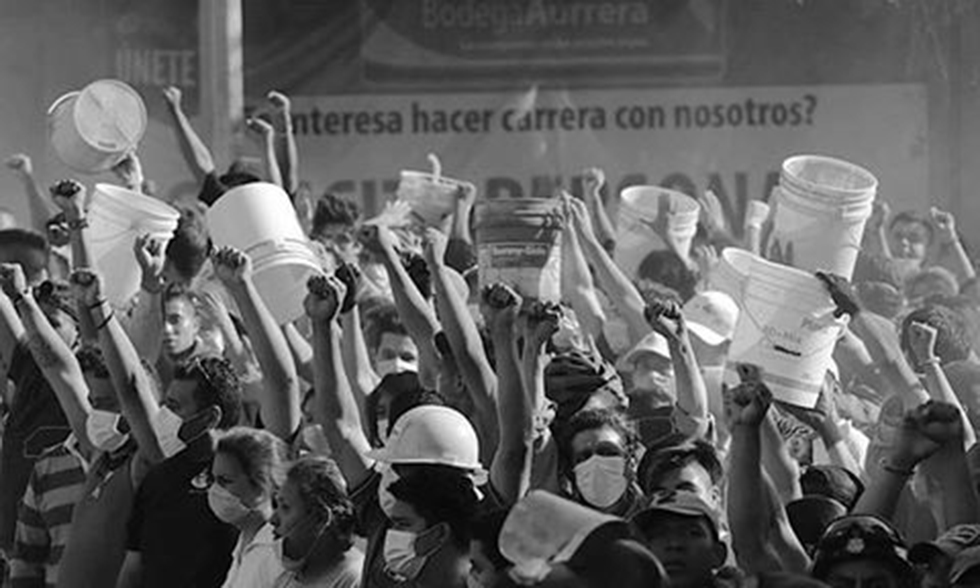
As in 1985, those who claim to govern remain totally surpassed by reality. Today their wonderland can’t be seen, not even by them. Meanwhile, we are the ones from below who suffered the consequences of these natural and socio-environmental disasters. Like 32 years ago, today the Mexican people are the ones going into the streets and towns to help, to give what little they have to help the other, the one who suffers, the stranger, the brother. Some who have much contribute much. Among those who have little, they contribute what they can, sometimes everything that is in their hands. Those who have nothing give their heart and offer to serve were needed. They are the ones who fill the streets and coordinate to gather aid and distribute it. Small business owners support by giving food and drink to those who give their time and effort. True hope emerges from these smiles and glances of solidarity.

Continue reading

Mexico: Solidarity and Self-Organization in Earthquake Aftermath

Originally published on It’s Going Down

On Tuesday, September 19, a powerful earthquake struck central Mexico. With a magnitude of 7.1 on the Richter scale and the epicenter just south of the city of Puebla, it has caused numerous deaths and widespread damage in Mexico City and the neighboring states of Puebla, Morelos and the State of Mexico, along with reports of loss of life and structural damage as far south and west as the states of Oaxaca and Guerrero.

https://twitter.com/vigilantehuaste/status/910218704641695746

Dozens of buildings collapsed in Mexico City alone and at the time of this writing at least 230 people have been reported as killed. The earthquake occurred just hours after a national earthquake drill and commemoration of the 32nd anniversary of the 1985 quake in which more than 10,000 people were killed. The 1985 tragedy is a seminal moment in modern Mexican history not only for the massive devastation caused but also due to the negligence, corruption and opportunism which marked the government’s response, especially when contrasted with the tremendous mobilization and solidarity of civil society in successfully self-organizing rescue efforts in the face of the state’s abdication of responsibility.

Continue reading