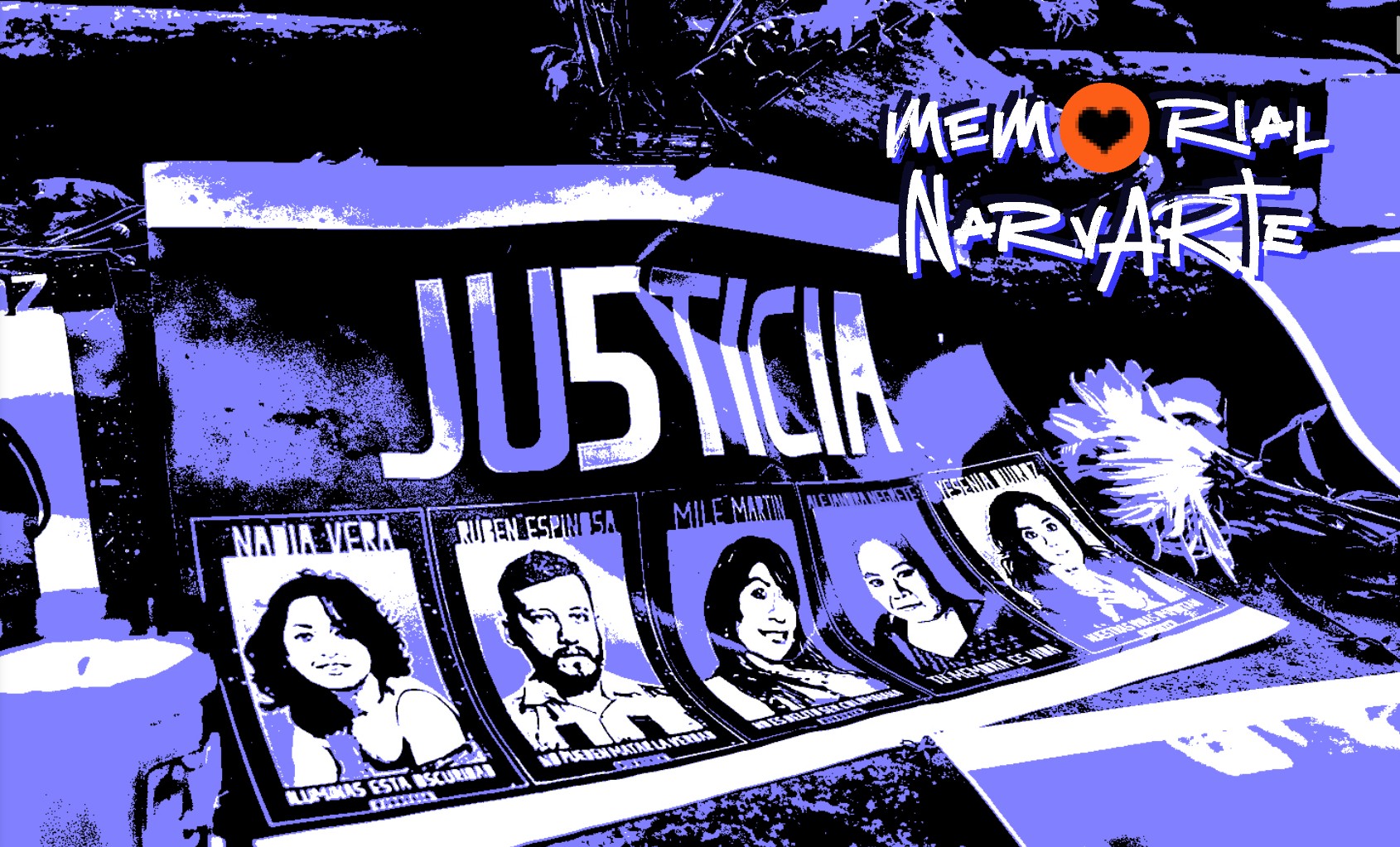
At the invitation of Mirtha Pérez, the mother of Nadia Vera, I prepared this short piece on grief and collective memory ten years after the Narvarte murders. It was originally published in Spanish on Memorial Narvarte.
I did not know Alejandra, Mile, Nadia, Rubén or Yesenia. I only learned of their existence after their deaths. It is a double loss to realize the lives one might have encountered had they not been stolen so abruptly and so cruelly. Despite not knowing them in life, I have had the honor to participate in a very small way in trying to maintain their memories and presences over the past ten years.
It began when I read Mirtha’s letter-poem to her daughter, Nadia, marking one year after her murder. Working with independent media outlets in what is called the United States, I translated her letter, published it online, and shared it among friends, comrades, and on social media. As a result, a dear compa who was editing an anthology on collective grief and mourning asked to include the translation in the volume, along with a brief introduction written by me.
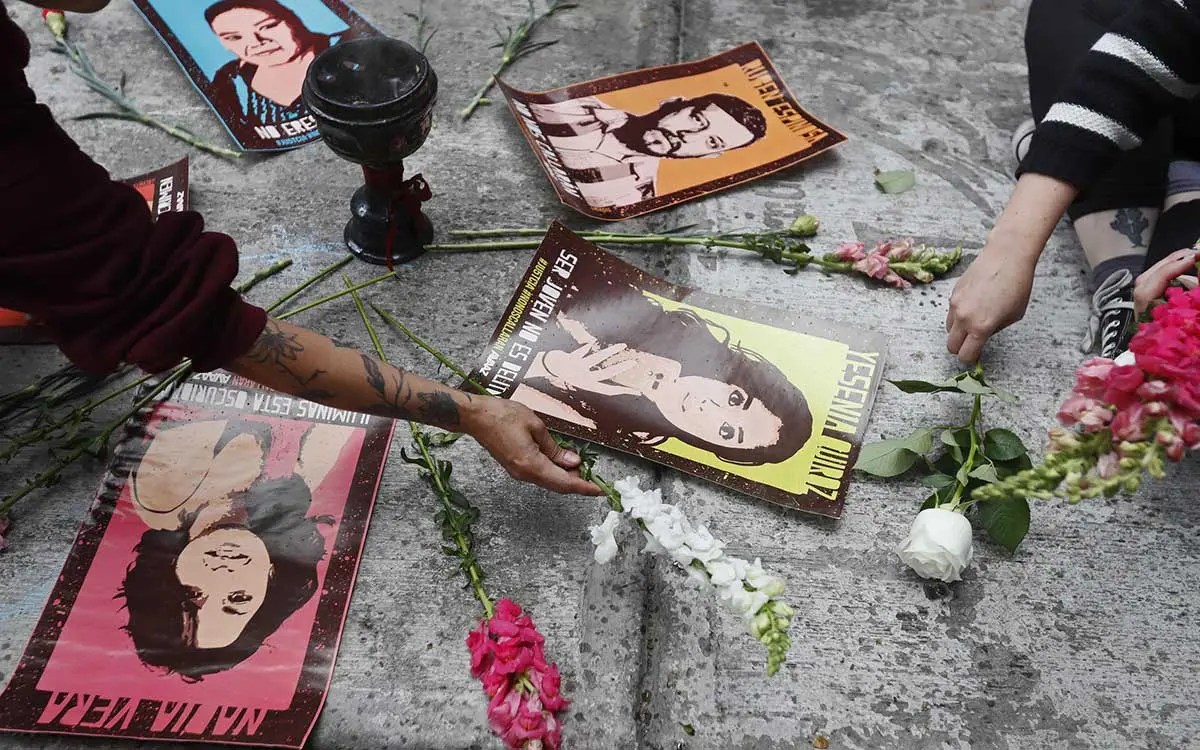
On July 31, 2015, Alejandra Negrete, Mile Martín, Nadia Vera, Rubén Espinosa and Yesenia Quiroz were murdered in an apartment in the Narvarte neighborhood of Mexico City. In the ten years since, their family members, friends, and comrades have been demanding justice and struggling to keep their memories alive. While three people have been detained for the killings, evidence ignored by the Mexico City prosecutor’s office implicates former officials of that office in the killings. It has also refused to investigate the role of the administration of Javier Duarte, former governor of Veracruz, from where Nadia, a radical activist, and Rubén, a journalist, fled fearing for their safety after receiving threats. To mark ten years, those accompanying the families in their search for truth and justice have created a digital common archive: Memorial Narvarte. Below is a text announcing the archive along with a piece by Mirtha Luz Pérez Robledo, the mother of Nadia Vera. Both were translated by Scott Campbell.
Memorial Narvarte: An Archive for the Future
Ten years after Alejandra Negrete, Mile Martín, Nadia Vera, Rubén Espinosa and Yesenia Quiroz were taken from us, we continue putting faith in collective memory.
After the multi-femicide and homicide that occurred on July 31, 2015, in an apartment at 1909 Luz Saviñón Street in the Narvarte neighborhood of Mexico City, authorities tried to create a “historical truth,” to shelve the case without considering that Nadia and Rubén fled from threats in Veracruz, and without following the different lines of investigation linked to Nadia’s activism and Rubén’s journalism. What followed would be a demand for justice in the face of criminalization, revictimization, xenophobia, and discrimination against the 5; as well as a collective demonstration of resistance and living memory.
Over the course of this decade, together with their families and allied organizations, we made space amid State neglect and abandonment. We want to continue building a dissident common sense to the hegemonic narratives regarding the recent history of our country and the acts that mark us. That is why we are building a common archive, a space of digital memory to remember them: memorialnarvarte.org.
Translator’s note:Eight years ago, on July 31, 2015, Nadia Vera Pérez, Yesenia Quiroz Alfaro, Mile Virginia Martin, Alejandra Negrete Avilés, and Rubén Espinosa Becerril were murdered in an apartment in the Narvarte neighborhood of Mexico City. While three individuals have been sentenced, the identity of all those responsible, including the intellectual authors and their motives, remains unknown. Evidence points to the possible involvement of the then-government of Javier Duarte of Veracruz, as both Nadia and Rubén had fled Veracruz following threats for their work. The words of Mirtha Luz Pérez Robledo, mother of Nadia Vera, marking one year since the murder of her daughter can be found on this site here. That translation, along with an introduction, was later published in the anthology Rebellious Mourning: The Collective Work of Grief, edited by Cindy Milstein. The Narvarte killings are also the focus of the documentary In Broad Daylight: The Narvarte Case, available on Netflix. The below article discusses new information about the case brought forward this week by the family members of those killed.
Patricia Espinosa, sister of photojournalist Rubén Espinosa, one of the five victims of the multihomicide in the Narvarte neighborhood in July 2015, said it was due to a statement of assets [1] that they could link Alejandro “N” [2] as being the son of an official in the Mexico City Attorney General’s Office (FGJCDMX), and that both could be related to the case.
In an interview with Aristegui en Vivo, Patricia explained that, according to police reports, they found that a cell phone associated with Alejandro “N” was located during and after the murders, and the cross-checking of information from a statement of assets identified Alejandro as the son of Luis Javier Garcia Saldaña, identified by the families as an agent of the Public Prosecutor’s Office of the FGJCDMX.
Neither of the two have been investigated, assured Patricia Espinosa.
Four years ago, on July 31, 2015, five lives were taken in a Mexico City apartment. They were Nadia Vera Pérez, Yesenia Quiroz Alfaro, Mile Virginia Martín, Olivia Alejandra Negrete Avilés, and Rubén Espinosa Becerril. Their torture and execution-style killings received international attention, in particular because Nadia Vera, a social justice organizer and human rights defender, and Rubén Espinosa, a photojournalist, had fled to Mexico City from Veracruz following attacks and death threats due to their work. Before her murder, Nadia stated that should anything happen to her, it would be Javier Duarte who was responsible. Duarte was then governor of Veracruz and is now serving a nine-year sentence for corruption after he fled the country and was extradited from Guatemala. During his rule, widespread human rights abuses were the norm, including the assassination of journalists and political opponents.
While a few people have been detained for the murders, the state’s investigation has been egregiously irregular, incompetent, and disrespectful to the victims and their families. Over the course of four years, it has offered a variety of narratives – from a robbery gone bad to a cartel settling of accounts – yet, unsurprisingly, has assiduously avoided investigating the most likely scenario, that it was an extrajudicial assassination ordered and organized by state actors.



 Falling Into Incandescence