Accountable to history

Photo by Al Benoit on Unsplash

When I was very young, I used to believe that my parents were omniscient and infallible. They knew everything and were never wrong. As I aged, I of course realized the faults of my assumptions. Being a parent now myself, I especially realize how absurd that notion was. We make it up as we go along, doing the best we can with the information we have at hand. Mistakes are part of the practice.

Part of my younger beliefs was that my parents were responsible for or had control over worldly developments. They were adults, they had agency that I did not. I am sure there is some psychological term for this, but, likely for the sake of simplicity, I subordinated systems of authority and power into the hands of those I was most familiar with who also had such seemingly tremendous power and authority – my parents.

Again, this belief waned as I grew, but it became replaced by a perhaps more right-sized view of accountability and action in the world. Rather than holding the expectation that my parents could control everything, I was interested in what they contributed to change and making the world a better place, broadly speaking. As my worldview became explicitly infused with politics during my adolescence and its accompanying arrogance, I more specifically wanted to know what they did that was in accord with my view of what they should have done.

Continue reading
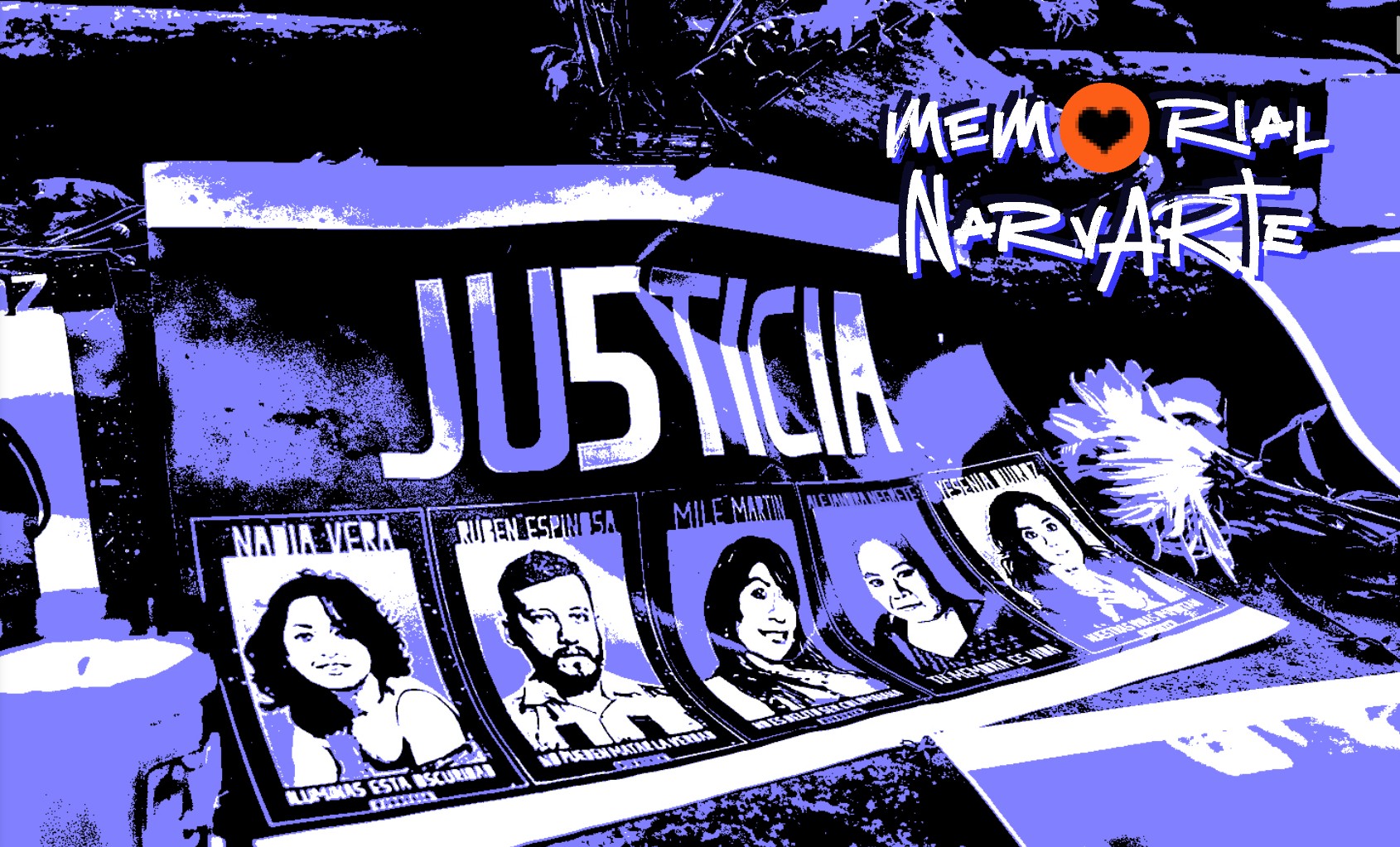
Marking 10 years since the Narvarte murders: Justice, struggle, and memory

Originally posted on It’s Going Down.

On July 31, 2015, Alejandra Negrete, Mile Martín, Nadia Vera, Rubén Espinosa and Yesenia Quiroz were murdered in an apartment in the Narvarte neighborhood of Mexico City. In the ten years since, their family members, friends, and comrades have been demanding justice and struggling to keep their memories alive. While three people have been detained for the killings, evidence ignored by the Mexico City prosecutor’s office implicates former officials of that office in the killings. It has also refused to investigate the role of the administration of Javier Duarte, former governor of Veracruz, from where Nadia, a radical activist, and Rubén, a journalist, fled fearing for their safety after receiving threats. To mark ten years, those accompanying the families in their search for truth and justice have created a digital common archive: Memorial Narvarte. Below is a text announcing the archive along with a piece by Mirtha Luz Pérez Robledo, the mother of Nadia Vera. Both were translated by Scott Campbell.


Memorial Narvarte: An Archive for the Future

Ten years after Alejandra Negrete, Mile Martín, Nadia Vera, Rubén Espinosa and Yesenia Quiroz were taken from us, we continue putting faith in collective memory.

After the multi-femicide and homicide that occurred on July 31, 2015, in an apartment at 1909 Luz Saviñón Street in the Narvarte neighborhood of Mexico City, authorities tried to create a “historical truth,” to shelve the case without considering that Nadia and Rubén fled from threats in Veracruz, and without following the different lines of investigation linked to Nadia’s activism and Rubén’s journalism. What followed would be a demand for justice in the face of criminalization, revictimization, xenophobia, and discrimination against the 5; as well as a collective demonstration of resistance and living memory.

Over the course of this decade, together with their families and allied organizations, we made space amid State neglect and abandonment. We want to continue building a dissident common sense to the hegemonic narratives regarding the recent history of our country and the acts that mark us. That is why we are building a common archive, a space of digital memory to remember them: memorialnarvarte.org.

Continue reading