
I have been thinking a lot about grief, about mourning. Unsure what to do with it, I have done nothing. I have also been working on a project about José Revueltas and came across the following piece, beautiful, if flawed, which I felt called to translate. Perhaps someone else’s words, from some other time, can do better than mine in speaking to the present moment. I don’t know. Yet here they are.
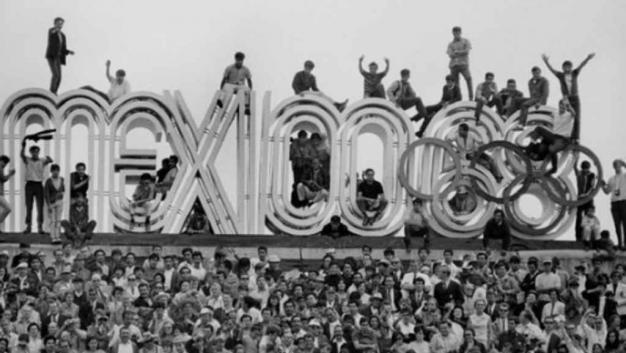
These were written in Mexico in 1968. In July of that year, a massive student movement erupted, shutting down numerous universities and bringing hundreds of thousands into the streets. A movement that was crushed with overwhelming force on October 2, when the army and a paramilitary battalion opened fire on a student gathering in the Three Cultures Plaza in Tlatelolco, Mexico City, killing hundreds.
José Revueltas, a self-taught professor at the National Autonomous University of Mexico (UNAM), was involved in the movement from the very start. An award-winning novelist and heterodox communist militant with, I propose, more anarchistic leanings than he would care to admit, Revueltas was painted by the Mexican state as the intellectual leader of the student movement. At the time that he wrote this, he was underground, moving from house to house in Mexico City. He would be arrested on November 16, 1968, charged with innumerable crimes, and become a political prisoner for the fourth time in his life, released from Lecumberri Prison as part of an amnesty in 1971. These words were initially written in his journal, then published in two outlets in 1969. They can be found in the 1978 text México 68: juventud y revolución, on pages 79-83, as Un fantasma recorre México.
A specter is haunting Mexico
By José Revueltas
Translated by Scott Campbell
I begin writing these notes in an ample room, orderly, in some house somewhere in the city, today, Tuesday, October 29. A house, a refuge of a friend who I will call Cronos. Cronos smiles with his eyes, he’s a wry and very good person. He’s left me alone to write. To write… The very act of writing is strange, uncanny. One doesn’t know what it means, what is this thing of joining together words, in a world, in an unbreathable emptiness where they all appear to have been broken and not daring to say what happened, what they mean: it’s not the horror but this emptiness, this orphanhood, so many dead that they surround us. In reality, I started making notes in the beginning of May, before the Movement. One day or another I’ll reconstruct them, in the ever-new light – new every minute, every hour – of this dizzying, changing, intangible life, where something that had an enormous or distressing importance in the moment, later appears unreal to us, dreamy, implausibly lived, as if we ourselves were our own story, our own distant tale told by other people.
“Don’t you think we’re a little supernatural? – I will say to Cronos one of these days –, that all of us, you and me and the rest, we’re supernatural?” There’s something of that in all of us, in this struggle, in this chaos which we’re in, lively and ghostly at the same time, without sleeping, lucid and dull, each one a character in their own dreams and in the dreams of the rest: it’s not just about loving one another, we also dream one another; the rest, the others, are my dream, not my reality. This is so close and so alive – and so real, so real like the young little donkey that amazed Goethe to the point of the ineffable, to the point of bringing forth tears (as he was not yet a Weimar counselor and a lively little donkey could show him life in all its fullness) –, a reality in one’s self that’s so alive and so immense that one can’t see it, such as when one is in the center of a mountain, in its breast, when one becomes a part of it.
Ur plays with an old Spanish knife, without hostility. He brandishes it in the air, infantilely, against invisible enemies, as if he were playing Indian. He laughs. Plunges it into the chest of some adversary “to test it out,” he says. No one pays attention nor says anything. We all look at his Spanish knife, the reflections it throws. This is Ur’s reality. The reality of all of us here, in this apartment, on the night of October 2, seated, lying down, bored, surrounding the telephone placed on the floor, just as if we were around a campfire, in the middle of the forest, amidst the tall trees and not at a certain height, on the fourth or fifth floor, I don’t know, suspended in the air, floating over the immense and frightening nighttime city, bathed in blood just a few hours earlier. Anthropology and other things, some book, some novel. Someone here studies anthropology. And suddenly this word, anthropology, becomes alive and terrible, it’s no longer an academic discipline: we are gathered here, waiting, surrounded by books, is all, but there’s something else. And the telephone. It’s not that we look at it: there’s something, but it’s not looking. Each of us has it placed in a corner of the eye, and it almost seems to us that it would be a weakness, a frailty of spirit to face it head on: the fire in the middle of the evening camp, the apparatus on which we all depend, attentive, with a secret feeling, without facing it, surrounded by all these anthropology books.
Ur puts away the Spanish knife, his infantile toy weapon: reality is still here, ever more supernatural. I’ll tell Cronos any day now how things were, how things are. To Cronos, with his pleasant face, wry, with his conversation full of intelligence. It was all like this is those moments; it is all like this, real and supernatural. The knife, the telephone. It will all continue being supernatural. The names that we keep hearing. We now know that Fulano, Mengano, that Rey, that Lú, that Federica also fell. We draw in our shoulders. The shoulders also draw in our rage. Damn it! Each new name, damn it! The small campfire is black, immobile, of obsidian, sculpted like a fist. We will keep hearing names. And now, who? Hirondelle has a book open on her knees, seated on the floor, back against the wall. Does she read or wait for the ring of the telephone, like all of us? Books, books, books. Culture. The first, the second, the third. The three cultures. The fourth has been this: the blood that runs in Tlatelolco, over the sacrifice stone, like before and after Zumárraga. I see Hirondelle one morning in the Medicine courtyard, at ten, at twelve, I don’t remember and she won’t either. We walk calmly, with slow steps, she inside her white lab coat. She called me to ask me about a problem: she’s pregnant; I knew about her relationship; she loves him, loves him rabidly, she loves this man, will always love him, all her life. The grass of the courtyard is blue, oh, no, pardon, it’s the sky; we walk on the sky, with slow steps, pensive, that think about their path before stepping onto each cloud. I remember the moving fatigue of Hirondelle. She’s in exams and during her free time, to help, she cares for a rich, paralyzed elderly woman in a house in Las Lomas, as a nurse. Does she read or just wait, with eyes fixed on the book, for the phone call? She runs from University City, from one bus to another, from the trolley to who knows what other vehicle. She cleans with care the excrement that remains between the creases of the elderly woman’s buttocks, her inner thigh, just like volcanic lava in the cracks of a mountain range, Copper Canyon, the Andes. We walk step by step and the orange sun of the grass bends under our feet. So incredibly thin, Hirondelle. Her large and absurd eyes. She bends over from fatigue and must enter her exam, biology, I don’t know. Biology is a science concerned with life, with cells, with tissues, with the formation of all those living beings that we are, that love and that walk in short steps through the school courtyard during one luminous and tranquil morning, seven-hundred years ago, among the pyramids and the cúes of Tlatelolco plaza, surrounded by the voices and movements of snake and toad sellers, or of those who buy fabric, or of the solemnity of the half-naked women who draw colored tattoos on thighs, or of the poor shamans and priests who offer incantations of poetry on flint or chiluca stones. But suddenly, right here, in this anthropological room, a happy storm crashes in the middle of the room. It has travelled through the walls, the door, stunned to be herself, Federica. A la bío, a la bau! She didn’t fall in Tlatelolco. False alarm. But, who has fallen here? We are all a false alarm. A false alarm from God, the massacre of the innocents. Hirondelle stops, turns, looks at me with her black, almond eyes. This is the other Hirondelle, but it doesn’t matter: she’s the same one from here. Her face brightens. “If it’s a boy, he’ll be named Fidel” (of course after our Fidel, from Cuba). Immediately she runs with her thin legs, that emerge from under the white lab coat, from one side to the other, like those of a little girl, and walks up one of the ramps to Medicine. She stops at the top and waves a hand. “And if it’s a girl?” I shout to her laughing. She hadn’t called me to tell me that she was pregnant, but that she wouldn’t have an abortion. Does she read or wait, the Hirondelle from here? Wait and think. About who? About little Fidel? Federica carries in one hand The Notebooks of Malta Laurids Brigge. She sits next to me, back also supported by the wall. Rilke. Rilke unites Federica and me. Rilke unites all the boys and girls who are in this room. All the girls and boys in the world. And this old man, me. “I would have written a lot – says Rilke –, for I would have had many thoughts, and memories of many people. But life has turned out differently, God knows why. My old furniture is rotting in a barn where I left it, and I myself, yes, my God, I don’t have a roof over my head and it is raining into my eyes.” It is Rilke, sad, angelic, loved. It is raining into all our eyes and our old family furniture, the portraits of mother or of grandfather, are there, in some shed. As if a certain melancholy wants to fall over my soul. Federica squeezes my hand with hers, Rilke in between, whose pages have closed between her fingers, between mine, between our lives. Books, books, books. It’s not that Rilke is intertwined in our hands, those of Federica and mine, of everyone’s: Rilke, César Vallejo, Baudelaire, in our hands, in our fists, against the chest. The books are us, everyone who is writing on their own skin. Tlatelolco. We’ll keep writing it: you, Hirondelle, you, Federica, and Ruperto and Carlos and Luis and Mario and Cronos. A story that will not end because others will continue writing it. María Castrejón arrives, upset, a bush shaken by anguish, she, so slight, such a child despite her 24 years, the eyes desolate. She comes from Tlatelolco. She doesn’t know anything about Juan Manuel, that other guy, her husband; they got separated; they lost one another. They ran, got swept away by women, girls, terrorized people. María is unable – or doesn’t even try – to control the tension on her face or her unknown gestures that we haven’t seen her make before. She comes from Tlatelolco. “Calm, calm, don’t let them provoke you,” shouted a CNH loudspeaker over the plaza. But what does that calm mean? An abstract invocation over the heads of a multitude driven crazy, while murderers from the Olympia Battalion, dressed as civilians and with a white glove on one hand to identify themselves to one another, fired point blank at people. The last image of Juan Manuel was that of a figure crouched behind a narrow column, amid cross fire, says María. A specter is haunting Mexico, our lives. We are Tlatelolco…
 Falling Into Incandescence