I am pleased to share that my first peer-reviewed article, “Re-visioning the university: José Revueltas and academic self-management,” has been published by the journal Radical Americas. Below is a short post contextualizing and summarizing the article that I wrote for the journal’s blog, reposted here with permission.
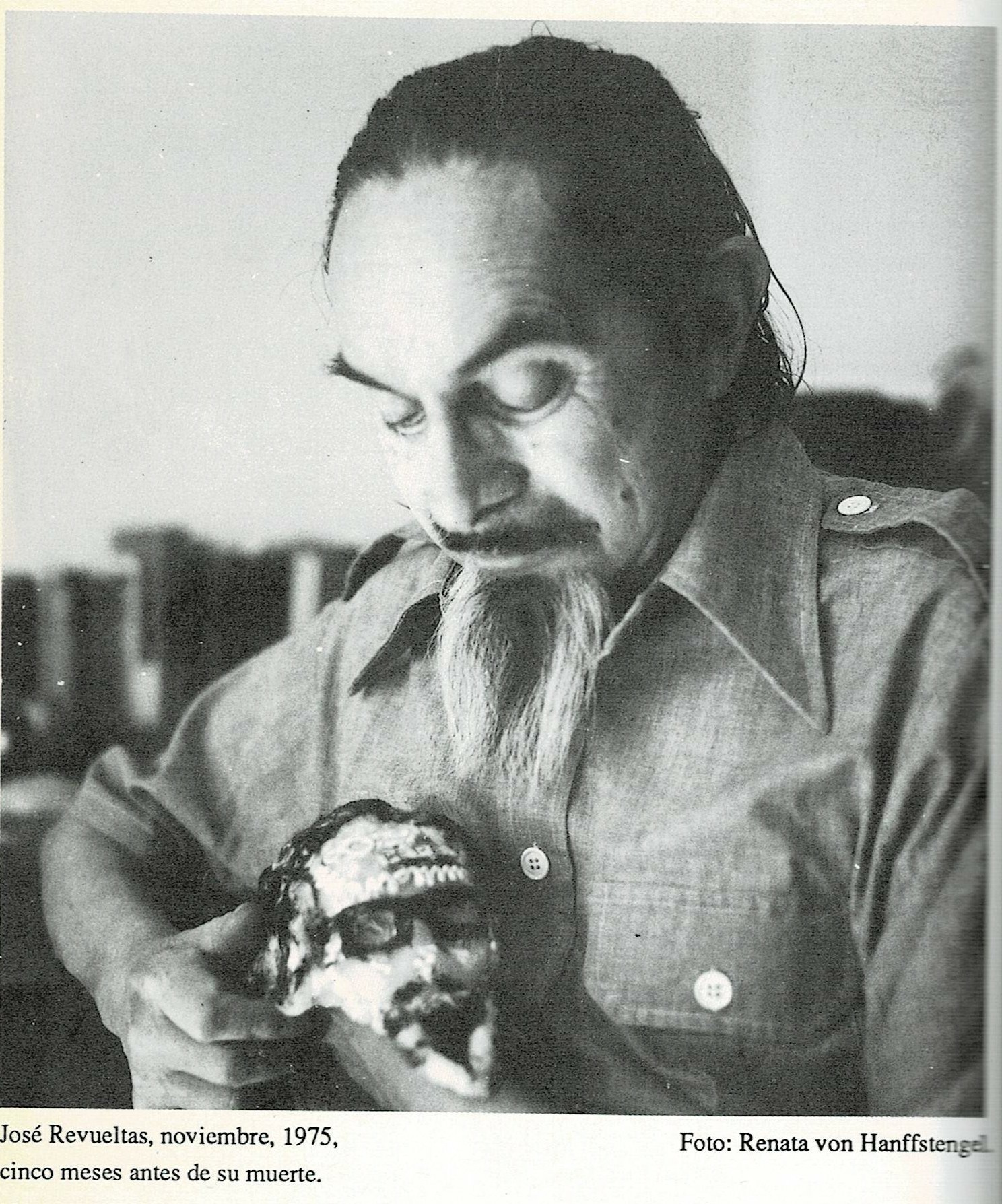
This past 14 April marked fifty years since the death of José Revueltas, a singular figure of the mid-twentieth-century Mexican left. A four-time political prisoner, a winner of the National Prize for Literature, a communist twice expelled from the Mexican Communist Party, and a self-taught university professor, Revueltas was a heterodox, flawed, contradictory but immensely committed individual in the struggle for a better world. As a student of social movements and state repression in Mexico, I was intrigued by both his fascinating biography and – with important and notable exceptions – the limited scholarly engagement his later work and theoretical contributions have received.
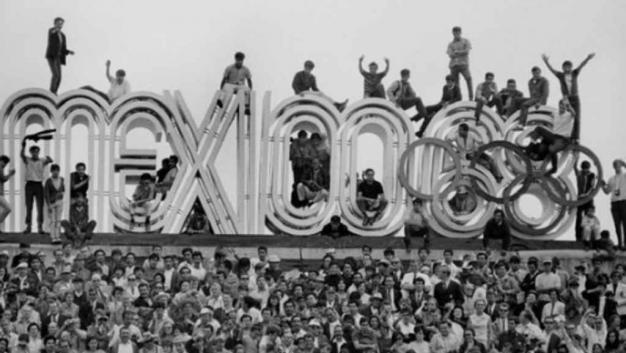
Initial drafts of this article came together as students around the United States and beyond claimed space on their campuses to demand an end to U.S. and academic complicity with Israel’s genocide in Gaza. That wave of mobilization has passed, but another will surely come. In the meantime, the university remains in crisis, caught between forces of neoliberalism and far-right reaction and the ever-present question of its role in society. Revisiting Revueltas’s theory of academic self-management as put forward during the student movement in Mexico City in 1968 thus seems apropos at this moment. I am excited to have it published as an open-access article by Radical Americas, a journal welcoming early career professionals (which I most definitely am) and dedicated to the practice of systemic critique.
As such, my article seeks to accomplish two main tasks. One is to trace Revueltas’s political trajectory over the decades, demonstrating how it evolved to criticize the means he once embraced as the framework for revolutionary change, and how this evolution coincided with the dynamics of the 1968 movement. The second is to examine the contents of his theory of academic self-management as a transformative vehicle for the restructuring of society as a whole. In his attempt to theorize and give shape and direction to a movement as it was unfolding, Revueltas argued for the subversive role of the university as space for the self-critique of the society in which it was embedded. He proposed a non-hierarchical institution collaboratively managed by faculty and students dedicated to reflexively engaging with the most pressing concerns of the country and world. His vision for academic self-management began in the university but did not end there. Instead, practices of self-management would extend to the masses, ultimately leading to a socialist Mexico predicated upon absolute freedom, democracy, and justice. While aspirational, arguably utopian, and not explicitly adopted by the student movement, Revueltas’s theory offers insights not only into his own political progression and the mobilizations of which he was a part but can serve as a point of inflection for those immersed in similar concerns today.
Re-visioning the university: José Revueltas and academic self-management by Scott Campbell (Claremont Graduate University, CA, USA) is published in Radical Americas, volume 11.