Netanyahu, the Global far-Right, and Building Solidarity with Palestine: In Conversation with Scott Campbell

Originally posted on It’s Going Down.

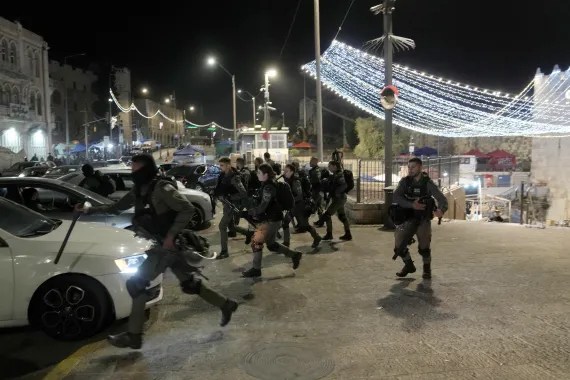
On this episode of the It’s Going Down podcast, we host a discussion with IGD contributor Scott Campbell, as we cover the current situation on the ground in Palestine, the Netanyahu government in Israel and its links to the global far-Right, the role of the US in the conflict, and what possible avenues social movements could take in the fight against apartheid and occupation.

During our discussion, Scott gives us a short history of the occupation of Palestine by the state of Israel, the political players on the ground, the role of the United States, and how Israel has worked to export its brand of ethno-nationalism and counter-insurgency around the world.

Over the course of our talk, we touch on the connections between settler-colonial regimes around the world, how we can use history as a tool to inform our struggles, and how we might go about building our capacity to act in solidarity.

More Info: Scott Campbell on Mastodon, Decolonization is Not a Metaphor, Movement Memos podcast, and Behind the 21st Century Intifada

photo: Ahmed Abu Hameeda via Unsplash

music: “Real Gaza Me Seh!” by Hanouneh ft. Promoe

A Letter to the President (of my university)

The president of the university I attend just sent out a lamentable statement to the entire school regarding the recent events in Palestine. For what it’s worth, here is my response:

Dear President Jessup,

I am sure you are receiving numerous responses to this email from a number of perspectives. Nonetheless, I feel I must contribute mine.

I understand your condemnation of the Hamas attacks. I am, however, disheartened by your failure to condemn Israel’s response to the attacks. What is happening in Gaza is more than a “humanitarian crisis,” as if it were struck by a natural disaster. Israel is carrying out war crimes, such as the forcible transfer of populations, a total siege and blockade of food, water and fuel, the use of white phosphorous, the bombings of civilian, media, and medical targets, and the killing thus far of at least 1,900 people, including 614 children.

Continue reading

Family Members Reveal New Evidence in Narvarte Multihomicide

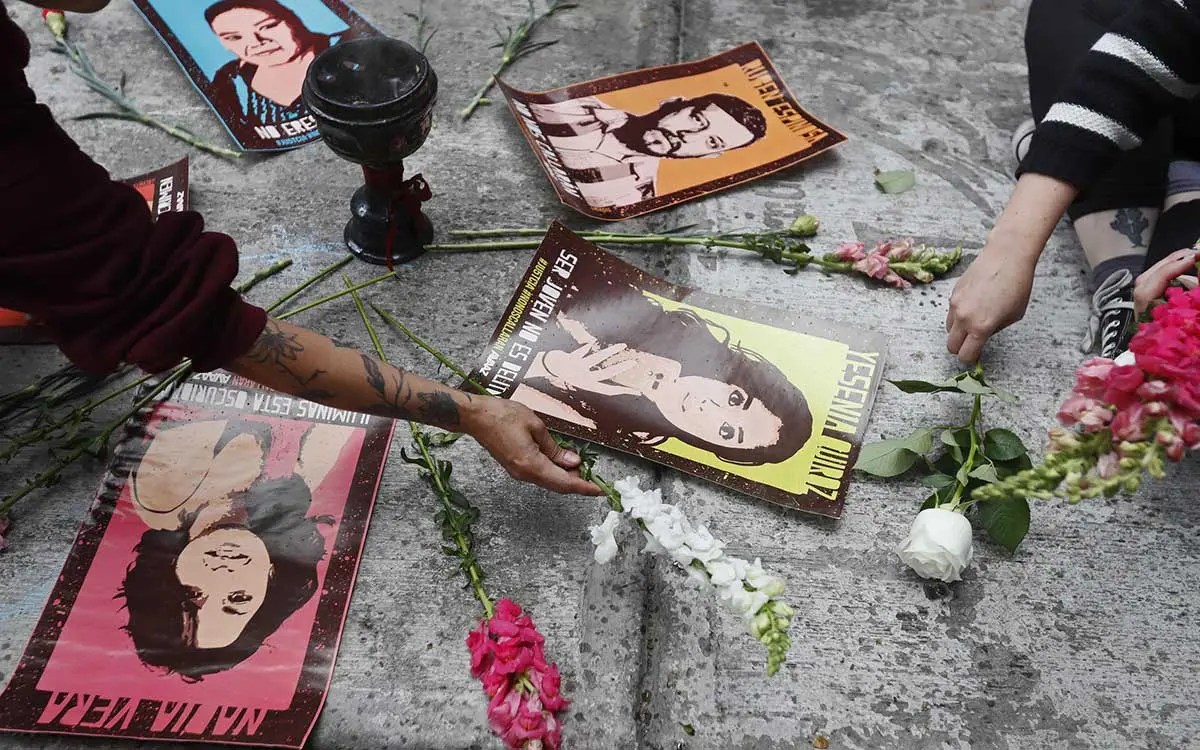
Translator’s note: Eight years ago, on July 31, 2015, Nadia Vera Pérez, Yesenia Quiroz Alfaro, Mile Virginia Martin, Alejandra Negrete Avilés, and Rubén Espinosa Becerril were murdered in an apartment in the Narvarte neighborhood of Mexico City. While three individuals have been sentenced, the identity of all those responsible, including the intellectual authors and their motives, remains unknown. Evidence points to the possible involvement of the then-government of Javier Duarte of Veracruz, as both Nadia and Rubén had fled Veracruz following threats for their work. The words of Mirtha Luz Pérez Robledo, mother of Nadia Vera, marking one year since the murder of her daughter can be found on this site here. That translation, along with an introduction, was later published in the anthology Rebellious Mourning: The Collective Work of Grief, edited by Cindy Milstein. The Narvarte killings are also the focus of the documentary In Broad Daylight: The Narvarte Case, available on Netflix. The below article discusses new information about the case brought forward this week by the family members of those killed.

By Aristegui Noticias, August 2, 2023
Translated by Scott Campbell

Patricia Espinosa, sister of photojournalist Rubén Espinosa, one of the five victims of the multihomicide in the Narvarte neighborhood in July 2015, said it was due to a statement of assets [1] that they could link Alejandro “N” [2] as being the son of an official in the Mexico City Attorney General’s Office (FGJCDMX), and that both could be related to the case.

In an interview with Aristegui en Vivo, Patricia explained that, according to police reports, they found that a cell phone associated with Alejandro “N” was located during and after the murders, and the cross-checking of information from a statement of assets identified Alejandro as the son of Luis Javier Garcia Saldaña, identified by the families as an agent of the Public Prosecutor’s Office of the FGJCDMX.

Neither of the two have been investigated, assured Patricia Espinosa.

Continue reading

Colonialism and Yaqui Resistance

Family members of ten community members of Loma de Bácum who were disappeared on July 14, 2021, hold up images of their missing loved ones.

The following is an English-language translation of a brief essay I wrote for a course I am taking called Epistemologías del Sur. As I dislike the academic practice of creating work that doesn’t go beyond the classroom, I’m publishing it here in case it might be of any use or interest. For the latest information on Fidencio Aldama and his case, see this recently published statement.

For the past several years, part of my work has been as a member of the Fidencio Aldama Support Group. A small, binational collective of individuals in what they call the United States and Mexico, we work through a variety of means to advocate for the immediate release of Yaqui political prisoner Fidencio Aldama and to support him and his family during his imprisonment. Currently serving a 14-year sentence for a homicide he did not commit, Fidencio’s incarceration is rooted in his and his community of Loma de Bácum’s steadfast resistance to the imposition of a natural gas pipeline through their territory. Echoes of the arguments put forward by the epistemologies from the South in this course can be easily identified through the lenses of Fidencio’s case and the centuries-long tradition of Yaqui resistance and self-defense.

Continue reading

Podcast on Fidencio Aldama and Miguel Peralta

On the most recent It’s Going Down podcast, a compa and I discuss the cases of Indigenous political prisoner Fidencio Aldama and politically persecuted Indigenous anarchist Miguel Peralta in so-called Mexico. We also touch on topics such as migration and neoliberal megaprojects. Have a listen here!

April Reading

I feel repetitive in noting I didn’t read as much as I’d hoped to this past month, but April was truly one for lite reading. In part, due to an overall lack of motivation and, more importantly, the precedence of a wonderful family visit. Nonetheless, a few things did get read, and for those interested, here they are.

  • Bartleby, the Scrivener: A Story of Wall Street, by Herman Melville
  • Dawn, by Octavia E. Butler
  • Not a Nation of Immigrants: Settler Colonialism, White Supremacy, and a History of Erasure and Exclusion, by Roxanne Dunbar-Ortiz
  • The City Inside, by Samit Basu
Continue reading

The raids on Al-Aqsa in context

Some quick, brief thoughts on the ongoing repression and resistance in occupied Palestine:

The consecutive brutal raids on al-Aqsa during Ramadan by the fascist government of Israel shouldn’t been seen as isolated incidents. Nearly 100 Palestinians have been killed so far this year by Israeli forces, including massacres in Jenin and Nablus. Harsher conditions have been imposed on thousands of Palestinian political prisoners. Laws from banning the flying of the Palestinian flag to allowing Israel to strip Palestinian citizens of Israel of citizenship have been passed.

Relatedly, other measures, such as the revocation of the 2005 law removing settlements from the northern West Bank, to the loosening of gun ownership regulations, to the creation of a National Guard specifically designed to target Palestinians and under the control of Kahanist Itamar Ben-Gvir, all point to a government desiring and planning for conflict and escalation as a means to continue the Zionist settler-colonial project.

Continue reading

March Reading

I blame this month’s lack of reading on the U.S. government. In particular, preparing documentation for our appointment at the U.S. embassy to obtain a Consular Report of Birth Abroad (CRBA), which perhaps I’ll write about at another time, but probably won’t. The good news is at least all that work/not-reading paid off and our little one is now a U.S. citizen.

But in between cursing profligate bureaucratic obtuseness and the absurdity of citizenship, a few books got read, along with a series of fascinating academic essays, which I’ll be sharing more about below. This month’s round-up includes:

  • Becoming an Ally to the Gender-Expansive Child: A Guide for Parents and Carers by Anna Bianchi
  • The Terraformers by Annalee Newitz
  • Gender Born, Gender Made: Raising Healthy Gender-Nonconforming Children by Diane Ehrensaft
  • The Adventures of Amina al-Sirafi by S.A. Chakraborty
  • Polarización y transfobia: Miradas críticas sobre el avance de los movimientos antitrans y antigénero en México por Julianna Neuhouser, et al.
  • Unapologetic: A Black, Queer, and Feminist Mandate for Radical Movements by Charlene Carruthers
  • The Midnight Library by Matt Haig
Continue reading

Navigating Gender in Newborns


In March of last year, we learned that my partner was pregnant. Along with the rollercoaster of emotions that entailed, we were also met with innumerable recommendations. Some of which, to my gringo ears, sounded completely bizarre, to be frank. “Don’t go out during an eclipse, or else your baby will be born with a cleft lip.” “Always wear something red to protect the baby.” “Put on a safety pin to ensure it reaches full term.”

But more than anything, as seemingly everywhere else in the world, advice and divination nearly always revolved around gender. “If your back hurts, it’s a boy.” “If you eat chiles, it’ll be a girl.” “If you don’t have much morning sickness, it’s a boy.” “If you have heartburn, it’s a girl.” The guessing game of gender seemed never ending and always pointing toward different conclusions, along with the constant questioning of what we, the parents, wanted: a girl or a boy.

Finally, about three months into the pregnancy, the obstetrician could make an “educated guess” that we were going to have a boy. Amount of chiles being eaten or not, this guess was later confirmed by subsequent ultrasounds. I wish I could say that my response was one of disinterest. Rather it was one of both joy at the thought of having a son, accompanied by the worry of knowing too many men (along with myself) and hoping my son wouldn’t be like them. But a third thought pervaded my thinking and continues to prod at me to this day: what does it even mean that this child is a boy?

Continue reading

February Reading

Another month gone and some more books read. Why not share? Building off the epically popular “January Reading” post, clicked on by an entire 11 people who weren’t me, I’ve decided to expand the Internet a bit and add a post for February’s books.

As a result of life circumstances, I didn’t get as much reading done as I was hoping to this month, though some books definitely gave me a lot to talk about. How about you? What have you been reading? As for myself, here are the texts this post will be talking about:

  • Foundation and Earth by Isaac Asimov
  • The Keeper’s Six by Kate Elliott
  • The Visit by Chimamanda Ngozi Adichie
  • King Leopold’s Ghost: A Story of Greed, Terror, and Heroism in Colonial Africa by Adam Hochschild
  • Radon Journal Issue 2
  • Sustainable Superabundance: A Universal Transhumanist Invitation by David W. Wood
  • The Actual Star: A Novel by Monica Byrne
  • The Idea of the World: A Multi-Disciplinary Argument for the Mental Nature of Reality by Bernardo Kastrup
Continue reading