Mexico: State Terrorism As Governance

Originally posted on El Enemigo Común. Esta nota también está disponible en español.
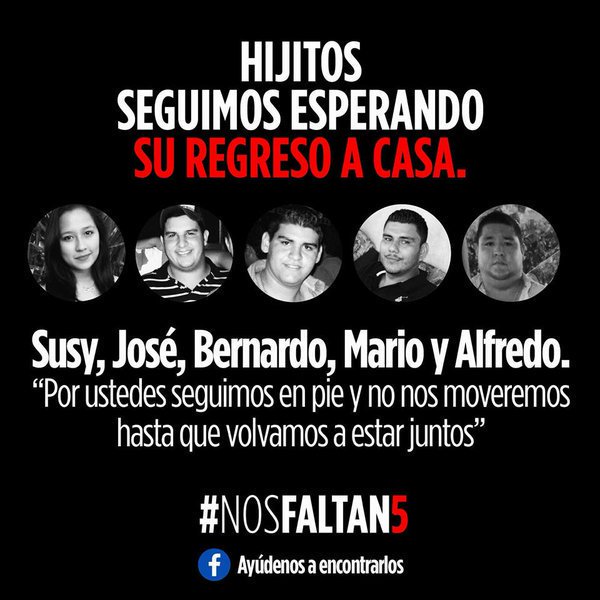
nos-faltan5-veracruzOn January 11, five young people returning home from a weekend birthday gathering were detained by police in Tierra Blanca, Veracruz, Mexico, where they had stopped to get something to eat. Susana Tapia Garibo, 16; José Benítez de la O, 24; Mario Orozco Sánchez, 27; José Alfredo González Díaz, 25; and Bernardo Benítez Arróniz, 25, can be seen on surveillance footage being taken into custody by members of the Veracruz State Police. Following their detention, nothing more was heard of them until Monday, February 8, when the burned remains of two of them, José Alfredo González Díaz and Bernardo Benítez Arróniz, were found on a ranch in Tlalixcoyan, 40 miles from Tierra Blanca.

Prior to finding the bodies, several members of the State Police were arrested, including Marcos Conde Hernández, the district chief for the area including Tierra Blanca. According to the government version, the police handed the youth over to the Cartel Jalisco Nueva Generación, some of whose members have also been detained.
Continue reading

Oaxaca, the fight for the air

Originally posted on El Enemigo Común

radio-oaxacaBy Jaime Quintana Guerrero
January 20, 2016
Desinformémonos
Translated by Scott Campbell

Bi, in the Binnizaá or Zapotec language, means “air”, means “spirit.” “For us, air not only represents life, it also carries loved ones who have died. When one dies, their spirit becomes air and returns to the people.”

The struggles against the wind farms that abound throughout the state also, then, contain this element: “They want to change the path of the wind, of the air, of our spirits, of our loved ones.”

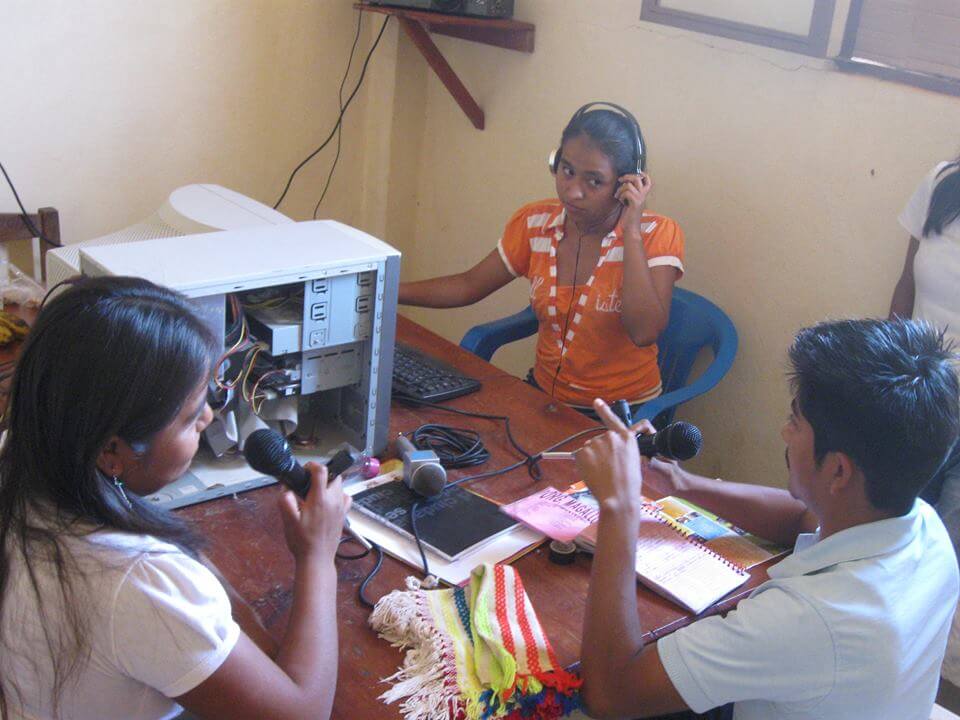
Carlos Martínez Fuentes, a member of Radio Totopo in Juchitán, Oaxaca, is the one who explained the above. Radio Totopo, with its nine years transmitting together with the spirits in the air, also belongs to the Popular Assembly of the Juchitecan People.

The emergence of the radio was a result of sheer necessity. On the one hand, as a tool in the resistance struggle to Plan Puebla Panama, which includes the wind farm system being put into place between those two locations.

As well, because the tradition of the indigenous peoples of Oaxaca (as with most) is oral. The radio fits perfectly, then. “In Oaxaca, 16 different languages are spoken. The indigenous oral tradition is the key reason behind the existence of community radio stations and community assemblies, their main supporters,” explains José Juan Cárdenas, member of the Integral Community Communication organization.

Continue reading

The Zapatistas and consciousness

Compañera Lizbeth reads her statement.

Compañera Lizbeth reads her statement.

The other day I was reading statements made by Zapatista women at the “Critical Thought Versus the Capitalist Hydra” seminar organized by the Zapatistas in May. In her remarks, compañera Lizbeth said:

“We are going to explain a little bit of how we have been living and doing our autonomous work after the 1994 armed uprising. We as Zapatista youth today, we are no longer familiar with the overseer, with the landowner, with the hacienda boss, much less with El Amate [a prison in Chiapas]; we do not know what it is to go to the official municipal presidents so that they can resolve our problems.”

That same day I was reading a book on the work of Carl Jung, in particular about individuation and synchronicity. I’m not going to pretend to know much about either of those things, however I do know they have to do with the development of consciousness, and how, if what he postulates is correct, the places we can reach through our consciousness are much more profound than where most of us currently are.

This led me to wonder what the difference is, if any, between the consciousness of someone born and raised in Zapatista territory after 1994, like Lizbeth, and someone born and raised under the previous system, before 1994? I believe there would be a difference, and this is the beginning of attempting to answer my own question.

Continue reading

Elections in Mexico: Close the streets, open the way

A bus serves as a barricade in the historic city center of Oaxaca.

A bus serves as a barricade in the historic city center of Oaxaca.

On Sunday, June 7, midterm elections were held in Mexico. Well, the state attempted to hold elections. As it turns out, the people of Mexico weren’t having it. A vast majority – 71 percent in a poll I saw – did not believe that the elections would be fair. With rampant vote-buying, candidates with documented links to cartels, party-affiliated candidates running as independents, political assassinations, and an ongoing climate of impunity, massacres, terror and voracious capitalism, not many are enthusiastic about the direction Mexico is going in.

As well, the family members of the 43 disappeared students from Ayotzinapa Teaching School in Guerrero called for the elections to be boycotted unless the students were returned alive. Their argument being that a government which murders and disappears students, then criminalizes those demanding their return, and has known links to drug cartels is not to be trusted nor is capable of holding free and fair elections. The CNTE, the more militant wing of the national teachers union, joined onto the call, furious – among other things – with government moves to privatize education and introduce standardization and quotas.

The call to boycott elections turned into efforts to impede the elections from happening. Over the past week, especially in the southern rural, indigenous and poor states of Guerrero, Oaxaca and Chiapas, teachers and their supporters seized National Electoral Institute (INE) offices, burning voter rolls and hundreds of thousands of ballots. In Oaxaca, teachers also blockaded the airport and seized an oil refinery and gas stations around the state, dispensing gas for free.

Continue reading

We walk together with you!

Originally posted on El Enemigo Común.

miguel-angel-peralta-betanzos

Last April 30, Miguel Ángel Peralta, a member of the Community Assembly of Eloxochitlán de Flores Magón, Oaxaca, was arrested at his workplace in Mexico City by plainclothes agents without an arrest warrant. He was held incommunicado for 20 hours before being presented at the Tlaxiaco prison in the state of Oaxaca. On the ride down, he was beaten and threatened.

Since 2010, Miguel has struggled alongside other members of the Community Assembly against the imposition of the illegitimate Mayor Manuel Zepeda Cortes, who rejected the council members elected according to traditions and customs and set up his own government, bringing a reign of terror, plunder and injustice to Eloxochitlan.

On August 10 2012, Miguel’s father Pedro Peralta was kidnapped, tortured, seriously wounded and locked up in the Cuicatlán prison, where he is still held as a political prisoner for having struggled against the tyranny of the Zepeda Cortés regime.

Miguel and 34 other comrades are charged with the deaths of two people who died in a confrontation on December 14, 2014, between Assembly members and followers of ex Mayor Manuel Zepeda Cortes in Eloxochitlán. Six comrades received bullet wounds in the fray. Eight of the 34 have been arrested and are now unjustly held in the Ixcotel prison, just outside Oaxaca City. Miguel and two other comrades are being held in a 2 x 2 meter punishment cell in Tlaxiaco. On the 20th day of his imprisonment, he wrote the following letter:

Continue reading

Ayotzinapa: Learn in order to teach

Originally posted on El Enemigo Común.

By Débora Poo Soto
Translated by Scott Campbell
[Spanish original]
May 15, 2015

Ayotzinapa is…

For some; everything, their only option, their best chance, a house, a family, is learning:

They give you, what, food, a bedroom – that’s the room to rest in – the three meals, so for me it means: this Normal [teaching college] is everything. Here there is everything, I have everything […]

They teach you to be humble, here they teach you what is…more than anything the humility to talk with the people, to be sensitive, to respect them, since in this normal they teach you what values are, they teach us to live together with the people and also here they really instill in us to work with the people, with poor people, peasants […].*

Means sharing: the sleepless nights, the tears and happiness, the dreams. It brings with it responsibility, a lot of work and effort in order to get here, in order to enter and to stay.

Continue reading