January Reading

For those who don’t know, one thing I love to do is read. And while the Occidental calendar of months and years are rather arbitrary, one thing I have started doing in 2023 is writing brief reviews of what I’ve been reading and sharing them on a couple social media sites. I figured I might as well share them here as well. Instead of publishing each review as its own post, I’ve decided to just do a one-off round-up of every book I’ve read this month. I have no idea if this will be a regular feature of the blog, we’ll see what next month brings.

A major reason for doing this is that along with reading books, I love talking about books. So if you’ve got thoughts on any of the books or reviews below, or have your own recommendations, please do share! I’m always looking for new reads to add to my list.

Here’s a list of the books reviewed in this post:

  • Foundation’s Edge by Isaac Asimov
  • Critique of Black Reason by Achille Mbembe
  • The Intuitionist by Colson Whitehead
  • A Map to the Door of No Return: Notes to Belonging by Dionne Brand
  • Home: Habitat, Range, Niche, Territory by Martha Wells
  • The Memory Librarian: And Other Stories of Dirty Computer by Janelle Monáe
  • Ontological Terror: Blackness, Nihilism, and Emancipation by Calvin L. Warren
  • Machinehood by S.B. Divya
  • Cannibal Metaphysics by Eduardo Viveiros de Castro
Continue reading

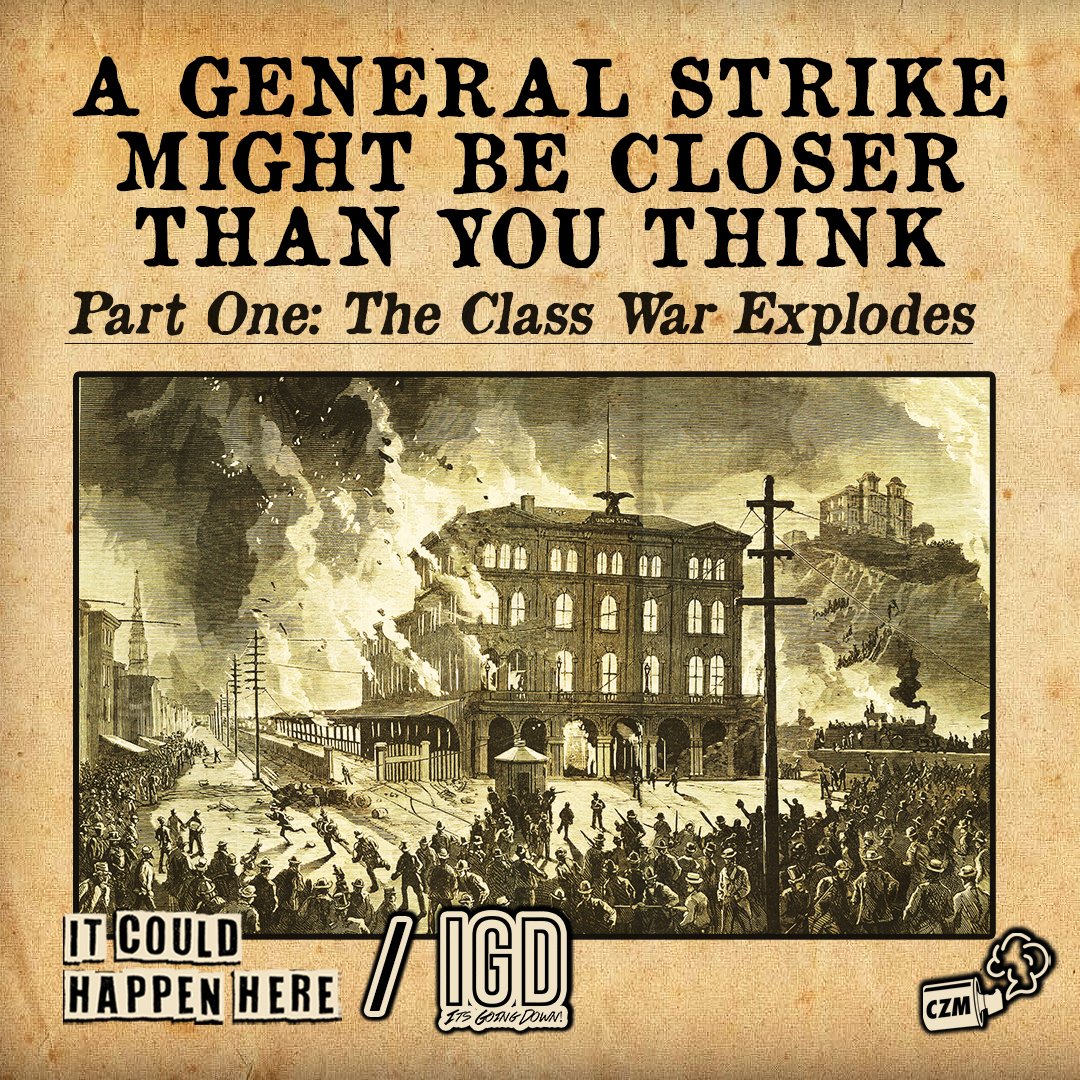
Interview on Occupy Oakland and its General Strike

It’s Going Down is in the midst of a brief (mutually agreed upon) takeover of the popular podcast It Could Happen Here. Alongside journalist Kim Kelly and labor organizer Tova, I joined their second episode on general strikes to discuss the history and my experiences at Occupy Oakland and in particular the general strike that occurred on November 2, 2011, when 100,000 people shut down the port of Oakland.

You can listen below or here.

Encounters with Complimentary Racism

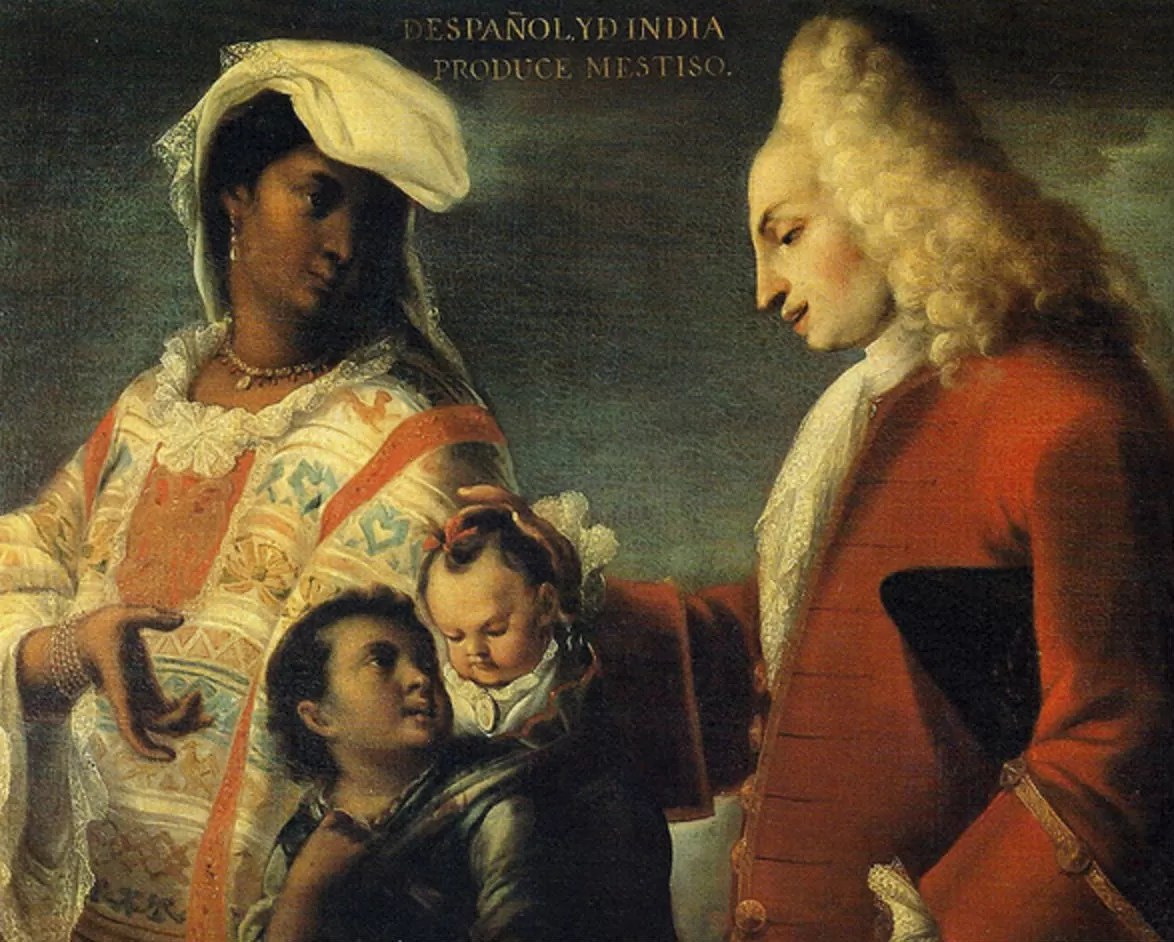
Spaniard and Indian Produce a Mestizo by Juan Rodríguez Juárez, 1715

Near the end of last year, I became a father. As expected, it’s been full of ups and downs, joys and frustrations, precious moments and sleepless nights. But one thing I didn’t expect to encounter was racism. More specifically, racism in the guise of compliments.

My partner is Mexican and currently we are living here as we wait an eternity for the US immigration system to process her visa request. During this time, we’ve been inundated by visits from her family members and friends. And I’ve been consistently taken aback by how many have pointed out the color of our child’s skin and complimented us on it – as if we somehow genetically modified our baby to meet their racialized expectations. “How light-skinned he is!” or “Oh, what a good color! Congratulations!” are some of the more frequent comments.

To be certain, our child is light-skinned and at this moment can easily pass as white. But the phenomenon of an individual telling my partner that she had “chosen well” by reproducing with me and as a result was “improving the race” was not a response we had been anticipating. Nor the other range of comments, such as our child being smart because “first-world babies are more advanced.” One wonders what words would have been (un)spoken if our child had different skin pigmentation.

Continue reading

Alchemical Speculative Placemaking

If you’ve visited this site in the past year and a half or so, you may have noticed the password-protected “Alchemical Speculative Placemaking” tab at the top. This post is to announce that, for what it’s worth, I’ve decided to make it open access and welcome you to check it out if you’re interested.

The story behind it is that it was initially a project for a course I took in Spring 2021. It needed a home online, I had a website, so I put it here. It was posted in February of that year and has not been updated since. Changes to WordPress mean some features no longer display as they originally did, but the pages are still navigable.

At first glance, it likely appears to be more esoteric and personal than the usual (albeit sporadic) content on this site. That, in fact, is what led me to keep it closed off behind a password for so long. However, I believe that ultimately it resonates with the beliefs, strivings, views and politics expressed here in other pieces. It is simply taking a different avenue to develop and articulate them. An avenue that I feel is crucial for fully embodied and integral individual and communal liberation. For others, that avenue may not take the shape of alchemy – which is simply a metaphor for deeper processes – but will likely contain many of the same facets.

As there are more words of introduction on the actual page, I’ll leave it here. Thank you for taking the time to have a look, and as always, I welcome your feedback!

Polyvalent Power: A Review of the “Power” Issue of “Perspectives on Anarchist Theory”

Originally published on It’s Going Down.

“A Love Supreme,” by Erin Bree of Gallery of the Streets, from issue 32 of Perspectives on Anarchist Theory.

During the height of the movement against neoliberal globalization in the U.S., numerous chants and sayings emerged or were resuscitated, such as, “This is what democracy looks like” or “The whole world is watching.” Fortunately, along with the phenomenon of summit-hopping itself, these utterances have largely fallen into disuse. A particularly nonsensical saying from that moment was “Speaking truth to power.” First coined by Bayard Rustin for a pamphlet he co-wrote in 1955, called Speaking Truth to Power: A Quaker Search for an Alternative to Violence, the notion has been rightfully critiqued by the likes of Noam Chomsky, who stated, “power knows the truth already, and is busy concealing it.”[1] Yet even this does not go far enough, as it maintains the presumption latent in the slogan that there exists a binary between those with power and those without it, or that power as such is a thing one can speak to.

Theorists from Spinoza to Gramsci to Foucault have attempted to wrestle with the question of what power is, arriving at no agreement aside from the fact that power is no one thing. In this sense, power can be understood as being “overdetermined,” a Freudian concept appropriated by Marxist theorists which, as explained by Stuart Hall, allows that “an idea, a symptom, or a dream symbol can itself be the condensation of a set of different chains of meaning, which are not manifest in the way in which the symbol is given.…One has to conceive of it as overdetermined; that is, the same symbol can be determined at different levels, by different kinds of discourses.”[2] The exploration of this discursive malleability of power, as well as the capacity of power to reify certain discourses, is at the heart of the most recent edition of Perspectives on Anarchist Theory, volume number 32, published in May of this year by the Institute for Anarchist Studies and oriented around the theme of “Power.”

Continue reading

Things We Aren’t Supposed to Talk About

Thanks for being real, Jarad. RIP.

Content Warning: Includes discussion of self harm and suicide.

For T, J, T, R, and E

I have the annoying habit of smiling all the time. It’s a defense mechanism. It is meant to make someone like me, to appear friendly, amiable and amenable, and to wordlessly deflect any inquiry into my mood or state-of-being. It’s designed to pacify, to make one not worry about me. It began in childhood and is now reflexive. It takes conscious effort, active thought, and muscle manipulation to not smile. For decades I have heard about my “beautiful smile” and how “Scott is always smiling.”

As related to me by my parents, once I was able to crawl, when I had to cry, I would crawl into an empty room to do it, so as not to bother anyone. Though I can now walk, I still do that today. Smile all the way into the empty room, or car, or bathroom floor, until I can weep freely. Though even that’s not true: I try to avoid making too much noise so as not to attract attention.

Continue reading

Note from a moment

January 1, 2021

I’m not one to give the new year much significance. It seems an imposed and arbitrary marker. While reflection upon the Earth completing one orbit around the sun does contain an offering of awe, there is no need for a churchly calendar to determine when that happens. And as with all events that once commemorated and reaffirmed the human’s place among the natural, spiritual, and cosmological, the new year has been emptied and rendered into spectacle. Now it is more a reminder of the severing of our beings from that which we co-created over millennia and has been ensnared in a system that demands forgetting, produces oblivion, and sells it in the name of progress.

It rained earlier this week for the first time in months. Heavy and steady. From where I sit, the nearby peaks are coated in snow. The sky is clear; the air is crisp and juniper scented; the birds flit and chatter among the trees. Not long ago, those peaks weren’t visible, as the air was thick with the smoke of numerous fires, and the only rain that fell was ash. While dates are ultimately circumstantial, today carries a feel of cleansing or reprieve from a year engulfed by flames, fears, breathlessness, and losses.

Continue reading

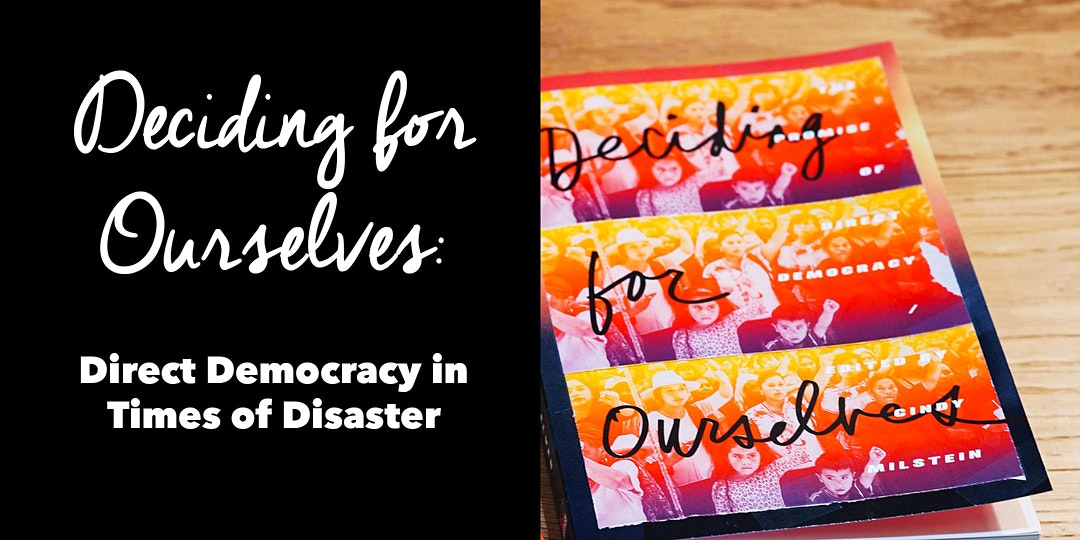
May 9: “Deciding For Ourselves: Direct Democracy in Times of Disaster” Online Panel

Last month, the anthology Deciding for Ourselves: The Promise of Direct Democracy was published by AK Press. As part of #RadicalMay, an multilingual series of online events organized by the recently formed Radical Publishers Alliance, editor Cindy Milstein and contributors Dilar Dirik, Asbjørn Nielsen, and I will participate in the online panel “Deciding For Ourselves: Direct Democracy in Times of Disaster” on Saturday, May 9 at 3pm EDT/12pm PDT.

You can register and read more about it here. It is free, but any donations will go to Mutual Aid Disaster Relief. From the event listing:

In this time of coronavirus-related disaster, people everywhere are looking for solutions. It’s clear that neither governments nor the capitalist economy can provide them. In almost every respect that matters, we’ll have to deal with this mess on our own. But how?

A better world through self-determination and self-governance is not only achievable. It was already happening before this pandemic, in urban and rural communities around the world as an implicit or explicit replacement for hierarchical social control. In this panel discussion, participants in such projects will share their insights and lessons, applying them to the situation we’re facing today. Diverse forms of direct democracy offer us not only a way to organize in times of crisis but also the best chance of creating the worlds we dream about, because they allow us to determine together, dynamically over time, what we need and want in our own distinctive contexts. Let’s build and dream together!

The Haunting Gaze of the Pandemic

Also reposted on Gods & Radicals Press

Sleep comes fitfully if at all anymore. In this I know I am not alone. At their due hour, the yawns, lethargy, and drooping eyelids make their appearances. Yet slumber comes not. Pills of concoctions both chemical and herbal are consumed in conjunction with pleas to Hypnos. But to no avail. Unlike past episodes of sleeplessness, there are no fiercely ruminating thoughts. Oddly, the mind is relatively quiet. All the same, consciousness will not abate. As I lie amidst the passing hours, a restless presencing inhibits the transition to sleep. Invading both body and mind, but perhaps most powerfully agitating the soul, it seems best described as a haunting.

Contemplating this experience, I’m drawn to a passage in Memories, Dreams, Reflections, where Carl Jung recalls the events immediately precipitating his writing of the gnostic Seven Sermons to the Dead:

It began with a restlessness, but I did not know what it meant or what “they” wanted of me. There was an ominous atmosphere all around me. I had the strange feeling that the air was filled with ghostly entities. Then it was as if my house began to be haunted…. The whole house was filled as if there were a crowd present, crammed full of spirits. They were packed deep right up to the door, and the air was so thick it was scarcely possible to breathe.

Continue reading

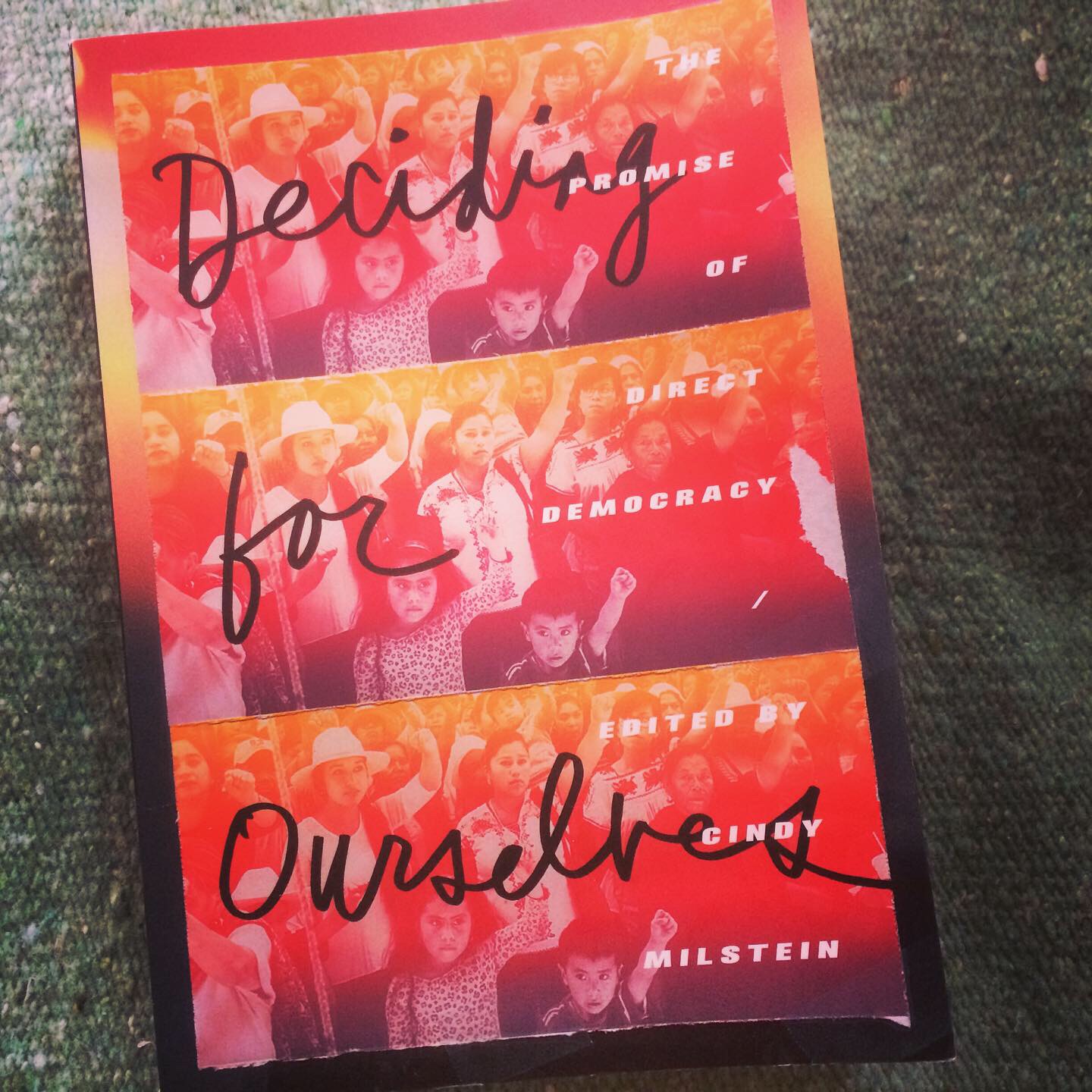
Out Now: “Deciding for Ourselves: The Promise of Direct Democracy”

While it emerges in the midst of tragic and difficult circumstances, I am excited for the release of the anthology Deciding for Ourselves: The Promise of Direct Democracy, edited by Cindy Milstein and to which I contributed the chapter “The Bonfires of Autonomy in Cherán.” As we make our way through this time of loss and uncertainty and begin to think about what comes next, I hope it may offer some insight and inspiration.

It’s now available for a short time on a “Pay What You Can” basis from AK Press.

As the book description reads, “A better world through self-determination and self-governance is not only achievable. It is already happening in urban and rural communities around the world.” This is what Deciding for Ourselves dives into, a theme that couldn’t feel more pressing and necessary.

My contribution looks at the indigenous P’urhépecha municipality of Cherán, located in Michoacán, Mexico. For the past nine years, Cherán has operated under a form of autonomous communal government after a popular uprising removed cartels, local police, politicians and political parties from the area. While the story of the rebellion and its immediate aftermath have been well documented, the chapter takes an in-depth look at how the communal government functions and meets the daily needs of Cherán’s residents, why the government took the form that it did, and how life has changed and is experienced in a place where community and government are woven into a shared communal fabric.

If mutual aid, solidarity, autonomy, self-determination and collective liberation are ideas that interest or resonate with you, this book is worth picking up. And at up to 75% off, it’s a great deal that also helps support an independent radical publisher.