Zines for these times

Photos courtesy of Cindy Barukh Milstein

9/13/25 Update: Another zine from Cindy has been published that also includes a contribution by me. Check out The Heart is a Muscle: 19 Embodiments of Antifascist Grief here.

How to make sense of this moment, survive and resist in this moment, and hold ourselves and one another up during this moment are all important and pressing concerns to many of us. Over the past several months, dear comrade Cindy Barukh Milstein (Mastodon; Instagram) has been editing and crafting zine-based interventions that speak directly to those matters.

At their kind invitation, I have had the honor of submitting short pieces to two of them. Rather than excising my own words from their context and placing them alone here, I wanted to encourage those who are interested to explore the two zines – and others! – in their entirety.

The first is Anarchist Compass: 29 Offerings for Navigating Christofascism. As Cindy writes, this zine is “an act of love and solidarity. It is intended for everyone who sees themselves on the side of antifascism, including those who’ve newly had their eyes opened. It’s especially dedicated to those who, in myriad ways, rebelliously, collectively, and bravely care for each other.”

The second is Everyday Antifascism: 14 Ways that Solidarity Keeps Us Safer. Again, Cindy states, “This zine does not offer sugarcoated ‘hope’ to somehow smooth over these utterly distasteful times. Yet I believe strongly in cracks in the edifice of hierarchical power and the promise they hold, and that there are always cracks even under the worst conditions. This zine, then, is a small sampler of acts of solidarity that just might keep us safer under fascism in order to get more of us to the other side, toward a world without fascism.”

While you’re clicking on links, here are two more with zines that Cindy has curated recently: Don’t Just Do Nothing: 20 Things You Can Do to Counter Fascism and Ritual as Resistance: 18 Stories of Defending the Sacred.

Enjoy! And remember to share!

Manifesto of the Feminist Anti-Carceral Network of Latin America

Originally published on It’s Going Down.

The following manifesto documents the formation, organization, politics, and methodologies of the Feminist Anti-Carceral Network of Latin America. Originally published in Spanish on Desinformémonos, it was translated by Scott Campbell.

Faced with the globalization of patriarchal and racist capitalism’s fascist project of death, which has used penal states to criminalize poor and racialized populations, to destroy their communal fabric, and to enable the dispossession of their resources and territories, we decided to join our struggles and strategies of resistance together with the creation in 2020 of the Feminist Anti-Carceral Network of Latin America. While our primary spaces of resistance and community building are the women’s prisons of the continent, our struggle is against the patriarchal penal States that function at the service of capital and that have historically used the force of law to facilitate and justify the exploitation and control of impoverished and racialized populations.

Although this politics of death was already being confronted locally by our organizations, it was in the context of the health and humanitarian crisis caused by the SARS COV 2 virus that we decided to unite our struggles. The pandemic revealed how the preexisting conditions of vulnerability and violence had differentiated and disproportionate impacts on certain groups, profoundly affecting women deprived of freedom. COVID 19 made plain the carceral crisis that has existed in Latin America for several decades, which our organizations have been denouncing. The overcrowded conditions, the lack of health services, the punitive nature of the prison systems, the long pretrial detention processes, the lack of alternatives to incarceration all exploded in the face of the health crisis. This context gave us the possibility of not only making carceral violence visible, but to document and show how prisons are part of a broader apparatus of death that destroys communal fabrics and facilitates dispossession and the advance of capital. Although each of our organizations carries out its work in different territories, under the control of different penal States, the violences we face have many similarities and come together in a civilizing project of death marked by militarism, of which prisons are one more link.

Continue reading

Afropessimism and Palestinian Liberation: An Essay

In October 2023, at the beginning of an ever-escalating genocide against the Palestinian population of Gaza, I wrote some rambling, rather perfunctory, thoughts on Afropessimism and Palestinian Liberation. I have since attempted to elaborate my thinking into a more structured argument, the result of which is the below essay. Declined for publication by several academic journals, I have decided to post it here, unsure of its merits but hoping amidst the words there may be a useful contribution to the conceptualizations of our collective struggles for liberation and the centrality of the Palestinian cause. I welcome feedback, critical or otherwise. As it is a lengthy essay, I have also made it available as a PDF.

Abstract: This paper draws upon Black feminist theory and Afropessimism to interrogate Palestinian demands for liberation. In doing so, it figures Zionism as a project of modernity and evaluates its epistemology through Sylvia Wynter’s formulation of the “genre of Man.” Subsequently, it picks up Afropessimism’s extension of Wynter’s thought to critique the ontology of the Human. As Zionism, a modern endeavor, knows itself through the othering of Palestinians, an Afropessimistic reading of Palestinian demands is examined. It is argued that Palestinian liberation is an impossibility in the current ordering of knowledge and being, demanding the end of the Human and this world.

In the face of genocide, the question of Palestinian liberation has never been more salient. Yet what liberation looks like and how to obtain it is a matter of debate. Formations such as the Palestine Liberation Organization and the Palestinian National Authority have accepted a two-state solution framework that would see a State of Palestine established alongside the State of Israel. Others have called for one binational state, where Israelis and Palestinians would live side by side under a secular, democratic government.[1] For its part, Palestinian civil society has focused less on a specific solution and more on the implementation of rights guaranteed under international law. This approach can be seen in the 2005 call for Boycott, Divestment, and Sanctions against Israel, which demands an end to the Israeli occupation of Palestinian territory, equal rights for Palestinian citizens of Israel, and the right to return for Palestinian refugees.[2] In a similar manner, scholars such as Rashid Khalidi have called for a focus on the inequality present in the Zionist project, proposing that a just solution in Palestine should be premised on equal rights for all inhabitants of the region: “Absolute equality of human, personal, civil, political, and national rights must be enshrined in whatever future scheme is ultimately accepted by the two societies. This is a high-sounding recommendation, but nothing else will address the core of the problem, nor will it be sustainable and lasting.”[3]

On the surface, appeals to equality and international law hold a certain resonance. They are aspirational yet practical, fitting within the current discourse regarding the fair and just organization of societies. At the same time, such approaches are hindered by unquestioned assumptions regarding the origins and intentions of constructs such as equality and international law, as well as the possibility of obtaining true or absolute justice within the current world paradigm. This paper argues that the present ontological and epistemological foundations of human being in this world – on which claims to equality or international law are based – impede the realization of Palestinian liberation. It posits that Palestinian freedom necessitates the creation of new worlds and, rather than the legislating of equality, the jettisoning of constructs such as modernity and the Human.

To make its case, this paper will place questions of Palestinian liberation into conversation with Black feminist thought and Afropessimism. It will first demonstrate the Zionist project to be one firmly rooted in modernity and loyalty to whiteness. Subsequently, it will draw upon the critiques of modernity formulated by Black feminist theorists, primarily Sylvia Wynter, arriving at a problematization of Man, or the current supremacy of the white, Western bourgeois male. Afropessimism will extend Wynter’s judgment of Man to encompass that of the Human, showing that Humanity itself is contingent upon anti-Blackness. Having troubled the construct of the Human, this paper will apply an Afropessimistic reading to Palestinian liberation, asking if total freedom means destruction of the Human, and Palestinians have been rendered as not-Human by Zionism, how can Afropessimism inform Palestinian liberation? I argue that Afropessimism not only assists in descriptively generating a theoretical reading of the Palestinian plight as the anti-modern Other, but also can prescriptively aid in conceptualizing resistance. My culminating argument, as mentioned above and built off the frameworks offered by Afropessimism and the Black feminist theory from which it emerged, is that true Palestinian liberation necessitates the end of modernity, the Human, and therefore, this world.

Continue reading

Marco Antonio Suástegui: The Warrior Lineage of the Yopes

Originally published on It’s Going Down.

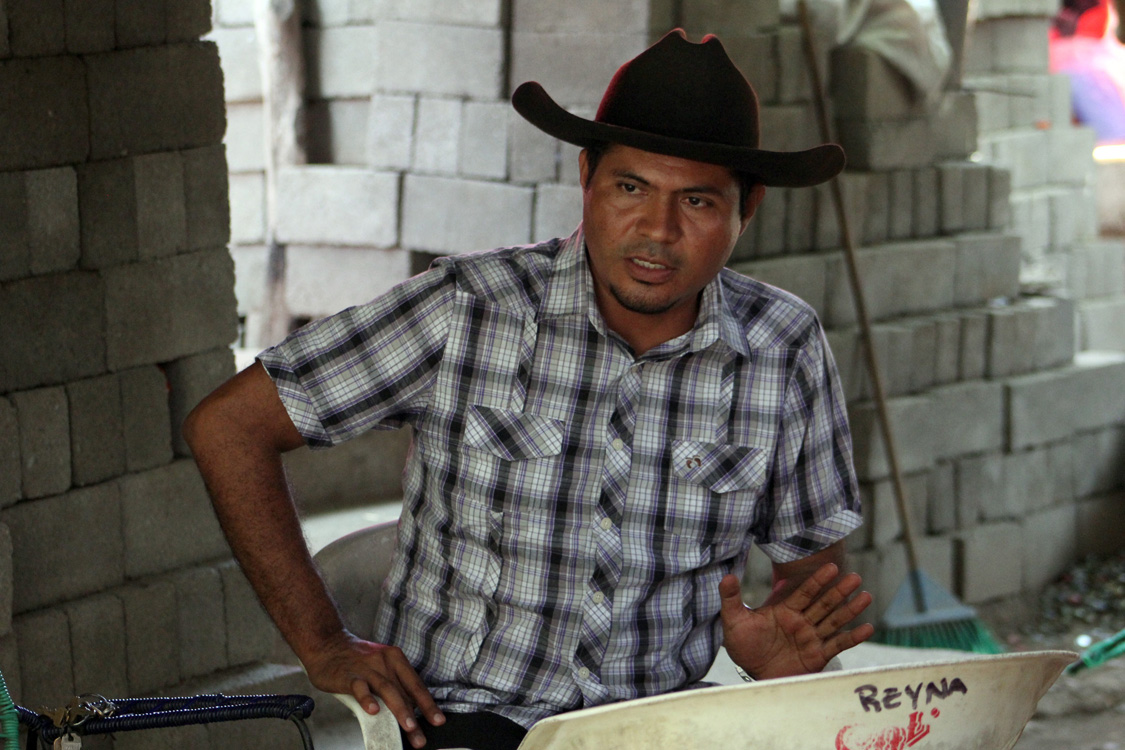
The following article by Vidulfo Rosales Sierra, translated by Scott Campbell, pays tribute to Marco Antonio Suástegui, a longtime and well-respected community organizer in Guerrero, Mexico, who played a key role in the defeat of the neoliberal La Parota dam project. He was targeted by a gunman and shot eight times on April 18, passing away on April 25.

Marco Antonio Suástegui Muñoz, son of Pedro Suástegui Valeriano and Noelia Muñoz Rodríguez, campesinos from La Parota. The Suásteguis are the founders of the communal nucleus of Cacahuatepec, they and other families fought for the creation of communally held property. Later, other leaders would be coopted by the PRI members of the National Campesino Confederation (CNC), one of the cacique figures was Eduardo Valente Navidad. These corrupt leaders handed out commission positions and sold lands to the highest bidder.

In 2000, the federal government began to talk about several large-scale infrastructure projects. Airports and large dams to generate energy and provide water to cities and towns would be built. One of these was to be in Guerrero. It was La Parota hydroelectric dam. It would cover an area of 17,000 hectares and would be 190 meters high. It would cover the municipalities of Acapulco, San Marcos, and Juan R. Escudero. The reservoir would be used as a lake for ecotourism. The bay of Acapulco would be joined with La Parota dam.

In 2003, with René Juárez as governor, engineers from the Federal Electricity Commission (CFE) began to build wells and sample houses, heliports, and other basic works, without consulting the community. The campesinos became concerned and obtained information about the damage caused by the work.

The communities of Garrapatas, Arroyo Verde, and San José would be buried under water. This worried them and, in their assemblies, they decided to set up an encampment in El Fraile to block the passage of machinery and CFE personnel. The campesinos went to see Marco Antonio and Felipe Flores for advice and to strengthen the movement. Marco Antonio did not hesitate for a moment. He went to the encampment. Together with Felipe Flores, they began to organize the struggle, traveling through various communities with communal lands, the ejidos of Dos Arroyos and Los Huajes.

Continue reading

Statement on the Occasion of the 15th Anniversary of the Murder of Bety Cariño and Jyri Jaakkola

Originally posted on It’s Going Down.

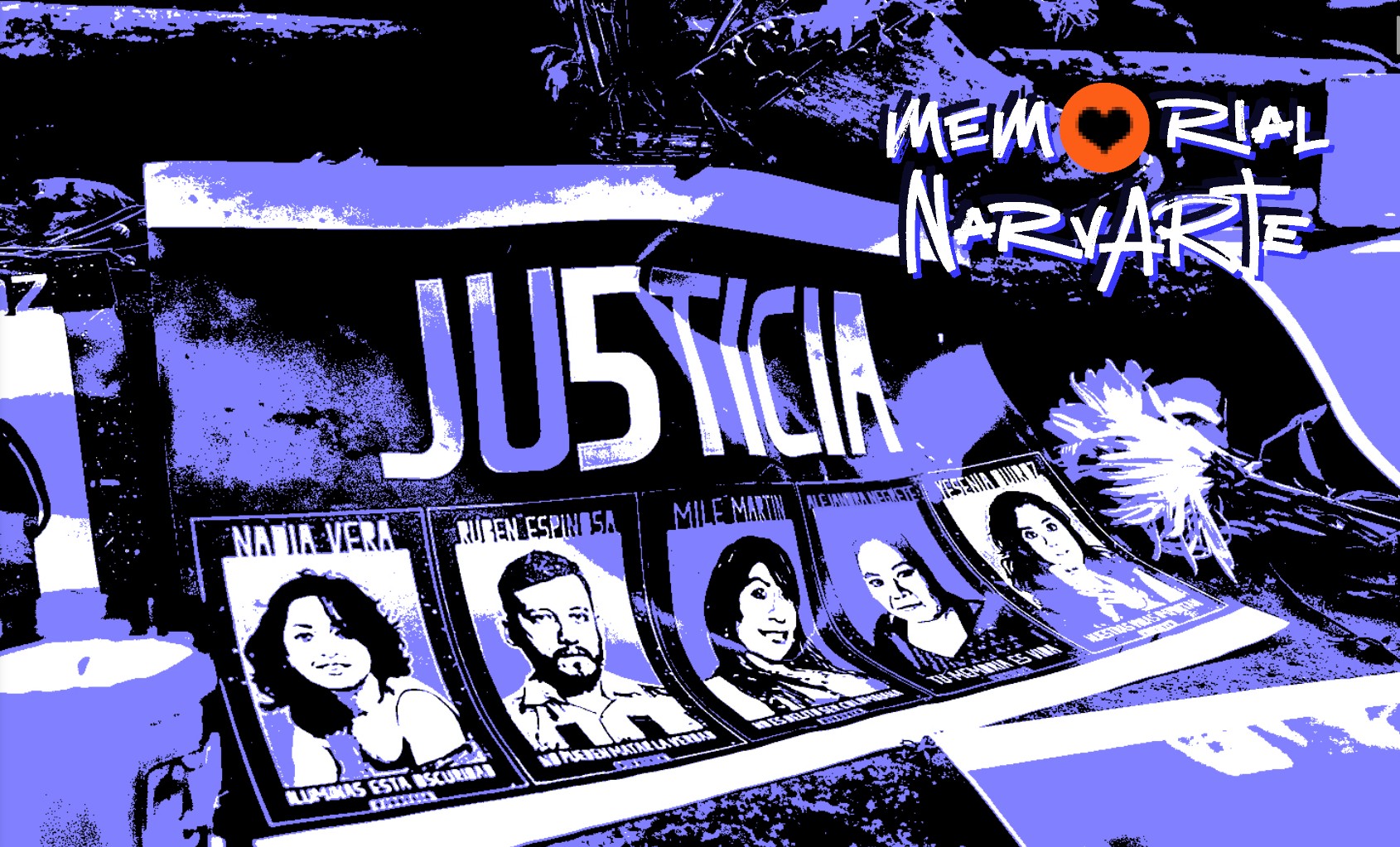
On April 27, 2010, a solidarity and mutual aid caravan to the besieged autonomous Triqui municipality of San Juan Copala left the city of Oaxaca. Along the way, it was ambushed by government-backed paramilitaries belonging to UBISORT (Union for the Social Well-Being of the Triqui Region). The paramilitaries killed Mixtec organizer Bety Cariño and Finnish solidarity activist Jyri Jaakkola and wounded several others. The following statement marks 15 years since the murders. It was translated by Scott Campbell.

To the media
To national and international public opinion
To social, solidarity, and human rights organizations
To the National Indigenous Congress and the Indigenous Governing Council
To the Zapatista Army of National Liberation
To the Indigenous peoples of Mexico and the world

On the occasion of the 15th anniversary of the murder of Bety Cariño and Jyri Jaakkola:

Today marks 15 years of impunity. Fifteen years since the murder of Bety and Jyri. And, faithful to custom – and the necessary stubbornness of keeping memory alive – we return to this date with the same wounded but unshakeable dignity.

In this digital era, our compañeros have been converted into a QR code, a WhatsApp message, an app, a song, a video that travels the world, a worn photo, a graphic exhibition. But they are not only that: they are a voice that resists in time, in the memory of those of us who refuse to forget.

In these 15 years, we have traveled the entire alphabet – from A to Z – going to every corner where it was possible for us to be, asking for justice. Sometimes we found a warm space, a friendly face that knew how to listen to what should be Justice; but most of the time we only found the eternal bureaucracy, the lie, the indifference. The sidewalks were our place of dialogue, our classrooms, our public plazas: in hunger strikes, in marches, in blockades, in endless waits before public officials and “authorities” of any level. We never expected anything from them. And time has only confirmed that institutional justice in Mexico is a failure.

Continue reading

Questions

“I thought about how the world can be anything and how sad it is that it’s this.”
– Nana Kwame Adjei-Brenyah, Chain-Gang All-Stars

When they are intentionally starving children in Gaza, what more does one need to know about Zionism? What conversations can be had? What legitimate disagreements can there be? Can there be a good-faith defense of genocide?

When genocide is livestreamed to every electronic device daily for 563 days (and counting), and it is still permitted to continue – not only permitted, but abetted and supported – what value is this world, its systems, its laws, its governments, its justice?

What does it mean when Democrats and Republicans can agree on nothing except for their shared desire for more dead Palestinians? What could be done with 17.9 billion dollars other than wholesale slaughter? What is the significance of bipartisan support for genocide facilitating the ascension of fascism in the last election? Does this nation-state, genocidal in its foundation and still committed to genocide 249 years later, merit anything other than opprobrium?

As a father, what do more than 17,400 dead children mean to me? When I look into my two-year-old’s eyes, what sense am I to make of the incomprehensible? Is there anything I would not do to keep him safe? Is there nothing I might not do to those who intentionally caused him harm? Does any parent feel differently? Is existence capacious enough for the pain of so many losses? Do we want it to be?

What does it mean when to be Palestinian means one’s life is disposable? What does it mean when to say “Palestine” means to be kidnapped, jailed, deported? What sense can be made of this world’s ontological hatred of the Palestinian? If its teleological zenith is genocide and fascism, is there anything worth salvaging? Why should we be loyal to that which would destroy us? Should we not seek to destroy it, instead?

What does it mean that genocide is but a symptom and the world is the sickness?

What if the answers did not scare us but guided us?

First Call for the Mesoamerican Caravan for the Climate and Life

Originally published on It’s Going Down.

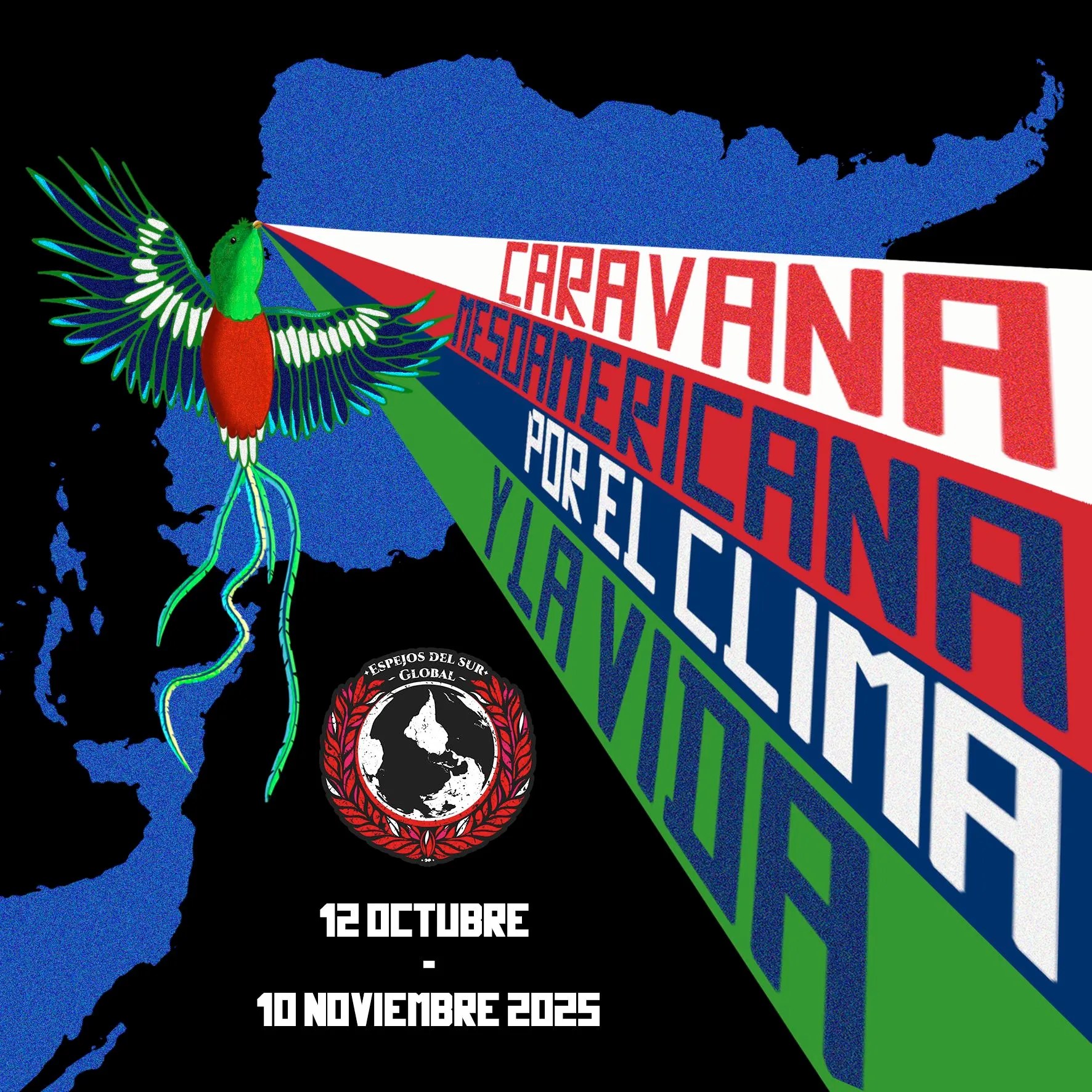
A call to participate in a caravan traveling from Mexico to Brazil organized by Indigenous and campesino social movements to take place later this year. Published in Spanish on the Centro de Medios Libres and translated by Scott Campbell.

To all the struggles, peoples, and movements of Mesoamerica, Abya Yala, and the Global South:

The climate crisis advances unstoppably, and with it, the devastation of our territories, our cultures, and our very lives. Dispossession, extractive megaprojects, and structural violence stalk us with greater intensity every day. In the face of this planetary emergency, we respond with unity, resistance, and hope.

This caravan will be a space of encounter and mobilization for the peoples and communities that fight in defense of Mother Earth and of territories. We will unite our voices and forces to resist violence, make visible the biodiversity and cultural plurality of our peoples, and denounce the financial system that perpetuates destruction and dispossession.

The caravan will leave from the Mexican southeast, passing through Guatemala, El Salvador, Honduras, Costa Rica, Panama, Colombia, Ecuador and will arrive in Belém, Brazil, where we will raise our voice in the framework of the UN Conference on Climate Change (COP30) and in the midst of this Civilizational Crisis that threatens our future with global collapse.

Continue reading

UNAM seeks to demobilize students, but protests continue

Originally published on It’s Going Down.

A short text by Camilo Ocampo, published on Pie de Página and translated by Scott Campbell, that looks at recent developments at the National Autonomous University of Mexico. Since the publishing of this article, the struggle has spread throughout UNAM, with reports of five departments on “total strike” as of Wednesday, April 9, 2025. Those are Social and Political Sciences, Arts and Design, Engineering, Chemistry, and Architecture; with a partial strike in the Economy Department.

In the midst of a politically tense atmosphere within UNAM, the University Council, the highest governing body, approved a change in Article 15 of the University Tribunal Regulations, which seeks to implement the suspension or expulsion of students and academics who engage in “acts of vandalism” on the institution’s campuses, as well as those who participate in drug dealing.

Students, workers, academics and even part of the University Council warn that this measure violates the freedom to protest, given the lack of clarity distinguishing between what is considered an act of vandalism and the right to protest.

Continue reading

Because all of Mexico is Teuchitlán

Originally posted on It’s Going Down.

The following collective letter comes in response to the discovery in early March by searching families of a forced recruitment and extermination camp in Teuchitlán, Jalisco, near Guadalajara. It was translated by Scott Campbell.

To those who are not indifferent to the war:

The discovery of the exploitation, torture, and extermination camp in Teuchitlán, Jalisco, is a small and terrible example of the cruel human crisis that Mexico is living through as a result of the Drug War unleashed in 2006 and that has not ended. The pain of the families of the disappeared reaches practically every corner of the country and extends beyond our borders. At least 124,000 people have been disappeared, a devastating figure because they are not numbers nor entries in a database. They are boys, girls, youths, women, and men torn from their homes and communities. They are people we miss and who forgetting threatens to erase.

Disappearance – any disappearance – is an unjustifiable crime, regardless of its cause or motive, without excuses or nuances. The search – any search – is an inescapable obligation and calls us not to stop until we find them all, to commit ourselves to putting an end to the horror, regardless of what we do, our ideology, and our geography.

The pain, the indignation, and the rage caused by knowing that there are extermination camps in Mexico (although it seems that those from above avoid recognizing that these schools of terror are just that) should not be used by those who provoked this human crisis since 2006 nor by those who claim to have broken with the practices of the past while repeating its vices. Nor by those inside and outside of Mexico who see in the pain a political, business, or interference opportunity.

Continue reading

An Anarchist in AA

The following was written in December of last year for inclusion in the recently released zine, “Anarchist Experiences in and Explorations of Alternatives to Twelve-Step Programs,” published by Scrappy Capy Distro. It’s a great collection of texts, be sure to check it out.

My name is Scott, and I’m an alcoholic. My sobriety date is December 17, 2023. I have a sponsor and have worked the twelve steps of Alcoholics Anonymous. I now take others through the steps. I go to three to four meetings a week. I have a conception of and relationship with a power greater than myself that has been the cornerstone to my recovery. I’m also an anarchist.

I’ve been battling alcoholism and addiction for a while now. The first time I realized I could not stop drinking even though I wanted to, even when my job, health, and relationships depended on it, was in 2013. Back then I was militantly atheist and, frankly, judgmental and arrogant. Some days I still am. I’m a work in progress. The first person to offer to take me to an AA meeting was a conservative older woman wearing a t-shirt with the US flag on it. I thought she couldn’t possibly have access to a solution that would work for me. A few months later, still unable to stop drinking, I ended up in treatment, where we had to attend AA meetings.

Continue reading