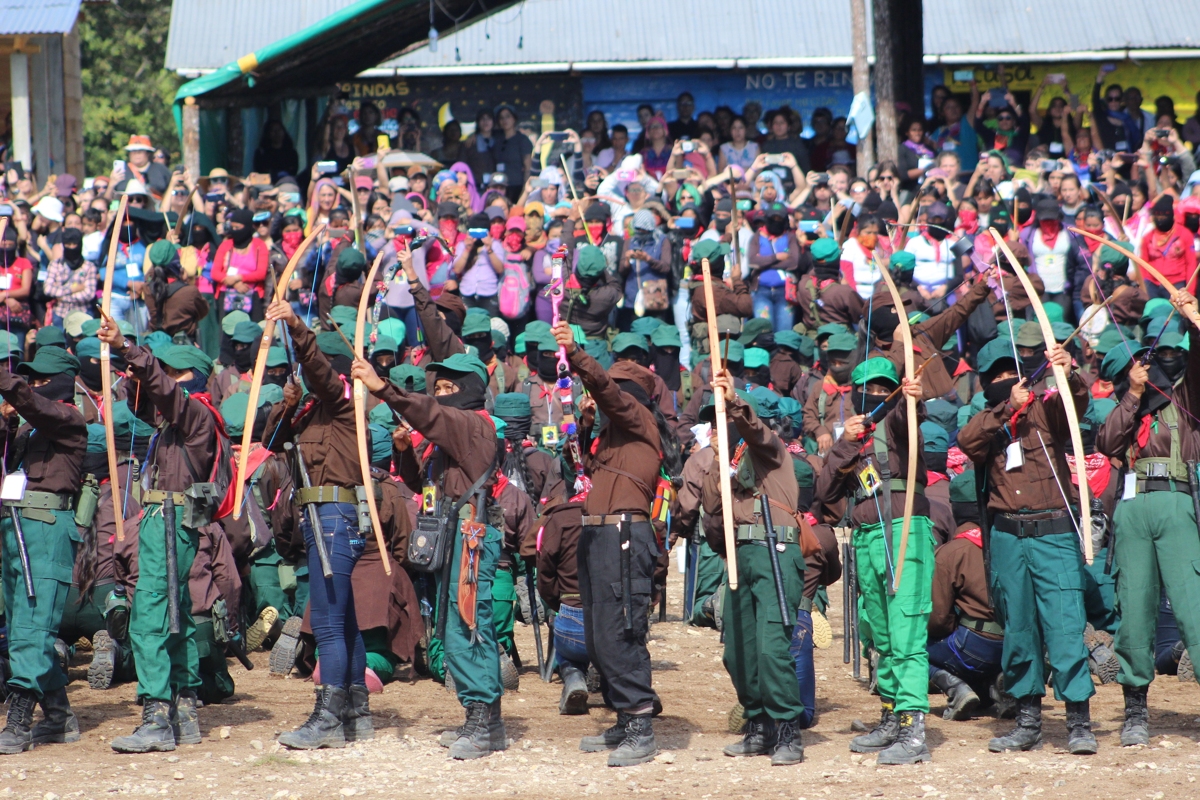
The San Juan Cancuc Five are free!

A statement from the Grupo de Trabajo No Estamos Todxs, originally published in Spanish and translated by Scott Campbell, on the release of the five Tzeltal political prisoners from San Juan Cancuc, Chiapas. Read more about their case here.

Valle de Jovel, November 21, 2025, from the territory called Mexico.

To all the compas that have accompanied the fight for the freedom of our imprisoned compañeros from San Juan Cancuc.

To their relatives and our five formerly imprisoned compañeros from San Juan Cancuc, to them above all.

For more than three years, we have had the enormous opportunity to accompany our imprisoned compañeros. Years of talks, of hugs, of seeing them and knowing them, of their dreams and their hopes. Above all, of their dignified demand for justice and freedom.

Today, in this land where injustice has become the norm, but resistance and dignified rage have also become a permanent condition. Today, dawn brought with it a rumor that turned into a cry and then a song: our five compañeros from San Juan Cancuc are free.

Free, but not due to the goodwill of the bad government, but due to the dignified stubbornness of their families, of their community, and of all the hands and hearts that, from so many corners of the world, did not stop fighting against the machinery that manufactures guilt.

Continue reading
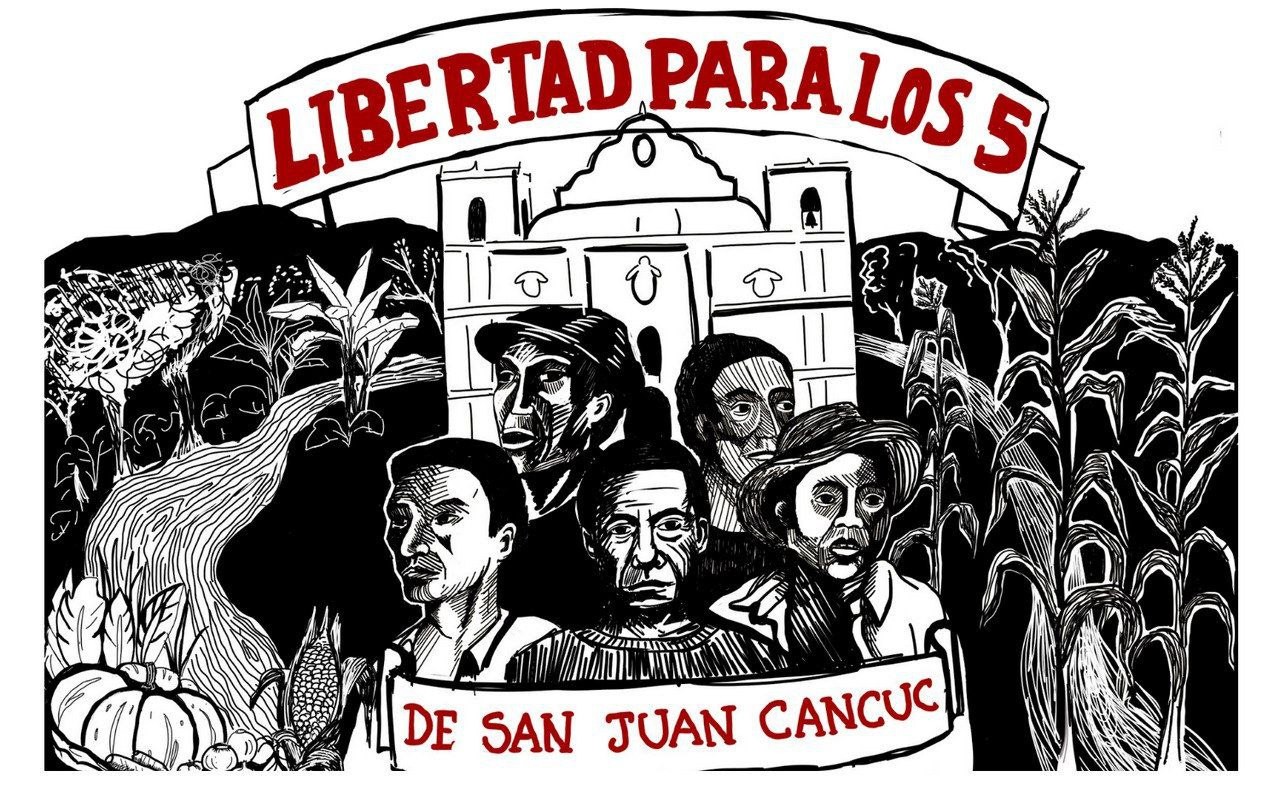
Freedom for the prisoners from San Juan Cancuc, Chiapas

Originally posted on It’s Going Down.

UPDATE: On November 21, 2025, a court ordered the immediate release of the five imprisoned compañeros from San Juan Cancuc. Read a statement regarding their release here.

The text below provides an overview of the case of five imprisoned Tzeltal land defenders from San Juan Cancuc, Chiapas, and how they can be supported during a crucial moment in the fight for their freedom.

The Context

San Juan Cancuc is an Indigenous Tzeltal municipality in the highlands of Chiapas located about halfway between the popular tourist destinations of San Cristóbal de Las Casas and the Cascadas de Agua Azul. For more than 20 years, the federal and state governments have been attempting to “develop” the region via the construction of a superhighway, called the Highway of Cultures. This highway would connect the coast of Chiapas in the west – where the Interoceanic Corridor will pass – with the highlands and jungle regions of the east – where they Maya Train will pass. With neoliberal development comes militarization, and attempts have been underway to construct a National Guard base near San Juan Cancuc. Since coming to power in 2018, the MORENA party has accelerated these projects.

The proposed Highway of Cultures is to pass through San Juan Cancuc and the State has put pressure on the municipality to agree to the construction – including withholding social programs. In repeated community assemblies, the residents of the municipality and neighboring communities have rejected both construction of the superhighway and the National Guard base.

Continue reading

How many autonomies fit in a community?

The following text by Leonardo Toledo, translated by Scott Campbell, takes a critical look at various autonomous processes in so-called Chiapas, Mexico. The original Spanish-language article is accompanied by a photo essay by Isaac Guzmán.

What do we imagine when we say “autonomy”? There are many disparate possible scenes. From an official invoicing a table dance in the name of his autonomous organization to a community self-defense member ambushed by police, soldiers, narcos, and former self-defense members.

Another image of autonomy could be the man with three positions in autonomous institutions who telephones his best friend to make fun of the way a group of Indigenous people speak, but it can also be an Indigenous community meeting in assembly, deciding upon their next local government together.

Perhaps we imagine a prosecutor who, instead of solving pressing cases for society, dedicates his time to litigating against his own family and fighting for a prestigious state scholarship. Or perhaps an entire community that, after a thousand fiascos, decides to expel political parties from local government.

My favorite imaginary image of autonomy is that of a man who, from a cubicle in an autonomous university (which would collapse without public funding), writes an article arguing that autonomy for the people is only possible if they refuse to accept public funding.

Autonomy can be many things. Philosophers will tell us that its existence depends on the “categorical imperative,” sociology will unthinkingly turn to “agreement in assembly,” some lawyers will probably lecture us about the indivisibility of territorial sovereignty and the concurrence of the law, while anthropology will offer to walk with us to reflect together on justice and dignity. How, then, does one look at and live autonomy?

Let’s look at the autonomous experience of the peoples of Chiapas.

Continue reading

Communal Government of Chilón, Chiapas: For the Defense of Life and Mother Earth

Originally posted on It’s Going Down.

A statement shared by the Communal Government of Chilón, Chiapas, following a march in the municipality, outlining their activities, concerns, and demands. It was published on Radio Zapatista and translated by Scott Campbell.

Chilón, Chiapas, on March 9, 2024

To the national and international organizations
To the original peoples of Mexico and the world
To the defenders of Indigenous and human rights
To the independent media
To the people in general 

We are the Communal Government of the municipality of Chilón, belonging to the original Tzeltal people. Our struggle began more than six years ago with the objective of creating an alternative path to that of the system of political parties. Today we conclude the visits to our 11 Attention Centers distributed throughout the municipality: Bachajpon, Palma Xanahil, Patwits, San Antonio Bulujib, Ch’ich’, Ahlan Sac Hun, Lázaro Cárdenas, Pamanabil, Sacun Palma, San Jerónimo T’ulih’a and Chilón, where we held 11 assemblies in which we had the opportunity to listen to our people and to inform them about our proposal for struggle and for life.

With pain and indignation, we listened to the various problems that the communities continue living through, and how our brothers and sisters are facing them. We note that the clandestine sale of alcohol and drugs has increased in the communities, which has caused the deaths of innocents and the destruction of families. We warn with concern about the increase in organized crimes cells and their collusion with the political party system. Election year has begun and the political campaigns have already shown their corrupt ways, going so far as to hand out alcohol at their events, intoxicating and manipulating the public. We said it from the start and we repeat it: political parties split, divide, and subjugate the people.

Continue reading

Notes on the EZLN’s Latest Announcement from Chiapas

Originally posted on It’s Going Down.

It’s Going Down contributor Scott Campbell reflects on a recent announcement from the EZLN in Chiapas, Mexico.

Several people have asked my thoughts on the recent announcement by the Zapatista Army of National Liberation (EZLN) that the Zapatista autonomous municipalities (MAREZ) and Good Government Juntas (JBG) have been “disappeared” or dissolved. I’m firmly of the opinion that it doesn’t matter what I think, and what I have to say would just be speculation, but I figured I’d have a go at it. There are numerous, complex factors to take into consideration when trying to understand this decision and the motivations behind it.

The primary one is that, as the EZLN has finally recognized in this statement, Chiapas is in crisis. There are wars playing out between the Jalisco New Generation Cartel and the Sinaloa Cartel along the mountains and borderlands of Chiapas. There are other paramilitary groups active in the interior of Chiapas. While the EZLN has not acknowledged it, all these armed groups have impacted Zapatista support territories, creating internally displaced Zapatistas, along with other civilians.

Continue reading

Observers withdraw from Zapatista territory after increase in violence

Originally published on Avispa Midia.

By Jeny Pascacio
Translated by Scott Campbell

Five observers from the Civil Observation Brigades (BriCO) withdrew from the Tzotzil community of Nuevo San Gregorio, Chiapas, due to lack of security guarantees and the intensification of attacks against this Zapatista territory.

The attacks appear to be coming from people from the San Gregorio ejido, Ranchería San Andrés Puerto Rico, Ranchería Duraznal, and Ranchería Rancho Alegre—four villages in the area—who are trying to displace the Zapatistas and take their territory.  

The attacks began in 2019 and have not let up since then, according to the Fray Bartolomé de Las Casas Human Rights Center (Frayba). As a result, the BriCo camp was set up in the community on March 3, 2021.

Continue reading

State Continues Attacks Against Normalista Students in Chiapas

Originally posted on It’s Going Down.

By Scott Campbell

Today, May 31, in Tuxtla Gutiérrez, Chiapas, students from the Mactumactzá Rural Normal School took over at least 11 commercial trucks and set up a blockade to the protest the May 18 state attack against them as they were protesting against changes to the school admissions process. During that previous attack, 95 people were arrested, women were subjected to sexual assault, and many were injured by police beatings. All 95 face serious charges, with 19 still being held in the high-security El Amate prison. Joining the students in protest both today and on May 18 were displaced Indigenous Tzotzil residents from Chenalhó, forced to flee their homes due to paramilitary violence.

Continue reading

Brutal State Violence Against Students in Chiapas Inspires Widespread Protests

Original posted on It’s Going Down.

By Scott Campbell

On Tuesday, May 18, around 120 students from the Mactumactzá Rural Normal School blockaded the Chiapa de Corzo-San Cristóbal highway in Chiapas, Mexico. The students were protesting changes to the admissions process to the school that would disadvantage working class, rural and Indigenous students. Seen as an attempt to change the makeup of the student body or as a step towards closing the school (which has already been closed four times by the Mexican state), students took to the streets, along with others who joined in solidarity.

In response, Chiapas State Police brutally attacked the blockade, firing tear gas and beating students with batons. In total, 95 people were arrested, 74 women and 19 men, all but two of them students. All 95 were moved to the high-security prison of El Amate. During the course of the arrests and transfer, the women students were forced to strip naked and were sexually assaulted by police. All those arrested are facing charges of rioting with a gang enhancement, violent robbery, damages, and attacks on the public peace and the bodily and cultural integrity of the state.

Continue reading

Life, Respect and Word: Chronicle of the Second Zapatista Gathering of Women Who Struggle

Originally posted on El Enemigo Común and It’s Going Down.

Originally published in Spanish by Radio Zapatista and translated by Scott Campbell. Additional photos, along with audios, can be found with the original text.

Text, audios and photos by all of us.

We dreamed “that the patriarchy burned” and that it was possible to inhabit spaces free of cruelty. For a long time, we graffitied it, theorized it, protested for it, and proposed it. We then came to shout this dream in a territory free of femicides. Here we cried it and wailed it. Here we sang it, danced it, cared for it in this valley of organization and work. From December 26 – 29, 2019, the Zapatista women sheltered us in their collective and rebellious lap to clothe us in dignity inside the seedbed carrying the name of Commander Ramona, who died 14 years ago. Walking in her footprints, in those of Susana and of all the founding mothers of the Zapatista Army of National Liberation, we arrived at this gathering that never should have been. Violence against women, the topic of discussion at this international gathering, should have decreased if the systemic conditions of parity and equity we enacted as a result of feminist debates were enough. But they aren’t. These autonomous and self-managed Zapatista rebel islands, that have multiplied in the past year, resist within a rough sea of generalized violence that led to 38,000 murders in 2019 in a Mexico that doesn’t work. That same violence impacts billions of people, particularly women, boys and girls, as explained by the some 4,000 women who came from 49 countries that also don’t work.

Continue reading

Torture, Tears, and Desperation in Mexico’s Migrant Jails

Originally posted on It’s Going Down


By Movimiento Migrante Mesoamericano
Translated by Scott Campbell

“‘You’re going to die! Sign your deportation and go back to your country!’ was what I heard as I struggled to recover from the asthma attack I suffered in the migrant detention center. I felt cornered by the guard and considered doing it, but remembering the problems that led me to leave my country, I dropped the idea.”

Lizzi is one of 51,607 people detained in Mexico by the National Migration Institute (INM) during the first four months of 2019. She was detained for 45 days, during which time she says she suffered physical and psychological torture. “We felt like we were in a jail, it was horrible! I had two asthma attacks inside. When we came back from the doctor, another guard asked me, “And you want to ask for refuge? Do you know you’ll be locked up for three to six months?”

A few meters from Pakal’ Ná park, near the train tracks in Palenque where hundreds of migrants meet to share their stories, the young, twenty-year-old mother recalls her painful experience. She left Honduras because she had problems with her son’s father, who belonged to one of the gangs. After years of abuse and threats, one day she decided to flee with her son to the United States to start a new life.

Continue reading