When the horror comes to light again. March 15 in Mexico: National Mourning

Originally posted on It’s Going Down.
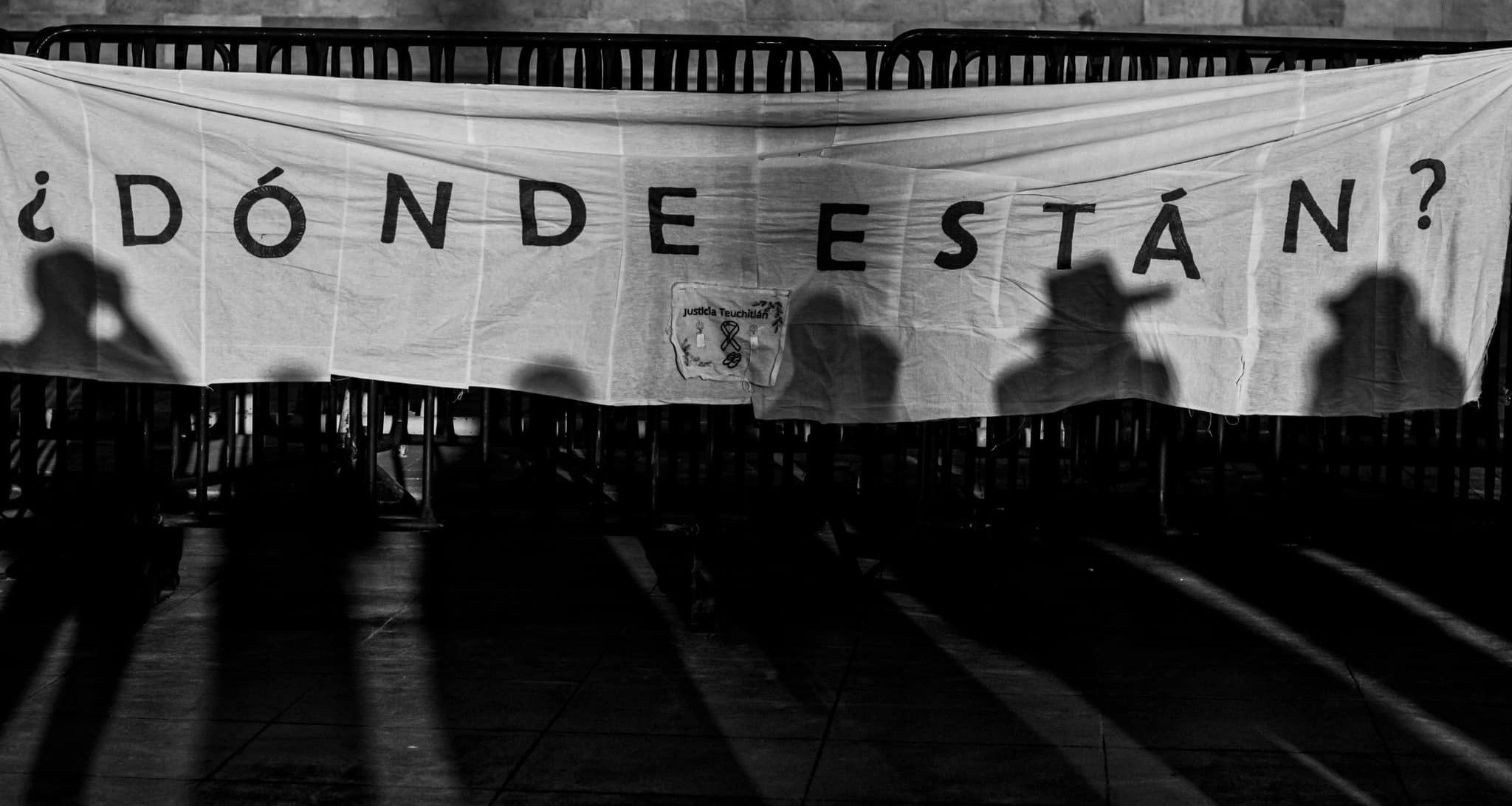
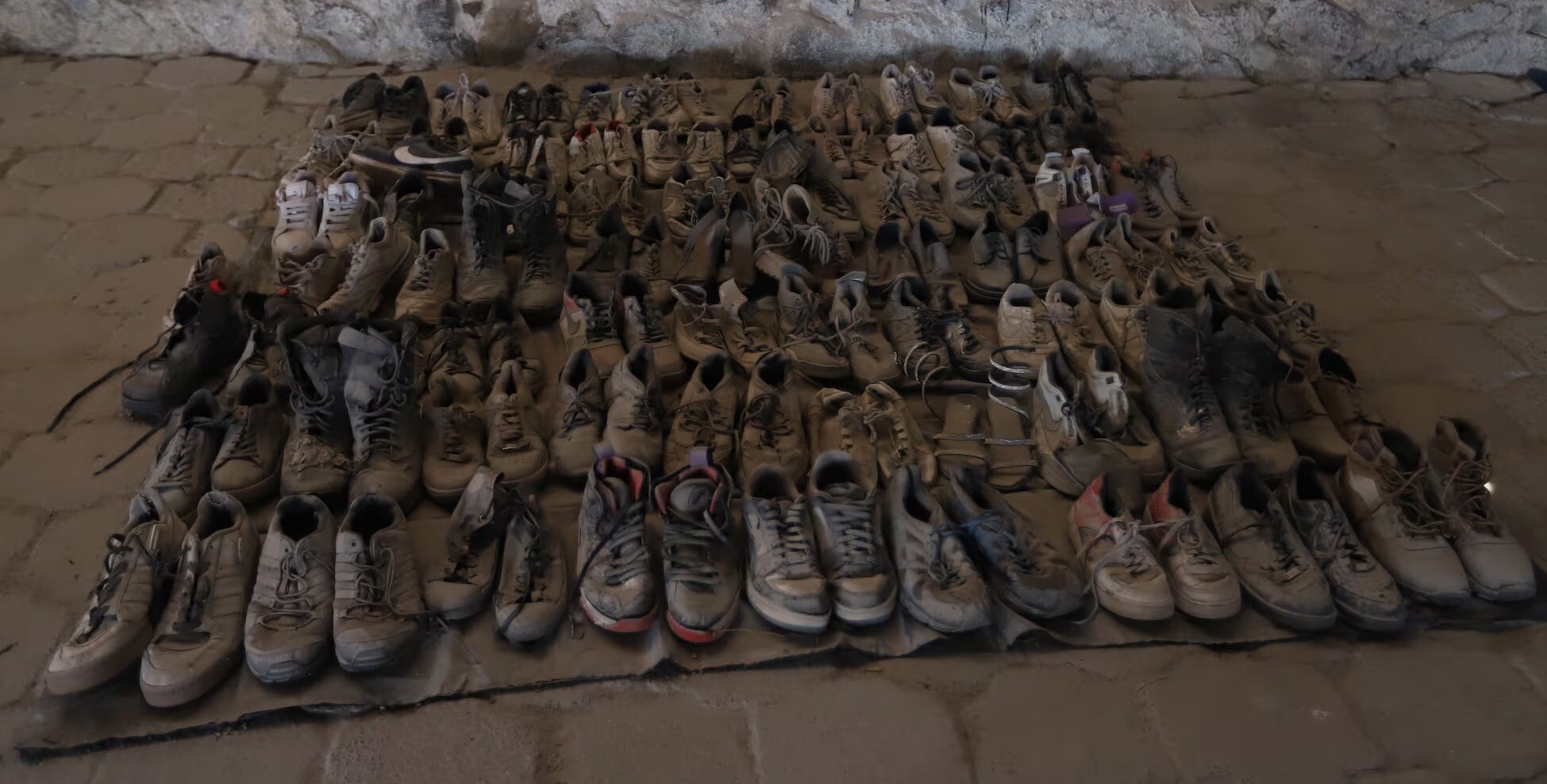
On March 5, the Warrior Searchers of Jalisco, a collective of family members of the disappeared, found a gruesome scene on a ranch in Teuchitlán, near Guadalajara, Jalisco. There, at a location supposedly searched by the state government in September 2024, they found three cremation ovens, clandestine graves, hundreds of human remains, and countless personal items and clothing, along with lists of names. The discovery of the forced recruitment and extermination camp run by the Jalisco New Generation Cartel (CJNG) has sent shockwaves throughout Mexico. It is a moment that makes plain the profound severity of the crisis gripping the country and the collective trauma endured after nearly twenty years of the so-called “drug war.” Civil society organizations have called for Saturday, March 15, to be a day of national mourning, with no place for politicians. The below text by Silvia L. Gil, published in Revista Común and translated by Scott Campbell, wrestles with the significance of what was found in Teuchitlán and what might be needed to counter the horror.

Several years ago, I heard a colleague say that in order to stop evil from reproducing itself, we had to stop denying it. She argued that our societies had put on a blindfold. Although this may be true in some parts of the world, it seemed to me that in Mexico what we needed was more of a truce, to stop staring horror in the face. That the problem was not exactly that we should look more or better, but that to survive in the face of what we already saw we should stop looking. At least for a while. This apparent paradox – pain surrounds us, but we cannot become so sensitized as we run the risk of being paralyzed – is very important in this time when violence and extreme precarity have intensified. There comes a point at which we are unable to assimilate all that we see in a world of injustice. If in other latitudes with this situation – which we can call a global war against life – an answer is sought to the initial question of how to not deny the pain that is spreading throughout the world, in Mexico, the question did a double somersault: once we have seen it all, once we have moved beyond any fictional scenario, what kind of deep transformation of the human do we need so that the horror never repeats itself again?

Continue reading

Raffle in Solidarity with Indigenous Anarchist Miguel Peralta

For more information about Miguel Peralta and the persecution he has been facing for the past decade, read this update from his support group.

Note: If you are located in what is called the United States and would like to participate in the raffle, Miguel’s support crew welcomes your participation! Please contact me for more information. The suggested price of the raffle ticket is $50 MXN ($2.50 USD), but you are welcome to contribute more if you would like. Prize winners will be responsible for covering shipping costs and will not be eligible for prizes that contain perishable items. A continually updated list of prizes can be found on the event’s Facebook page.

As you know, the case of Miguel Peralta Betanzos and the persecution and repression that his community, Eloxochitlán de Flores Magón, is experiencing, have been going on for more than ten years.

After years of imprisonment, hunger strikes, legal games, going back and forth in court at different judicial levels, etc., Miguel Peralta’s case reached the Supreme Court, which represented the possibility of putting an end to his persecution and obtaining his full and absolute freedom. However, things were not as favorable as one might think, and on November 6, the Supreme Court issued a resolution in which it limited itself to recommending that the Collegiate Court of the City of Oaxaca make review of Miguel’s case from an intercultural perspective. With this, the case returned to those instances, which are far from his community, family, legal team and support group.

Continue reading

Gaza Solidarity Encampments on Occupied Land

The above map and following essay are from a project produced for a course I took last semester. As it may be of some relevance or utility, I have chosen to post it here. As always, thoughts, critiques, and feedback is welcomed.

The map accompanying this essay attempts to situate via multiple data points the location of Gaza Solidarity Encampments installed on the campuses of colleges and universities during April and May 2024 in what is demarcated as Los Angeles County. In particular, it seeks to raise the question of the implications of the taking of space in solidarity with an Indigenous struggle for liberation in Palestine on land that itself was ethnically cleansed and genocided of most of its Indigenous inhabitants. To do so, it first notes the identities and territories of the original populations of what is now Los Angeles County: the Tongva, Kizh, and Chumash peoples. Upon that is layered the colonial infrastructure and place designations to orient the gaze from a settler lens with the intention of inspiring reflection on the imposition of settler colonialism and belonging in space. If the colonial place names were absent, would the viewer’s familiarity with the area change? Finally, using tent icons, the map indicates the approximate location of the five Gaza Solidarity Encampments in the area that were erected in April and May 2024, along with the identification of the college or university, the name given to the encampment by those involved, and the Indigenous lands upon which the encampment was placed. The intention of the map is not to condemn nor to celebrate, but to problematize the conception of space in the context of resistance and to encourage the incorporation of a decolonial perspective in the work of protest.

Continue reading

The Watermelon Scare: Attacks on Palestine Solidarity Are Aimed At Silencing the Anti-War Movement

Originally published on It’s Going Down.

By Scott Campbell

On October 15th, the Samidoun Palestinian Prisoner Solidarity Network was labeled a “terrorist entity” by Canada and subjected to sanctions by the United States. These designations follow a previous ban in Germany and the labeling of Samidoun as a “terrorist organization” by Israel. The U.S. claims Samidoun is a “sham fundraiser whose efforts have supported terrorism” by the Popular Front for the Liberation of Palestine (PFLP), a Marxist-Leninist Palestinian political party also labeled as a “Foreign Terrorist Organization” by the U.S. For its part, Samidoun states it “does not have any material or organizational ties to entities listed on the terrorist lists of the United States, Canada or the European Union.”

Two days later, Republican Senator Marco Rubio sent a letter to the U.S. Attorney General requesting he “immediately open a domestic terrorism investigation” into the popular pro-Palestine website and social media account, Unity of Fields, known for posting anonymous reports of direct actions. In a statement, the group said it is “an anti-imperialist propaganda front…we don’t do actions, we only report on them and receive anonymous submissions.”

As the Civil Liberties Defense Center (CLDC) recently noted, Rubio also pushed the Attorney General to charge four activists in Florida who were arrested for writing pro-choice graffiti following the fall of Roe v Wade for “terrorism.” One activist was sentenced to a year in prison by the Middle District of Florida, the same court that recently awarded only 8 months to a man convicted of literally firebombing a Planned Parenthood clinic.

Likewise, while Rubio is trying to claim that an Instagram account is terrorism, he has of course stayed quiet while his own party works overtime to spread rampant misinformation in the wake of two devastating hurricanes hitting his state and about the upcoming election – to say nothing of members of his own party regularly attending neo-Nazi gatherings and increasing aligning with white nationalists.

One may disagree with Samidoun and Unity of Fields on their specific political positions, but the entire movement against the ongoing war and genocide in Gaza should be concerned with the state’s move to target them. In no way can Samidoun be understood as a “sham charity” or “terrorist entity,” nor a media project like Unity of Fields as responsible for “domestic terrorism.” Even if one were to accept the legitimacy of power to deploy a subjective term such as “terrorism,” in reality, the extent of Samidoun’s work is posting statements, organizing public educational and political events, and pushing online action campaigns, while Unity of Fields maintains a counter-info website and social media accounts.

Continue reading

One year on…

From “I’m Still Alive,” by Maisara Baroud, 2023-24.

At the time of this writing, since October 7, 2023, Israel has killed 42,612 people in Gaza, including 16,765 children. 97,166 people have been wounded. Academic estimates place the actual death toll to be as high as 335,000, out of a population of 2.3 million. In the West Bank, 742 people have been killed. As Israel escalates its rampage against Lebanon, more than 2,000 have been killed there. Numbers such as these do not even come close to capturing the depth of the genocidal horror that has been unleashed against the Palestinian people by Israel, aided and abetted and armed by the United States. We can compile numbers, share anecdotes, link to videos, repost poetry, and more, but no frame is large enough to hold the scope of the devastation. It is incomprehensible.

To mark, remember, resist one year of genocide, I had originally planned to write a lengthy post contextualizing Palestinians as agents of their own history as well as survivors of histories imposed upon them. I wanted to problematize narratives, challenge conceptions, propose nuance, and foment action. Alas, exigencies beyond my control have led me to abandon such a plan. I can leave only a title: Every prison riots. Every colony rebels.

Continue reading

Panel at the 8th International Conference of the Anarchist Studies Network

If you can’t sleep, or live in a different time zone, you can get a dose of anarchy with our online panel “Conflict and affinity at the borders of anarchism” as part of the 8th International Conference of the Anarchist Studies Network, tomorrow, Monday, September 2, at 5:30am PDT.

Register for free here.

I’ll be presenting alongside comrades Ryan Knight and Imuris Valle. My talk is entitled “Toward the destruction of the Human.” Below is the abstract. Hope to see you there!

In recent decades, Black feminist and Afropessimist thinkers have problematized the notion of the “Human,” arguing that this construct of modernity is rooted in and necessitates an ontological and epistemological anti-Blackness. As an intellectual and socio-political movement, anarchism has come far in its analysis of race as a hierarchical social construct. Nonetheless, an unresolved tension within anarchism remains its origins in modernity and thus raises the question of how does a movement navigate and understand race if said origins are premised in anti-Blackness? This paper will offer a problematization of the Human drawing on theories of power, administrative violence, Black feminism, and Afropessimism. It will then propose that calls for the destruction of the Human and lines of flight from the Human inherently present a challenge to anarchist thought by forcing anarchism to reckon with its roots and its understanding of race from a perspective that, will be argued, is more radical than anarchism itself.

How many autonomies fit in a community?

The following text by Leonardo Toledo, translated by Scott Campbell, takes a critical look at various autonomous processes in so-called Chiapas, Mexico. The original Spanish-language article is accompanied by a photo essay by Isaac Guzmán.

What do we imagine when we say “autonomy”? There are many disparate possible scenes. From an official invoicing a table dance in the name of his autonomous organization to a community self-defense member ambushed by police, soldiers, narcos, and former self-defense members.

Another image of autonomy could be the man with three positions in autonomous institutions who telephones his best friend to make fun of the way a group of Indigenous people speak, but it can also be an Indigenous community meeting in assembly, deciding upon their next local government together.

Perhaps we imagine a prosecutor who, instead of solving pressing cases for society, dedicates his time to litigating against his own family and fighting for a prestigious state scholarship. Or perhaps an entire community that, after a thousand fiascos, decides to expel political parties from local government.

My favorite imaginary image of autonomy is that of a man who, from a cubicle in an autonomous university (which would collapse without public funding), writes an article arguing that autonomy for the people is only possible if they refuse to accept public funding.

Autonomy can be many things. Philosophers will tell us that its existence depends on the “categorical imperative,” sociology will unthinkingly turn to “agreement in assembly,” some lawyers will probably lecture us about the indivisibility of territorial sovereignty and the concurrence of the law, while anthropology will offer to walk with us to reflect together on justice and dignity. How, then, does one look at and live autonomy?

Let’s look at the autonomous experience of the peoples of Chiapas.

Continue reading

Building support for anarchist political prisoner Jorge “Yorch” Esquivel and Okupa Che

Originally published on It’s Going Down.

On this episode of the It’s Going Down podcast, IGD contributor Scott Campbell speaks with Flor, a compa in so-called Mexico actively involved in supporting anarchist political prisoner Jorge “Yorch” Esquivel. They speak about Okupa Che, an autonomous, self-managed space on the campus of the National Autonomous University of Mexico (UNAM), a project where Yorch has been a long-term participant. They then talk about the various charges and legal battles Yorch has faced since 2016, his ongoing imprisonment since December 8, 2022, and his recent sentence of seven years and six months. Flor also provides information on how folks can act in solidarity with Yorch and discusses the cases of other political prisoners in Mexico.

For more information about Yorch and Okupa Che, check out the following resources:

Heat

The phone warns that the air is toxic and the sun too sunny. Smog to the left of me, forest fires to the right, here I am, stuck in the middle of modernity. Drink water. But the tiny omnipresent poison pellets are giving the kids cancer. I know this and drink it anyway. The A/C daily fights a losing battle. Utility bill as climate tax. Breaking records is banal. In the Caribbean, islands are eviscerated. In Saudi Arabia, hundreds drop dead. It’s a Tuesday. Meanwhile, the argument continues over who gets to captain the Titanic. One is committing genocide, the other wants to commit genocide. Get out the vote. Get out of my vote. Our dreams don’t fit in your ballot boxes. I sit between my parents and my son and think about how the aperture of perspective shifts as the wheel of time spins. Or how we navigate future pasts, tending to generational wounds. There was no cook at Denny’s, so we went to another one. How strange to be in two different locations but the same place. Quantum level capitalism. The left tried to sell me a paper. I tried to give it a zine. Turns out no one reads anymore, unless it’s on Instagram. X (née Twitter) is having a fire sale on fascism. The soul is broken when the path to freedom is premised on the suffering of the Other. God is dead, their corpse caresses our conscience. Alas, it’s muted by anhedonia. There’s no dopamine left for the divine. We are walking tragedies not of our own choosing. I try not to feel guilt and shame, and fail more often than not. It all just seems too big. I know it’s by design, but sometimes the design works. The ingenuity of an unwalled prison is that wherever you go, there you are. Seems the only choice left is to rebel. It’s already so damn hot.

Amid the Electoral Farce, Capitalist War Against the Peoples

Originally posted on It’s Going Down.

The following statement provides an overview of some of the current struggles in so-called Mexico in the lead up to the June 2 presidential elections and was translated by Scott Campbell.

To the CCRI-CG EZLN
To the Zapatista Army of National Liberation, EZLN
To the Sixth Commission of the EZLN
To the National Indigenous Congress, CNI
To the Indigenous Governing Council, CIG
To Ma. de Jesús Patricio Martínez, Spokeswoman of the CNI-CIG
To the People, Tribes, Nations, Communities, and First Neighborhoods that were never conquered
To the National and International Sexta
To the Networks of Resistance and Rebellion
To the Insubordinate, Dignified and Rebel Europe
To those that signed the Declaration for Life
To the free, independent, alternative, or whatever they’re called media…

Siblings All

With the arrival of the “Fourth Transformation,” [1] its governing policies increased the militarization of Indigenous peoples and communities, especially in Zapatista territory. Paramilitary groups and organized crime operate with total impunity as guarantors of the imposition of not just megaprojects of death such as the Maya Train, the Interoceanic Corridor, and the Morelos Integral Project; they are at the service of the state and big capital to carry out the displacement of territory, Mother Earth, and life.

Amid its “ELECTORAL FARCE,” we see that, in recent weeks, nothing matters but votes, polls, debates, numbers, and electoral preferences; but, above all, its strategy to attack and discredit its enemies as a campaign strategy.

This June 2, a “democracy” is not in dispute, much less a leftist one. What is really in dispute is an economic and political power that seeks to sustain itself with militarization, with impunity, and with the accumulation of wealth in the hands of a few in the service of large transnationals. Their plan is to sustain this “Fourth Transformation” with a CAPITALIST WAR against Indigenous peoples and communities.

Continue reading