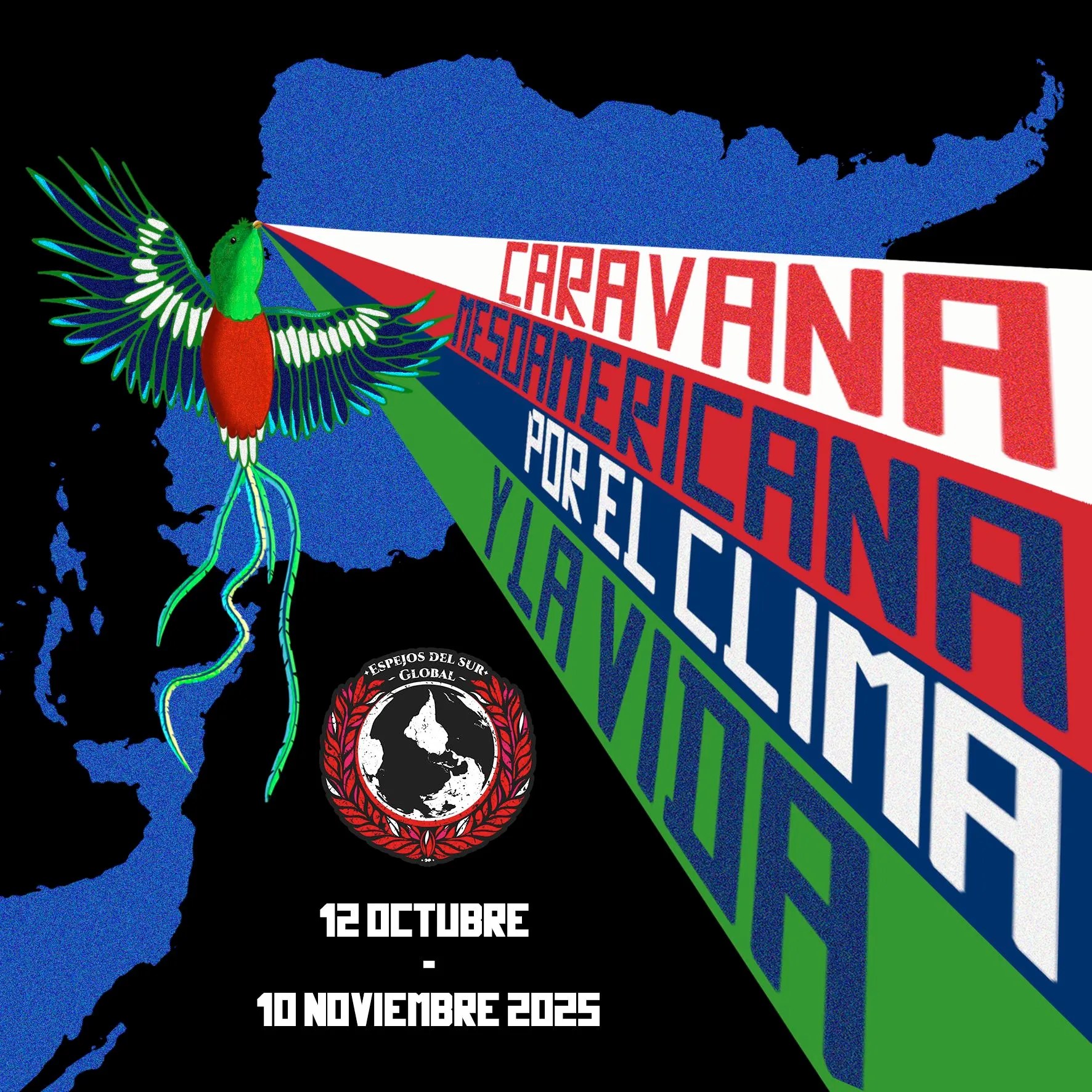
First Call for the Mesoamerican Caravan for the Climate and Life

Originally published on It’s Going Down.

A call to participate in a caravan traveling from Mexico to Brazil organized by Indigenous and campesino social movements to take place later this year. Published in Spanish on the Centro de Medios Libres and translated by Scott Campbell.

To all the struggles, peoples, and movements of Mesoamerica, Abya Yala, and the Global South:

The climate crisis advances unstoppably, and with it, the devastation of our territories, our cultures, and our very lives. Dispossession, extractive megaprojects, and structural violence stalk us with greater intensity every day. In the face of this planetary emergency, we respond with unity, resistance, and hope.

This caravan will be a space of encounter and mobilization for the peoples and communities that fight in defense of Mother Earth and of territories. We will unite our voices and forces to resist violence, make visible the biodiversity and cultural plurality of our peoples, and denounce the financial system that perpetuates destruction and dispossession.

The caravan will leave from the Mexican southeast, passing through Guatemala, El Salvador, Honduras, Costa Rica, Panama, Colombia, Ecuador and will arrive in Belém, Brazil, where we will raise our voice in the framework of the UN Conference on Climate Change (COP30) and in the midst of this Civilizational Crisis that threatens our future with global collapse.

Continue reading

UNAM seeks to demobilize students, but protests continue

Originally published on It’s Going Down.

A short text by Camilo Ocampo, published on Pie de Página and translated by Scott Campbell, that looks at recent developments at the National Autonomous University of Mexico. Since the publishing of this article, the struggle has spread throughout UNAM, with reports of five departments on “total strike” as of Wednesday, April 9, 2025. Those are Social and Political Sciences, Arts and Design, Engineering, Chemistry, and Architecture; with a partial strike in the Economy Department.

In the midst of a politically tense atmosphere within UNAM, the University Council, the highest governing body, approved a change in Article 15 of the University Tribunal Regulations, which seeks to implement the suspension or expulsion of students and academics who engage in “acts of vandalism” on the institution’s campuses, as well as those who participate in drug dealing.

Students, workers, academics and even part of the University Council warn that this measure violates the freedom to protest, given the lack of clarity distinguishing between what is considered an act of vandalism and the right to protest.

Continue reading

Because all of Mexico is Teuchitlán

Originally posted on It’s Going Down.

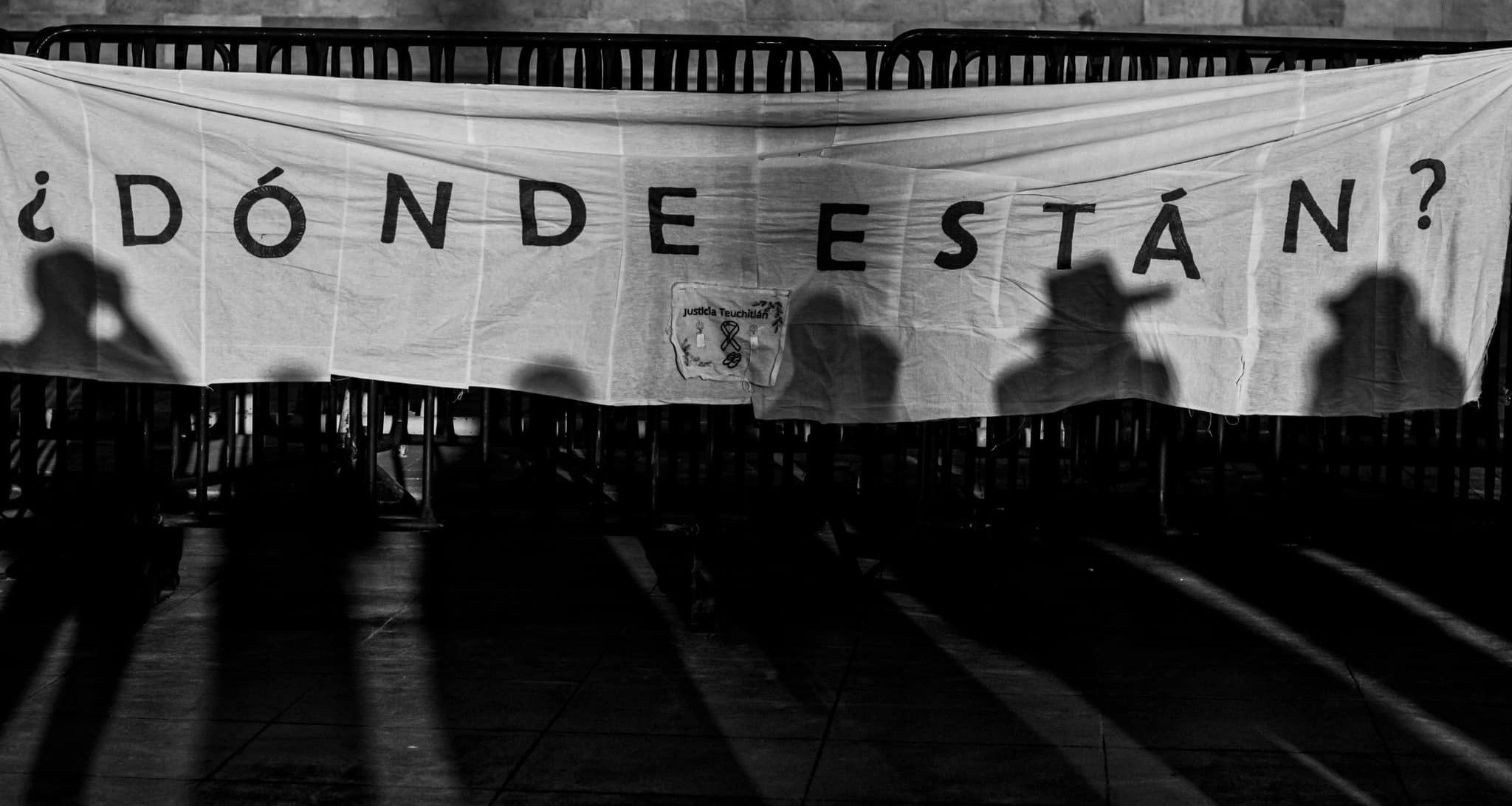
The following collective letter comes in response to the discovery in early March by searching families of a forced recruitment and extermination camp in Teuchitlán, Jalisco, near Guadalajara. It was translated by Scott Campbell.

To those who are not indifferent to the war:

The discovery of the exploitation, torture, and extermination camp in Teuchitlán, Jalisco, is a small and terrible example of the cruel human crisis that Mexico is living through as a result of the Drug War unleashed in 2006 and that has not ended. The pain of the families of the disappeared reaches practically every corner of the country and extends beyond our borders. At least 124,000 people have been disappeared, a devastating figure because they are not numbers nor entries in a database. They are boys, girls, youths, women, and men torn from their homes and communities. They are people we miss and who forgetting threatens to erase.

Disappearance – any disappearance – is an unjustifiable crime, regardless of its cause or motive, without excuses or nuances. The search – any search – is an inescapable obligation and calls us not to stop until we find them all, to commit ourselves to putting an end to the horror, regardless of what we do, our ideology, and our geography.

The pain, the indignation, and the rage caused by knowing that there are extermination camps in Mexico (although it seems that those from above avoid recognizing that these schools of terror are just that) should not be used by those who provoked this human crisis since 2006 nor by those who claim to have broken with the practices of the past while repeating its vices. Nor by those inside and outside of Mexico who see in the pain a political, business, or interference opportunity.

Continue reading

When the horror comes to light again. March 15 in Mexico: National Mourning

Originally posted on It’s Going Down.

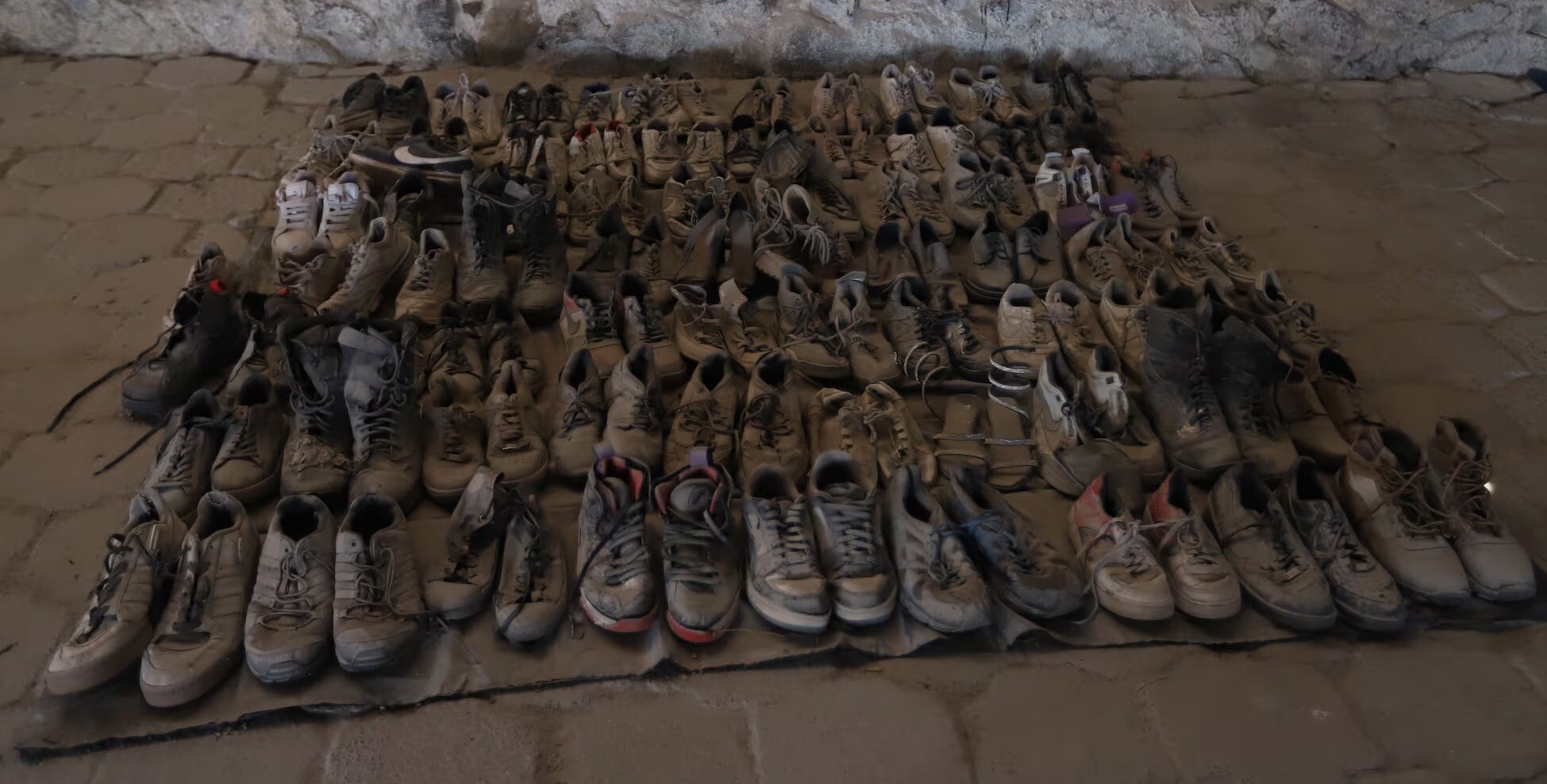
On March 5, the Warrior Searchers of Jalisco, a collective of family members of the disappeared, found a gruesome scene on a ranch in Teuchitlán, near Guadalajara, Jalisco. There, at a location supposedly searched by the state government in September 2024, they found three cremation ovens, clandestine graves, hundreds of human remains, and countless personal items and clothing, along with lists of names. The discovery of the forced recruitment and extermination camp run by the Jalisco New Generation Cartel (CJNG) has sent shockwaves throughout Mexico. It is a moment that makes plain the profound severity of the crisis gripping the country and the collective trauma endured after nearly twenty years of the so-called “drug war.” Civil society organizations have called for Saturday, March 15, to be a day of national mourning, with no place for politicians. The below text by Silvia L. Gil, published in Revista Común and translated by Scott Campbell, wrestles with the significance of what was found in Teuchitlán and what might be needed to counter the horror.

Several years ago, I heard a colleague say that in order to stop evil from reproducing itself, we had to stop denying it. She argued that our societies had put on a blindfold. Although this may be true in some parts of the world, it seemed to me that in Mexico what we needed was more of a truce, to stop staring horror in the face. That the problem was not exactly that we should look more or better, but that to survive in the face of what we already saw we should stop looking. At least for a while. This apparent paradox – pain surrounds us, but we cannot become so sensitized as we run the risk of being paralyzed – is very important in this time when violence and extreme precarity have intensified. There comes a point at which we are unable to assimilate all that we see in a world of injustice. If in other latitudes with this situation – which we can call a global war against life – an answer is sought to the initial question of how to not deny the pain that is spreading throughout the world, in Mexico, the question did a double somersault: once we have seen it all, once we have moved beyond any fictional scenario, what kind of deep transformation of the human do we need so that the horror never repeats itself again?

Continue reading

Raffle in Solidarity with Indigenous Anarchist Miguel Peralta

For more information about Miguel Peralta and the persecution he has been facing for the past decade, read this update from his support group.

Note: If you are located in what is called the United States and would like to participate in the raffle, Miguel’s support crew welcomes your participation! Please contact me for more information. The suggested price of the raffle ticket is $50 MXN ($2.50 USD), but you are welcome to contribute more if you would like. Prize winners will be responsible for covering shipping costs and will not be eligible for prizes that contain perishable items. A continually updated list of prizes can be found on the event’s Facebook page.

As you know, the case of Miguel Peralta Betanzos and the persecution and repression that his community, Eloxochitlán de Flores Magón, is experiencing, have been going on for more than ten years.

After years of imprisonment, hunger strikes, legal games, going back and forth in court at different judicial levels, etc., Miguel Peralta’s case reached the Supreme Court, which represented the possibility of putting an end to his persecution and obtaining his full and absolute freedom. However, things were not as favorable as one might think, and on November 6, the Supreme Court issued a resolution in which it limited itself to recommending that the Collegiate Court of the City of Oaxaca make review of Miguel’s case from an intercultural perspective. With this, the case returned to those instances, which are far from his community, family, legal team and support group.

Continue reading

How many autonomies fit in a community?

The following text by Leonardo Toledo, translated by Scott Campbell, takes a critical look at various autonomous processes in so-called Chiapas, Mexico. The original Spanish-language article is accompanied by a photo essay by Isaac Guzmán.

What do we imagine when we say “autonomy”? There are many disparate possible scenes. From an official invoicing a table dance in the name of his autonomous organization to a community self-defense member ambushed by police, soldiers, narcos, and former self-defense members.

Another image of autonomy could be the man with three positions in autonomous institutions who telephones his best friend to make fun of the way a group of Indigenous people speak, but it can also be an Indigenous community meeting in assembly, deciding upon their next local government together.

Perhaps we imagine a prosecutor who, instead of solving pressing cases for society, dedicates his time to litigating against his own family and fighting for a prestigious state scholarship. Or perhaps an entire community that, after a thousand fiascos, decides to expel political parties from local government.

My favorite imaginary image of autonomy is that of a man who, from a cubicle in an autonomous university (which would collapse without public funding), writes an article arguing that autonomy for the people is only possible if they refuse to accept public funding.

Autonomy can be many things. Philosophers will tell us that its existence depends on the “categorical imperative,” sociology will unthinkingly turn to “agreement in assembly,” some lawyers will probably lecture us about the indivisibility of territorial sovereignty and the concurrence of the law, while anthropology will offer to walk with us to reflect together on justice and dignity. How, then, does one look at and live autonomy?

Let’s look at the autonomous experience of the peoples of Chiapas.

Continue reading

Building support for anarchist political prisoner Jorge “Yorch” Esquivel and Okupa Che

Originally published on It’s Going Down.

On this episode of the It’s Going Down podcast, IGD contributor Scott Campbell speaks with Flor, a compa in so-called Mexico actively involved in supporting anarchist political prisoner Jorge “Yorch” Esquivel. They speak about Okupa Che, an autonomous, self-managed space on the campus of the National Autonomous University of Mexico (UNAM), a project where Yorch has been a long-term participant. They then talk about the various charges and legal battles Yorch has faced since 2016, his ongoing imprisonment since December 8, 2022, and his recent sentence of seven years and six months. Flor also provides information on how folks can act in solidarity with Yorch and discusses the cases of other political prisoners in Mexico.

For more information about Yorch and Okupa Che, check out the following resources:

Amid the Electoral Farce, Capitalist War Against the Peoples

Originally posted on It’s Going Down.

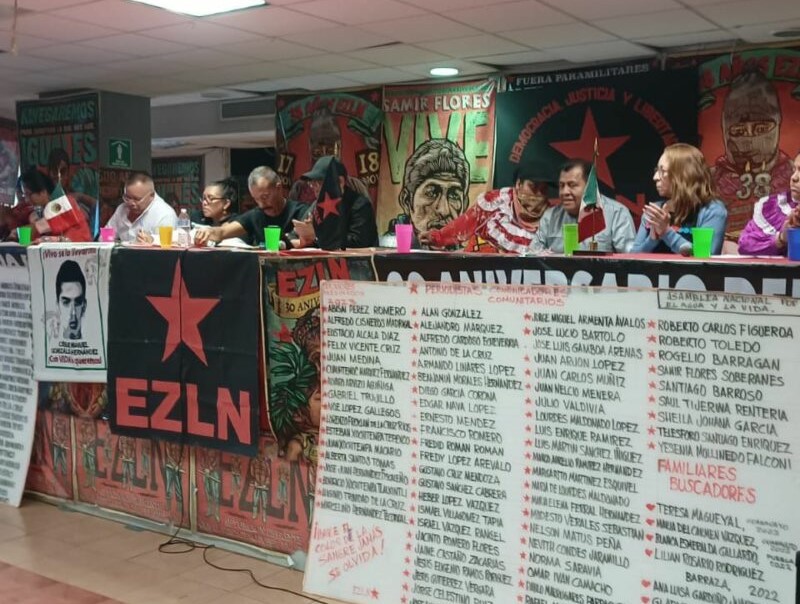
The following statement provides an overview of some of the current struggles in so-called Mexico in the lead up to the June 2 presidential elections and was translated by Scott Campbell.

To the CCRI-CG EZLN
To the Zapatista Army of National Liberation, EZLN
To the Sixth Commission of the EZLN
To the National Indigenous Congress, CNI
To the Indigenous Governing Council, CIG
To Ma. de Jesús Patricio Martínez, Spokeswoman of the CNI-CIG
To the People, Tribes, Nations, Communities, and First Neighborhoods that were never conquered
To the National and International Sexta
To the Networks of Resistance and Rebellion
To the Insubordinate, Dignified and Rebel Europe
To those that signed the Declaration for Life
To the free, independent, alternative, or whatever they’re called media…

Siblings All

With the arrival of the “Fourth Transformation,” [1] its governing policies increased the militarization of Indigenous peoples and communities, especially in Zapatista territory. Paramilitary groups and organized crime operate with total impunity as guarantors of the imposition of not just megaprojects of death such as the Maya Train, the Interoceanic Corridor, and the Morelos Integral Project; they are at the service of the state and big capital to carry out the displacement of territory, Mother Earth, and life.

Amid its “ELECTORAL FARCE,” we see that, in recent weeks, nothing matters but votes, polls, debates, numbers, and electoral preferences; but, above all, its strategy to attack and discredit its enemies as a campaign strategy.

This June 2, a “democracy” is not in dispute, much less a leftist one. What is really in dispute is an economic and political power that seeks to sustain itself with militarization, with impunity, and with the accumulation of wealth in the hands of a few in the service of large transnationals. Their plan is to sustain this “Fourth Transformation” with a CAPITALIST WAR against Indigenous peoples and communities.

Continue reading

The Campus Movement and Academic Self-Management

Originally published on It’s Going Down.

As Israel’s brutal genocide against the Palestinian people and Palestine itself continues past the 200-day mark, students around the so-called United States have risen up and are carrying out occupations and erecting encampments on their campuses. These acts are extremely inspiring, militant, and hopeful – calling to mind the campus occupations from the early aughts, the student mobilizing against the war on Vietnam in the 1960s and protests against apartheid in South Africa in the 1980s. Breathless blather from politicians and the media have turned what are actions against genocide into a “controversy” that deftly manages to ignore the political content of what is currently unfolding across the country. As Samuel P. Catlin notes in his exceptional essay, “The Campus Does Not Exist”:

Campus panic is a sustained note in the American public conversation; from Vietnam to Gaza, it has never let up. Reliably, every few months something happens “on campus” that the media inflates to the status of a national emergency: a speaker is invited, a speaker is disinvited, a speaker is not disinvited, a professor teaches, a student complains, a protest takes place. The media offers these incidents as scandals so fascinating and disturbing that they eclipse even a genocide.

At the front of any conversation regarding what is happening on college campuses must be an acknowledgement of what the action is in response to: an ongoing, U.S.-facilitated genocide. It seems both absurd and necessary to note that what matters above all is the genocide. Students (and some faculty and staff) are taking tangible, direct action to pressure institutions complicit in the genocide into divesting and disassociating from that most atrocious of acts. That opposition to genocide has been successfully constructed as “controversial” in this country merely demonstrates the insipid nature of what passes for public discourse and the paucity of thought contained within it.

Continue reading

Our Affinity Is Our Manifesto: Interview with Mexico City-Based Feminist-Anarchist Affinity Group

Originally published on It’s Going Down, this is an extended interview with an unnamed feminist-anarchist affinity group based in Mexico City that I conducted and translated last year. An edited version of this text appears in the newly released anthology Constellations of Care: Anarcha-Feminism in Practice, edited by Cindy Barukh Milstein and published by Pluto Press. In that anthology I also have another translation of an incredible piece, “Communitarian Kitchens: Stoking the Flames of Memory and Rebellion,” written by Vilma Almendra. I encourage folks to pick up a copy if you’re able!

Lee la entrevista en español.

IGD: How would you like to introduce yourselves?

We should start by saying that we aren’t a collective or formal group. We see ourselves more as a small group of women and nonconforming folks who are united by love, friendship, and the struggle for freedom, autonomy, mutual aid, and life against the dynamics of the current patriarchal state.

We have known each other for several years and, amidst those, we have on several occasions been part of collectives or working groups, but we haven’t seen ourselves as needing to create a group as such. We come from different anarchist positions and we understand things differently in many cases, but we come together to do things jointly based on trust and the need to support our existence. We live in different parts of Mexico City where we carry out most of our struggles.

IGD: Can you elaborate on how you came to your anarcha-feminist positions, how you found one another, and how you decided to form an affinity group?

Not all of us conceive of ourselves as anarcha-feminists. We are all anarchists, anti-authoritarians, and anti-patriarchal, so we have never arrived at having a joint identity. We have come together based on the recognition that our own experiences have provided. We are a group that ranges from 20 to 40 years old. As such, we do not all have the same paths, trajectories, or positions.

All our stories are individual ones and each one took its time. For some, what was important was the break with those men who we believed to be compañeros and who betrayed, hurt, or snitched on us. With that we saw the crumbling of a discourse that was just that, a discourse. It did not delve deeply into how patriarchy runs through us. For others of us, the reality of being women and feminized bodies was always present, how we weren’t listened to or were made invisible in political anarchist spaces; that only masculine voices were respected, and that even when we sustained various activities and a large part of the anarchist movement in the city, we continued to be relegated and unheard. So we assumed a position of defense and necessary confrontation within the movement, which was exhausting, but that helped us to be in this place today, together.

Continue reading