Communal Government of Chilón, Chiapas: For the Defense of Life and Mother Earth

Originally posted on It’s Going Down.

A statement shared by the Communal Government of Chilón, Chiapas, following a march in the municipality, outlining their activities, concerns, and demands. It was published on Radio Zapatista and translated by Scott Campbell.

Chilón, Chiapas, on March 9, 2024

To the national and international organizations
To the original peoples of Mexico and the world
To the defenders of Indigenous and human rights
To the independent media
To the people in general 

We are the Communal Government of the municipality of Chilón, belonging to the original Tzeltal people. Our struggle began more than six years ago with the objective of creating an alternative path to that of the system of political parties. Today we conclude the visits to our 11 Attention Centers distributed throughout the municipality: Bachajpon, Palma Xanahil, Patwits, San Antonio Bulujib, Ch’ich’, Ahlan Sac Hun, Lázaro Cárdenas, Pamanabil, Sacun Palma, San Jerónimo T’ulih’a and Chilón, where we held 11 assemblies in which we had the opportunity to listen to our people and to inform them about our proposal for struggle and for life.

With pain and indignation, we listened to the various problems that the communities continue living through, and how our brothers and sisters are facing them. We note that the clandestine sale of alcohol and drugs has increased in the communities, which has caused the deaths of innocents and the destruction of families. We warn with concern about the increase in organized crimes cells and their collusion with the political party system. Election year has begun and the political campaigns have already shown their corrupt ways, going so far as to hand out alcohol at their events, intoxicating and manipulating the public. We said it from the start and we repeat it: political parties split, divide, and subjugate the people.

Continue reading

A specter is haunting Mexico

I have been thinking a lot about grief, about mourning. Unsure what to do with it, I have done nothing. I have also been working on a project about José Revueltas and came across the following piece, beautiful, if flawed, which I felt called to translate. Perhaps someone else’s words, from some other time, can do better than mine in speaking to the present moment. I don’t know. Yet here they are.

These were written in Mexico in 1968. In July of that year, a massive student movement erupted, shutting down numerous universities and bringing hundreds of thousands into the streets. A movement that was crushed with overwhelming force on October 2, when the army and a paramilitary battalion opened fire on a student gathering in the Three Cultures Plaza in Tlatelolco, Mexico City, killing hundreds.

José Revueltas, a self-taught professor at the National Autonomous University of Mexico (UNAM), was involved in the movement from the very start. An award-winning novelist and heterodox communist militant with, I propose, more anarchistic leanings than he would care to admit, Revueltas was painted by the Mexican state as the intellectual leader of the student movement. At the time that he wrote this, he was underground, moving from house to house in Mexico City. He would be arrested on November 16, 1968, charged with innumerable crimes, and become a political prisoner for the fourth time in his life, released from Lecumberri Prison as part of an amnesty in 1971. These words were initially written in his journal, then published in two outlets in 1969. They can be found in the 1978 text México 68: juventud y revolución, on pages 79-83, as Un fantasma recorre México.

A specter is haunting Mexico
By José Revueltas
Translated by Scott Campbell

I begin writing these notes in an ample room, orderly, in some house somewhere in the city, today, Tuesday, October 29. A house, a refuge of a friend who I will call Cronos. Cronos smiles with his eyes, he’s a wry and very good person. He’s left me alone to write. To write… The very act of writing is strange, uncanny. One doesn’t know what it means, what is this thing of joining together words, in a world, in an unbreathable emptiness where they all appear to have been broken and not daring to say what happened, what they mean: it’s not the horror but this emptiness, this orphanhood, so many dead that they surround us. In reality, I started making notes in the beginning of May, before the Movement. One day or another I’ll reconstruct them, in the ever-new light – new every minute, every hour – of this dizzying, changing, intangible life, where something that had an enormous or distressing importance in the moment, later appears unreal to us, dreamy, implausibly lived, as if we ourselves were our own story, our own distant tale told by other people.

Continue reading

The Blue Agave Revolution – Book Release from Oso Blanco

I’m honored to be participating in this upcoming event, speaking on Magonismo in the context of the Mexican Revolution and its legacy. See the full post on Philly ABC’s site for info on how to attend in person or remotely. Hope to see you there!

Join us at 3:30pm ET on Sunday, January 28th at Iffy Books for the premier release of freshly published The Blue Agave Revolution: Poetry of the Blind Rebel. Collaboratively written by indigenous anarchist political prisoner Oso Blanco and Michael Novick, The Blue Agave Revolution is a joint work of speculative/magical realist fiction containing tales of the Mexican Revolution, analyses of contemporary Indigenous struggle, engagement with the work of other political prisoners including Leonard Peltier, Mumia Abu-Jamal, and Jessica Reznicek, art, poetry, and meditations about what struggles for freedom may look like in the future.

Continue reading

Notes on the EZLN’s Latest Announcement from Chiapas

Originally posted on It’s Going Down.

It’s Going Down contributor Scott Campbell reflects on a recent announcement from the EZLN in Chiapas, Mexico.

Several people have asked my thoughts on the recent announcement by the Zapatista Army of National Liberation (EZLN) that the Zapatista autonomous municipalities (MAREZ) and Good Government Juntas (JBG) have been “disappeared” or dissolved. I’m firmly of the opinion that it doesn’t matter what I think, and what I have to say would just be speculation, but I figured I’d have a go at it. There are numerous, complex factors to take into consideration when trying to understand this decision and the motivations behind it.

The primary one is that, as the EZLN has finally recognized in this statement, Chiapas is in crisis. There are wars playing out between the Jalisco New Generation Cartel and the Sinaloa Cartel along the mountains and borderlands of Chiapas. There are other paramilitary groups active in the interior of Chiapas. While the EZLN has not acknowledged it, all these armed groups have impacted Zapatista support territories, creating internally displaced Zapatistas, along with other civilians.

Continue reading

Family Members Reveal New Evidence in Narvarte Multihomicide

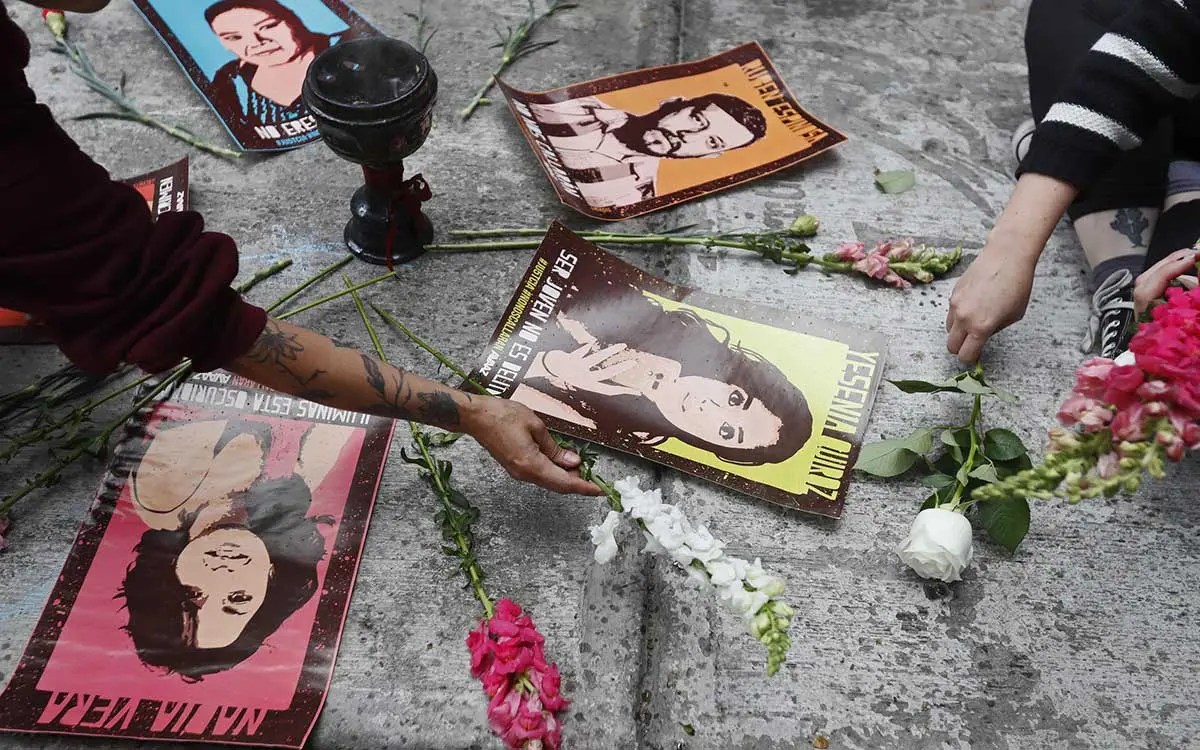
Translator’s note: Eight years ago, on July 31, 2015, Nadia Vera Pérez, Yesenia Quiroz Alfaro, Mile Virginia Martin, Alejandra Negrete Avilés, and Rubén Espinosa Becerril were murdered in an apartment in the Narvarte neighborhood of Mexico City. While three individuals have been sentenced, the identity of all those responsible, including the intellectual authors and their motives, remains unknown. Evidence points to the possible involvement of the then-government of Javier Duarte of Veracruz, as both Nadia and Rubén had fled Veracruz following threats for their work. The words of Mirtha Luz Pérez Robledo, mother of Nadia Vera, marking one year since the murder of her daughter can be found on this site here. That translation, along with an introduction, was later published in the anthology Rebellious Mourning: The Collective Work of Grief, edited by Cindy Milstein. The Narvarte killings are also the focus of the documentary In Broad Daylight: The Narvarte Case, available on Netflix. The below article discusses new information about the case brought forward this week by the family members of those killed.

By Aristegui Noticias, August 2, 2023
Translated by Scott Campbell

Patricia Espinosa, sister of photojournalist Rubén Espinosa, one of the five victims of the multihomicide in the Narvarte neighborhood in July 2015, said it was due to a statement of assets [1] that they could link Alejandro “N” [2] as being the son of an official in the Mexico City Attorney General’s Office (FGJCDMX), and that both could be related to the case.

In an interview with Aristegui en Vivo, Patricia explained that, according to police reports, they found that a cell phone associated with Alejandro “N” was located during and after the murders, and the cross-checking of information from a statement of assets identified Alejandro as the son of Luis Javier Garcia Saldaña, identified by the families as an agent of the Public Prosecutor’s Office of the FGJCDMX.

Neither of the two have been investigated, assured Patricia Espinosa.

Continue reading

Colonialism and Yaqui Resistance

Family members of ten community members of Loma de Bácum who were disappeared on July 14, 2021, hold up images of their missing loved ones.

The following is an English-language translation of a brief essay I wrote for a course I am taking called Epistemologías del Sur. As I dislike the academic practice of creating work that doesn’t go beyond the classroom, I’m publishing it here in case it might be of any use or interest. For the latest information on Fidencio Aldama and his case, see this recently published statement.

For the past several years, part of my work has been as a member of the Fidencio Aldama Support Group. A small, binational collective of individuals in what they call the United States and Mexico, we work through a variety of means to advocate for the immediate release of Yaqui political prisoner Fidencio Aldama and to support him and his family during his imprisonment. Currently serving a 14-year sentence for a homicide he did not commit, Fidencio’s incarceration is rooted in his and his community of Loma de Bácum’s steadfast resistance to the imposition of a natural gas pipeline through their territory. Echoes of the arguments put forward by the epistemologies from the South in this course can be easily identified through the lenses of Fidencio’s case and the centuries-long tradition of Yaqui resistance and self-defense.

Continue reading

Podcast on Fidencio Aldama and Miguel Peralta

On the most recent It’s Going Down podcast, a compa and I discuss the cases of Indigenous political prisoner Fidencio Aldama and politically persecuted Indigenous anarchist Miguel Peralta in so-called Mexico. We also touch on topics such as migration and neoliberal megaprojects. Have a listen here!

Mexico: Feminist Political Prisoners Magda Soberanes and Karla Tello Released from Prison

Originally published on It’s Going Down.


A brief update from Radio Zapote, translated by Scott Campbell, on the release from prison of Magda Soberanes and Karla Tello, who had been held since April 15, 2022, following a police raid on the Okupa Cuba.

The young social activists and feminists, Magda Soberanes and Karla Tello, were released from prison on February 23, and will be allowed to continue their legal proceedings in freedom. This joyous day comes after they had been held for almost a year in connection with the Okupa Cuba.

A movement for the immediate release of both women led to this victory against the injustice that is the Mexican justice system.

Continue reading

Mexican officials announce bids for Interoceanic Corridor industrial zones

Originally published on Avispa Midia.

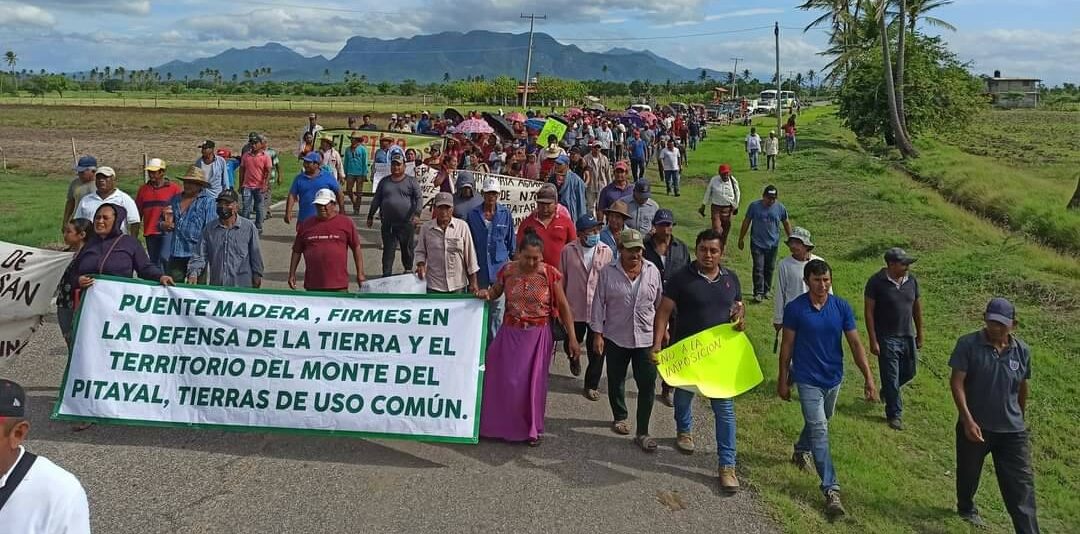
Indigenous Binniza residents of Puente Madera, in the municipality of San Blas Atempa, protest against the imposition of an industrial park on their communal lands.

By Ñaní Pinto
Translated by Scott Campbell

The Mexican government, through the Ministry of Economy, announced that the first tenders towards the creation of planned industrial zones in the Interoceanic Corridor of the Isthmus of Tehuantepec (CIIT), in Oaxaca, will be open for bids in February. 

“We hope that each development zone will generate investments of around one billion dollars,” said Raquel Buenrostro Sánchez, Minister of Economy, who anticipated that, in addition to government investment, resources from the United States government will be forthcoming.

At the end of 2022, the former head of the CIIT, Rafael Marín Mollinedo, announced that ten plots of land were ready for the construction of industrial parks. “At the beginning of the year, they will be opened for bidding so that developers can take charge and fill them with businesses,” he said in an interview with an infrastructure industry media outlet.

Continue reading

Encounters with Complimentary Racism

Spaniard and Indian Produce a Mestizo by Juan Rodríguez Juárez, 1715

Near the end of last year, I became a father. As expected, it’s been full of ups and downs, joys and frustrations, precious moments and sleepless nights. But one thing I didn’t expect to encounter was racism. More specifically, racism in the guise of compliments.

My partner is Mexican and currently we are living here as we wait an eternity for the US immigration system to process her visa request. During this time, we’ve been inundated by visits from her family members and friends. And I’ve been consistently taken aback by how many have pointed out the color of our child’s skin and complimented us on it – as if we somehow genetically modified our baby to meet their racialized expectations. “How light-skinned he is!” or “Oh, what a good color! Congratulations!” are some of the more frequent comments.

To be certain, our child is light-skinned and at this moment can easily pass as white. But the phenomenon of an individual telling my partner that she had “chosen well” by reproducing with me and as a result was “improving the race” was not a response we had been anticipating. Nor the other range of comments, such as our child being smart because “first-world babies are more advanced.” One wonders what words would have been (un)spoken if our child had different skin pigmentation.

Continue reading