On the most recent It’s Going Down podcast, a compa and I discuss the cases of Indigenous political prisoner Fidencio Aldama and politically persecuted Indigenous anarchist Miguel Peralta in so-called Mexico. We also touch on topics such as migration and neoliberal megaprojects. Have a listen here!
indigenous
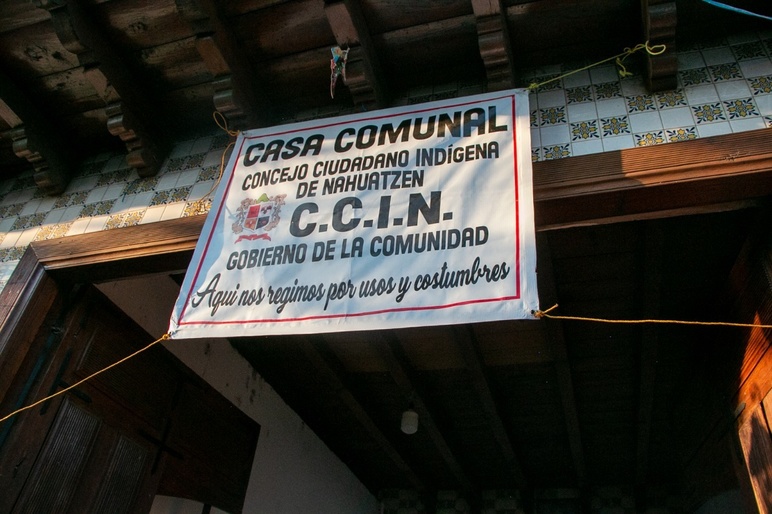
Interview with Freed Indigenous Political Prisoner José Antonio Arreola of Nahuatzen
Originally posted on It’s Going Down.
La versión original de esta entrevista en español puede encontrarse aquí.
The following is an interview with José Antonio Arreola, a former political prisoner released after serving more than three years of a seven-year sentence based on trumped-up charges. He is a member of the autonomous Indigenous Citizens’ Council of Nahuatzen, a P’urhépecha community in Michoacán. A previous interview with José Antonio can be read here.
After more than three years in prison, you won your freedom on February 9, when the Supreme Court ordered your immediate release. Congratulations on this victory. How are you doing? How does it feel to be back home?
I feel very happy, I feel very glad to now be with my children, with my wife, with all my family there in my community of Nahuatzen.
For those who are unfamiliar with your case, can you share some background on the struggle in Nahuatzen and the events that led to your political imprisonment?
The reason why I ended up in prison, being a political prisoner, is because of the following. In 2015, Nahuatzen rose up against the insecurity that the municipal government had been causing since its inception. An insecurity throughout the entire community. The residents, when they saw that organized crime came for some compañeros and took one of them, got together. We all gathered in the main square in our community and decided at that moment that the plan to follow was to meet with the entire municipal government in the municipal president’s office and to be able to ask for information about our compañero. The situation ended, thank God, with us recovering our compañero.
We called for a plebiscite through a statement read through the public address system in our community, where each person was asked to voluntarily come and sign sheets of paper with their name and a copy of their ID. I can tell you that nearly 5,000 signatures were collected out of the 5,000 photocopies. That is why, in 2017, we won a ruling from the Supreme Court, order 035, which resolved that we are an Indigenous community, that gave us our autonomy, our self-government, our self-determination. Subsequently, we filed another lawsuit to obtain the resources directed to our community, which was also granted to us by the Supreme Court through the Toluca regional court.
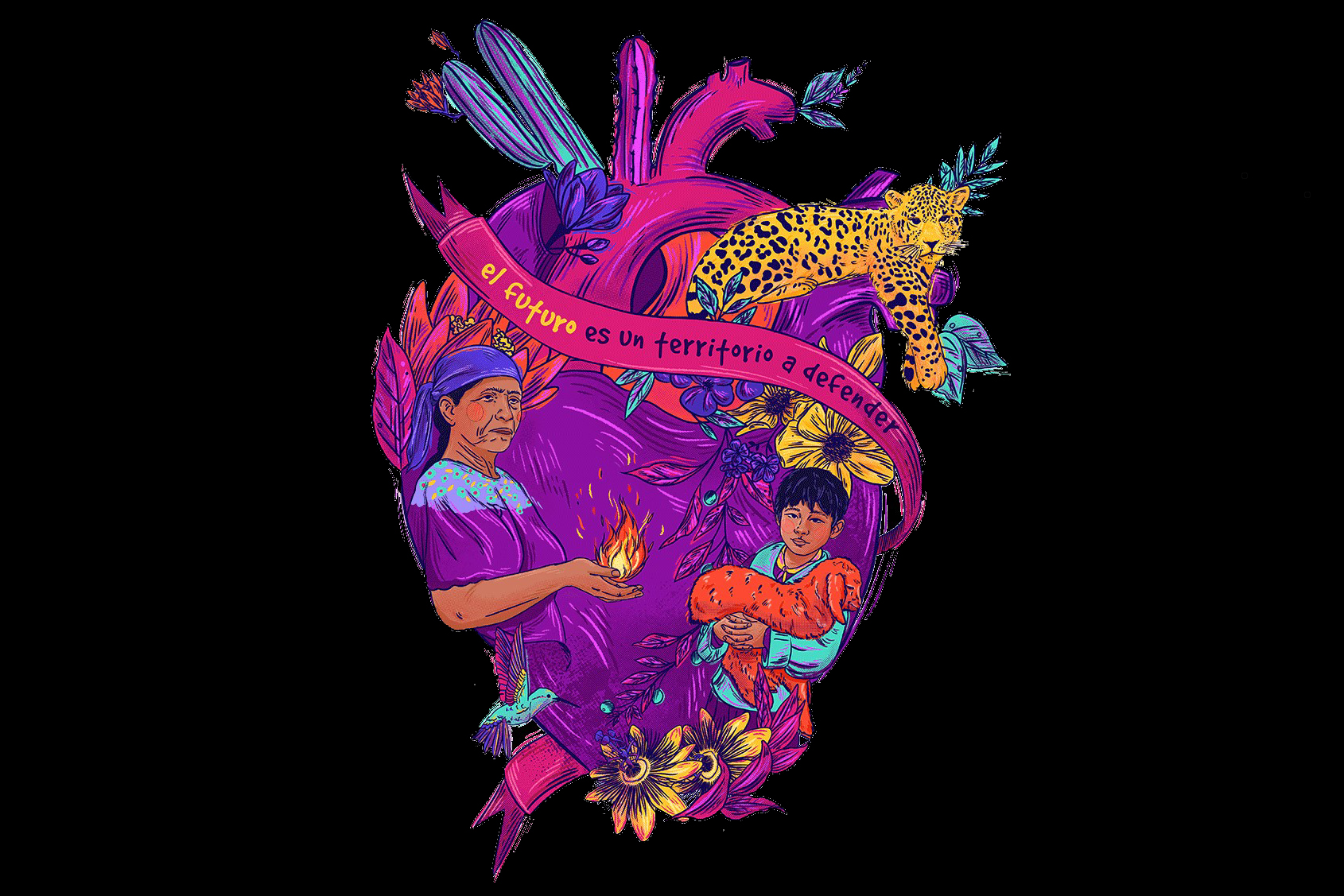
Continue readingIn times of climate crisis, the future is a territory to defend
Originally posted on It’s Going Down.
The following is the manifesto of the recently launched #FuturosIndígenas initiative being organized in so-called Mexico and beyond. Translated by Scott Campbell.
In the midst of this electoral drought, a network of narratives of resistance is born. Facing a climate crisis that threatens our future on the planet, that puts our lives and territories at risk, representatives from more than 20 Indigenous peoples are organizing to confront this emergency. To reforest minds, to indigenize hearts.
We are defending territory, our way of being and existing; we are uniting efforts and hearts through communicative actions and the creation of narratives in defense of life. We name ourselves Kiliwa, Cucapá, Nahua, Acolhua, Tzeltal, Tzotzil, Ñu Savi, Hñatho, Amuzga, Purépecha, Ayuuk, Afro-descendant, Zapoteca, Popoluca, Maya, K’iche’, Wayuu, Zoque and germinate as #FuturosIndígenas [#IndigenousFutures].
Continue readingMessage from Yaqui Political Prisoner Fidencio Aldama
Join the effort to free Fidencio here: https://www.fidencioaldama.org.
A message from Yaqui political prisoner and land defender Fidencio Aldama from prison in Ciudad Obregón, Sonora, Mexico. Fidencio has been locked up since October 27, 2016 and is serving 15+ years for a crime he did not commit.
To Dismantle a Gas Pipeline and Sell it as Scrap Metal: A Story of Yaqui Women

The following article, translated partially by me from the Spanish version on Pie de Página, looks at the women-led struggle against the passing of a U.S. company’s gas pipeline through Yaqui territory in so-called Mexico. It also touches on the case of Yaqui political prisoner Fidencio Aldama, serving a 15+ year sentence related to resistance to the pipeline. For more information on Fidencio, visit fidencioaldama.org.
Text: Daliri Oropeza and Reyna Haydee Ramirez
Photos: Daliri Oropeza
The gas pipeline was already a foregone conclusion, at least that’s what the company, the subsidiary, and the government of Sonora thought. They were wrong. Yaqui women narrate how they have stopped this project.
Loma de Bácum, Sonora: A gigantic metal pipe can be seen at the bottom of a hole in the earth. The family of Carmen García look into the hole which was dug by the people of Loma de Bácum to remove the gas pipeline.
The people used an excavator they seized from the company IEnova, affiliate of the United States transnational, Sempra Energy. The company was building the gas pipeline without the approval of those who live there. A consultation was never carried out. So, after an assembly, the entire community went to where the pipeline was being laid. There, they excavated and cut out with a blowtorch nearly ten kilometers of pipeline, which they then took to Ciudad Obregón to sell as scrap metal.
Continue readingRebellion, Autonomy, and Communal Self-Government in the Indigenous Municipality of Cherán, Michoacán
Originally posted on It’s Going Down.

La versión en español de este podcast y la transcripción se puede encontrar aquí.
On this episode of the It’s Going Down podcast, IGD contributor Scott Campbell interviews Yunuen Torres, a community member from the autonomous P’urhépecha municipality of Cherán, Michoacán. More than nine years ago, on April 15, 2011, the residents of Cherán rose up and removed from their community illegal loggers linked to cartels, the municipal authorities, and the police. In the time since, they created an autonomous communal government where political power rests in the hands of the community and that has been designed to meet the needs of the more than 20,000 inhabitants of Cherán.
The conversation discusses the uprising and its context, how the communal government was formed and how it functions, the changes and challenges experienced in the community as a result of nine years of autonomy, as well as how Cherán is facing the COVID-19 pandemic, and what lessons and inspiration the community’s struggle may offer to other struggles and social movements in other locations.
The interview was conducted in Spanish and rerecorded in English. Many thanks to the comrade who offered their voice for this recording. The two music tracks included in this podcast are both from Cherán. The first is by Colectivo Aho and the second composed by music teacher Mario López and performed by the young musicians of the Banda Sinfónica Infantil y Juvenil Cherán K’eri. A transcript of the interview can be found below.
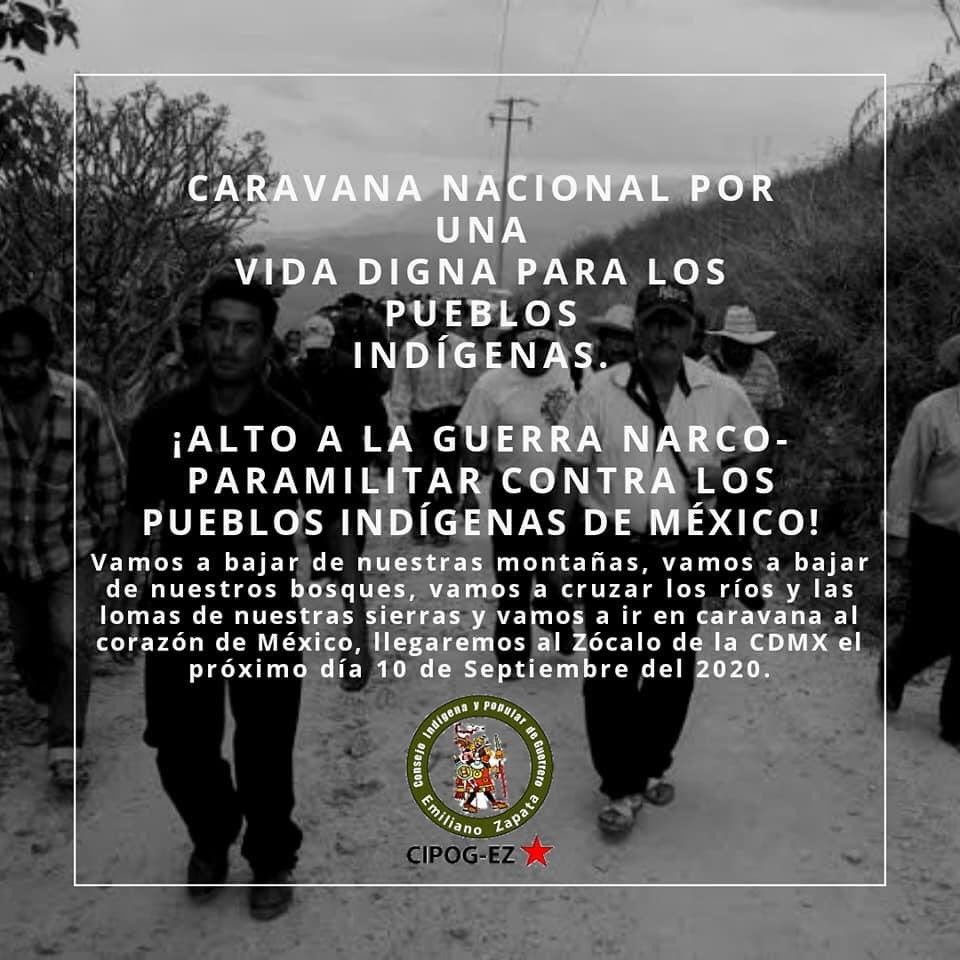
Continue readingMexico: “They are Literally Killing Us” – Call for a National Caravan for a Dignified Life for Indigenous Peoples
Originally posted on It’s Going Down.

Via the National Indigenous Congress (CNI)
Translated by Scott Campbell
As men, women, boys, girls, grandfathers and grandmothers of the Indigenous communities that we are: Na Savi, Me´pháá, Nahua, Ñamnkué, mestizos and Afro-Mexicans from the state of Guerrero, and who are organized in the Indigenous and Popular Council of Guerrero – Emiliano Zapata (CIPOG-EZ), together with our comradely communities in the National Front for the Liberation of the Peoples (FNLP) and the Campesino Organization of the Southern Sierra (O.C.S.S.), we have not forgotten that we are suffering a war against our peoples. A war that began 527 years ago and one that continues. Governments come, governments go, be their logos of one color, two colors or three colors, it doesn’t matter: their boss is the same.
We continue dying from hunger, from the lack of hospitals and doctors, and from poverty, but not just that: they are literally killing us. As if we were animals, as if we were something worthless, something that isn’t human. The narco-paramilitaries hunt us on the roads, in our homes, and our families have to flee. They are the ones they call the displaced, and they go, walking, uprooted from their land, entire communities without a home, with the pain of their murdered relatives, and without knowing if they will eat tomorrow or if they will sleep under a roof, worse off than animals.
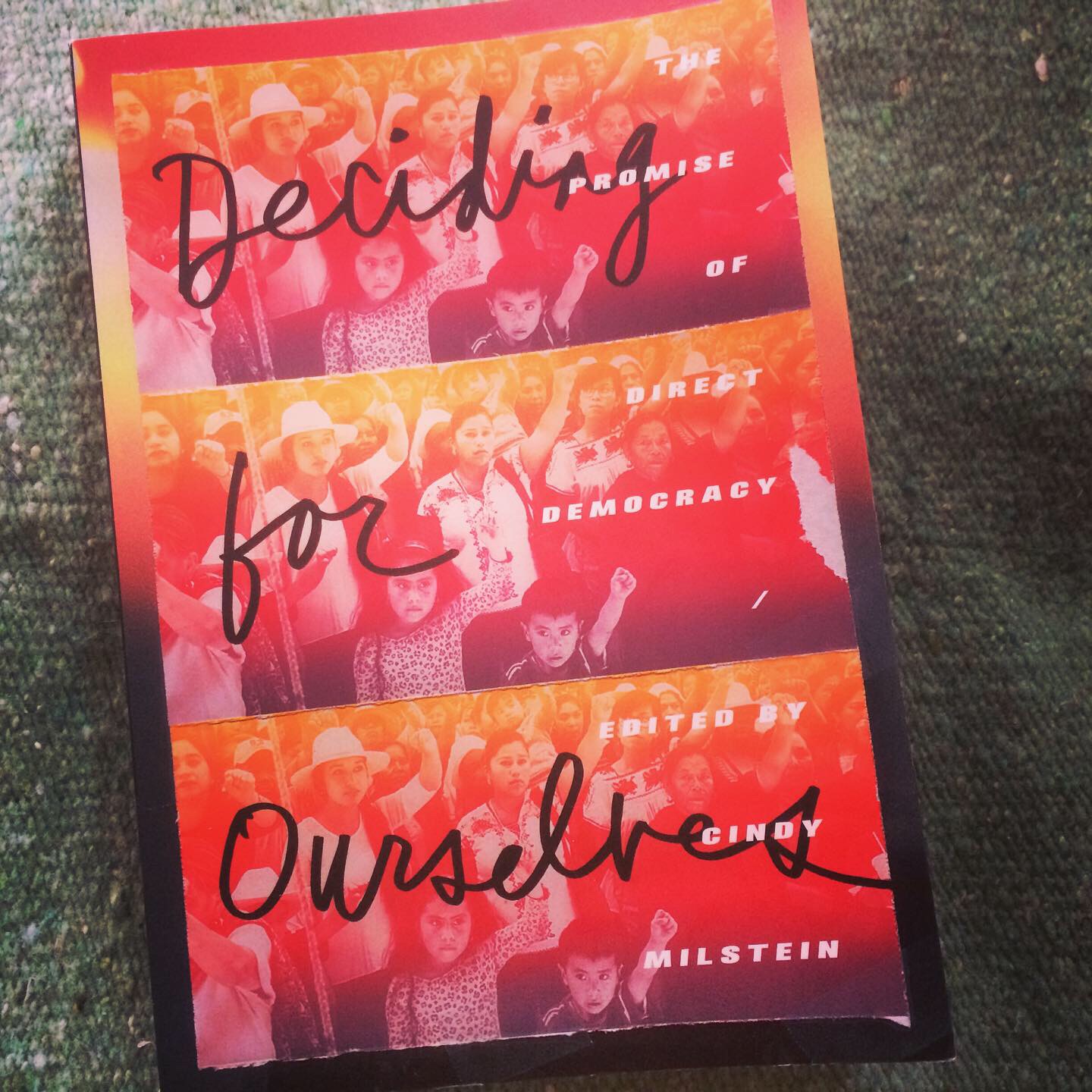
Out Now: “Deciding for Ourselves: The Promise of Direct Democracy”

While it emerges in the midst of tragic and difficult circumstances, I am excited for the release of the anthology Deciding for Ourselves: The Promise of Direct Democracy, edited by Cindy Milstein and to which I contributed the chapter “The Bonfires of Autonomy in Cherán.” As we make our way through this time of loss and uncertainty and begin to think about what comes next, I hope it may offer some insight and inspiration.
It’s now available for a short time on a “Pay What You Can” basis from AK Press.
As the book description reads, “A better world through self-determination and self-governance is not only achievable. It is already happening in urban and rural communities around the world.” This is what Deciding for Ourselves dives into, a theme that couldn’t feel more pressing and necessary.
My contribution looks at the indigenous P’urhépecha municipality of Cherán, located in Michoacán, Mexico. For the past nine years, Cherán has operated under a form of autonomous communal government after a popular uprising removed cartels, local police, politicians and political parties from the area. While the story of the rebellion and its immediate aftermath have been well documented, the chapter takes an in-depth look at how the communal government functions and meets the daily needs of Cherán’s residents, why the government took the form that it did, and how life has changed and is experienced in a place where community and government are woven into a shared communal fabric.
If mutual aid, solidarity, autonomy, self-determination and collective liberation are ideas that interest or resonate with you, this book is worth picking up. And at up to 75% off, it’s a great deal that also helps support an independent radical publisher.
Call for the Global Campaign: The Isthmus is Ours
Originally posted on It’s Going Down

From El Istmo es Nuestro
Translated by Scott Campbell
#ElIstmoEsNuestro
Isthmus of Tehuantepec
June 2019
The Isthmus of Tehuantepec is a region of Mexico shared by the states of Oaxaca and Veracruz. It is the narrowest part of the country between two oceans: the Pacific to the south and the Atlantic to the north (better known as the Gulf of Mexico), and a meeting point between flora and fauna from the north and south. These characteristics make the Isthmus the most biologically diverse area of the country, an invaluable richness of life concentrated on the territories of 11 different Indigenous peoples. Eight with ancestral lands (Zapotec, Mixe, Ikoots, Zoque/Chimalapa, Zoque Popoluca, Chontal, Chochoco and Nahua) and three peoples who migrated due to displacement and forced relocation (Chinanteco, Mixtec, and Tsotsil). Indigenous peoples who to this day have resolutely protected the natural wealth of our territories.
Facing the imminent threat of the Fourth Transformation government and President Andrés Manuel López Obrador (AMLO) to impose on the peoples of the Isthmus of Tehuantepec, the people of Mexico, and the nation itself, the so-called “Integral Development Plan for the Isthmus of Tehuantepec – Interoceanic Train” (popularly known since 1996 as the “Isthmus Megaproject”), and considering that:
The Neoliberalism of Mexico’s New Government Continues to Dispossess and Kill
Originally posted on Avispa Midia

By Ñaní Pinto, Avispa Midia
Translated by Scott Campbell
For the indigenous peoples of Mexico, the winds of war today seem to be the same as those of previous governments. Andrés Manuel López Obrador’s (AMLO) government has been in power just four months and the imposition of development projects, dispossession, persecution, harassment, forced disappearances, and murders continue as before.
On May 4, in the southern Mexican state of Guerrero, indigenous Nahuas belonging to the Popular Indigenous Council of Guerrero – Emiliano Zapata (CIPOG-EZ), held a meeting to coordinate actions at state and federal agencies to pressure them into meeting their social and political demands that had been rejected by the three levels of government. At the end of the meeting, at approximately 6pm, an armed group in Chilapa, Guerrero, kidnapped and later murdered José Lucio Bartolo Faustino and Modesto Verales Sebastián, both members of the National Indigenous Congress (CNI).