Statement on the Occasion of the 15th Anniversary of the Murder of Bety Cariño and Jyri Jaakkola

Originally posted on It’s Going Down.

On April 27, 2010, a solidarity and mutual aid caravan to the besieged autonomous Triqui municipality of San Juan Copala left the city of Oaxaca. Along the way, it was ambushed by government-backed paramilitaries belonging to UBISORT (Union for the Social Well-Being of the Triqui Region). The paramilitaries killed Mixtec organizer Bety Cariño and Finnish solidarity activist Jyri Jaakkola and wounded several others. The following statement marks 15 years since the murders. It was translated by Scott Campbell.

To the media
To national and international public opinion
To social, solidarity, and human rights organizations
To the National Indigenous Congress and the Indigenous Governing Council
To the Zapatista Army of National Liberation
To the Indigenous peoples of Mexico and the world

On the occasion of the 15th anniversary of the murder of Bety Cariño and Jyri Jaakkola:

Today marks 15 years of impunity. Fifteen years since the murder of Bety and Jyri. And, faithful to custom – and the necessary stubbornness of keeping memory alive – we return to this date with the same wounded but unshakeable dignity.

In this digital era, our compañeros have been converted into a QR code, a WhatsApp message, an app, a song, a video that travels the world, a worn photo, a graphic exhibition. But they are not only that: they are a voice that resists in time, in the memory of those of us who refuse to forget.

In these 15 years, we have traveled the entire alphabet – from A to Z – going to every corner where it was possible for us to be, asking for justice. Sometimes we found a warm space, a friendly face that knew how to listen to what should be Justice; but most of the time we only found the eternal bureaucracy, the lie, the indifference. The sidewalks were our place of dialogue, our classrooms, our public plazas: in hunger strikes, in marches, in blockades, in endless waits before public officials and “authorities” of any level. We never expected anything from them. And time has only confirmed that institutional justice in Mexico is a failure.

Continue reading

Raffle in Solidarity with Indigenous Anarchist Miguel Peralta

For more information about Miguel Peralta and the persecution he has been facing for the past decade, read this update from his support group.

Note: If you are located in what is called the United States and would like to participate in the raffle, Miguel’s support crew welcomes your participation! Please contact me for more information. The suggested price of the raffle ticket is $50 MXN ($2.50 USD), but you are welcome to contribute more if you would like. Prize winners will be responsible for covering shipping costs and will not be eligible for prizes that contain perishable items. A continually updated list of prizes can be found on the event’s Facebook page.

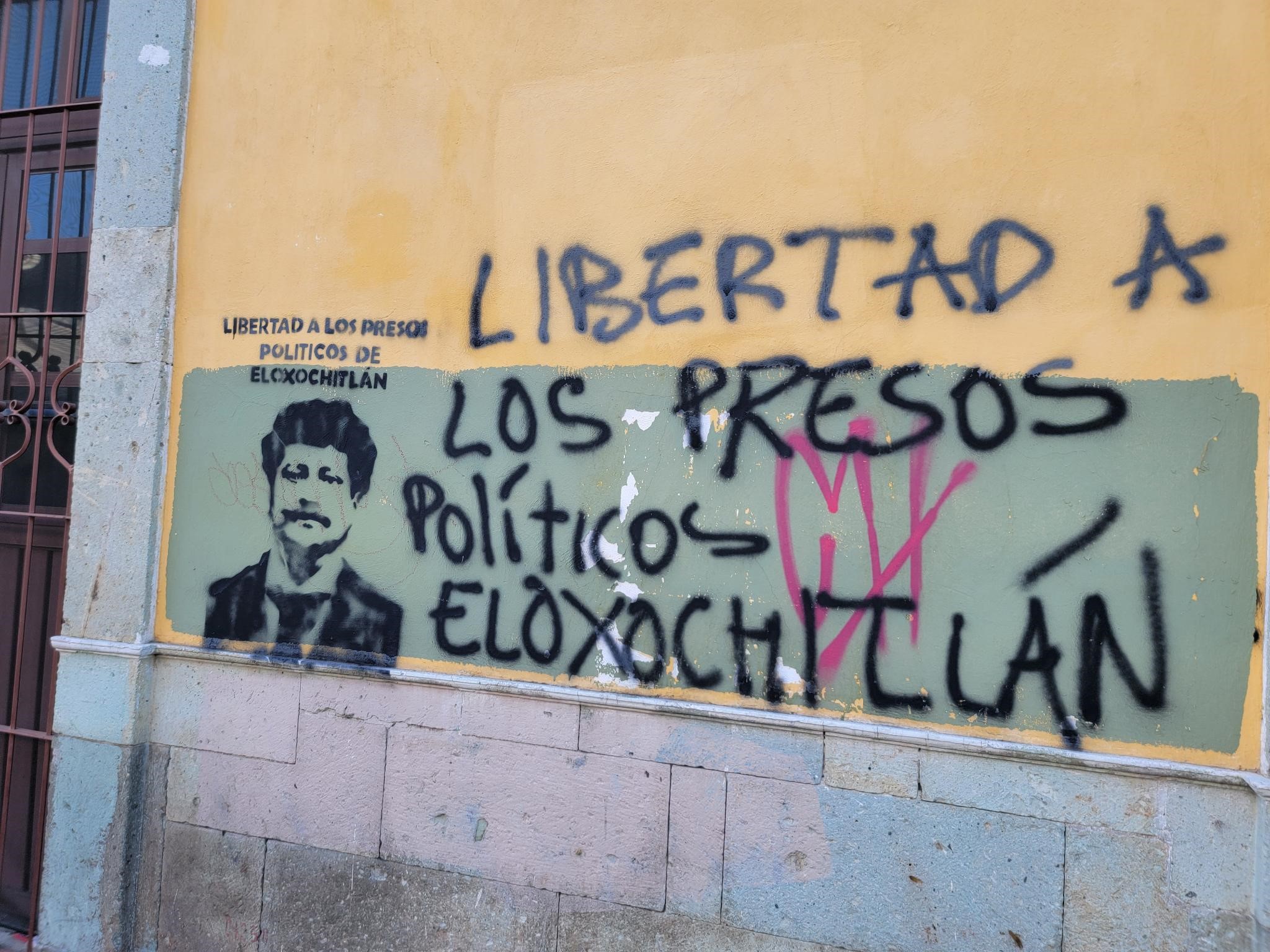
As you know, the case of Miguel Peralta Betanzos and the persecution and repression that his community, Eloxochitlán de Flores Magón, is experiencing, have been going on for more than ten years.

After years of imprisonment, hunger strikes, legal games, going back and forth in court at different judicial levels, etc., Miguel Peralta’s case reached the Supreme Court, which represented the possibility of putting an end to his persecution and obtaining his full and absolute freedom. However, things were not as favorable as one might think, and on November 6, the Supreme Court issued a resolution in which it limited itself to recommending that the Collegiate Court of the City of Oaxaca make review of Miguel’s case from an intercultural perspective. With this, the case returned to those instances, which are far from his community, family, legal team and support group.

Continue reading

Podcast on Fidencio Aldama and Miguel Peralta

On the most recent It’s Going Down podcast, a compa and I discuss the cases of Indigenous political prisoner Fidencio Aldama and politically persecuted Indigenous anarchist Miguel Peralta in so-called Mexico. We also touch on topics such as migration and neoliberal megaprojects. Have a listen here!

Mexican officials announce bids for Interoceanic Corridor industrial zones

Originally published on Avispa Midia.

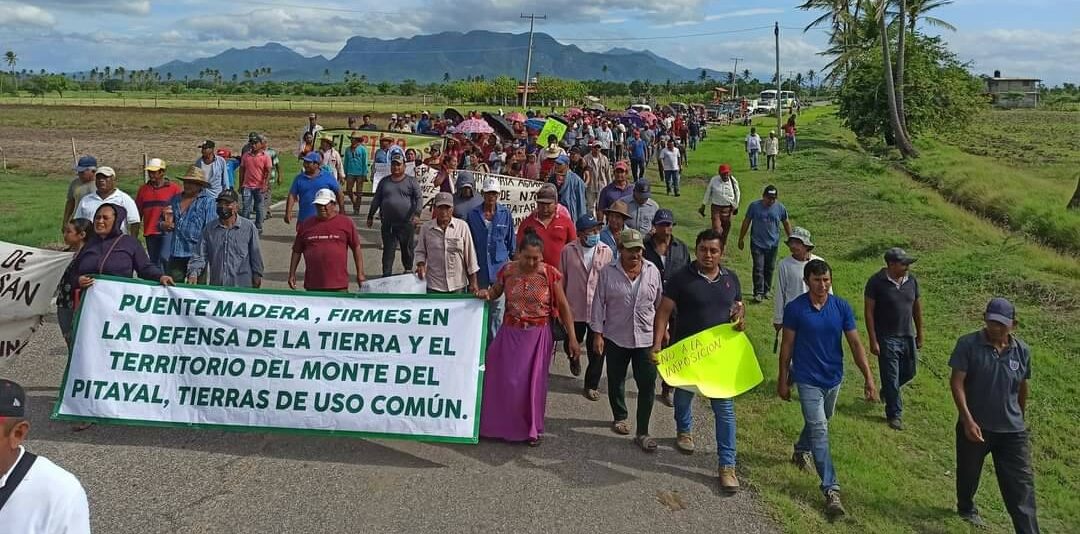
Indigenous Binniza residents of Puente Madera, in the municipality of San Blas Atempa, protest against the imposition of an industrial park on their communal lands.

By Ñaní Pinto
Translated by Scott Campbell

The Mexican government, through the Ministry of Economy, announced that the first tenders towards the creation of planned industrial zones in the Interoceanic Corridor of the Isthmus of Tehuantepec (CIIT), in Oaxaca, will be open for bids in February. 

“We hope that each development zone will generate investments of around one billion dollars,” said Raquel Buenrostro Sánchez, Minister of Economy, who anticipated that, in addition to government investment, resources from the United States government will be forthcoming.

At the end of 2022, the former head of the CIIT, Rafael Marín Mollinedo, announced that ten plots of land were ready for the construction of industrial parks. “At the beginning of the year, they will be opened for bidding so that developers can take charge and fill them with businesses,” he said in an interview with an infrastructure industry media outlet.

Continue reading

Seven Indigenous political prisoners from Eloxochitlán de Flores Magón launch hunger strike

By Gloria Muñoz Ramírez, Desinformémonos
Translated by Scott Campbell, On Mastodon

Eloxochitlán de Flores Magón | Desinformémonos. The demand for the freedom of the seven Mazateco political prisoners was the focus of the international event organized to mark the 100th anniversary of the death in prison of Ricardo Flores Magón, an anarchist precursor of the Mexican Revolution who questioned power until his death, which occurred on November 21, 1922 in a U.S. prison. The revolutionary was born in Eloxochitlán, Oaxaca, and here, after a series of commemorative acts organized by the community, it was announced that the prisoners – held in three different prisons – will remain on hunger strike until governor-elect Salomón Jara Cruz opens a dialogue with their relatives to facilitate their release.

In a letter sent from the prisons of Villa de Etla, Taniveth, and Cuicatlán, Oaxaca, Jaime Betanzos, Fernando Gavito, Alfredo Bolaños, Omar Hugo Morales, Herminio Monfil, Isaías Gallardo and Francisco Durán recalled that the federal government recognized them as political prisoners in December 2018. At that time, they noted, “it was recognized that we are Indigenous people whose rights have been violated and that crimes were fabricated against us.”

Continue reading

Oaxaca: Launch of the Campaign: “It’s Not Development – It’s Dispossession!”

Originally posted on It’s Going Down.

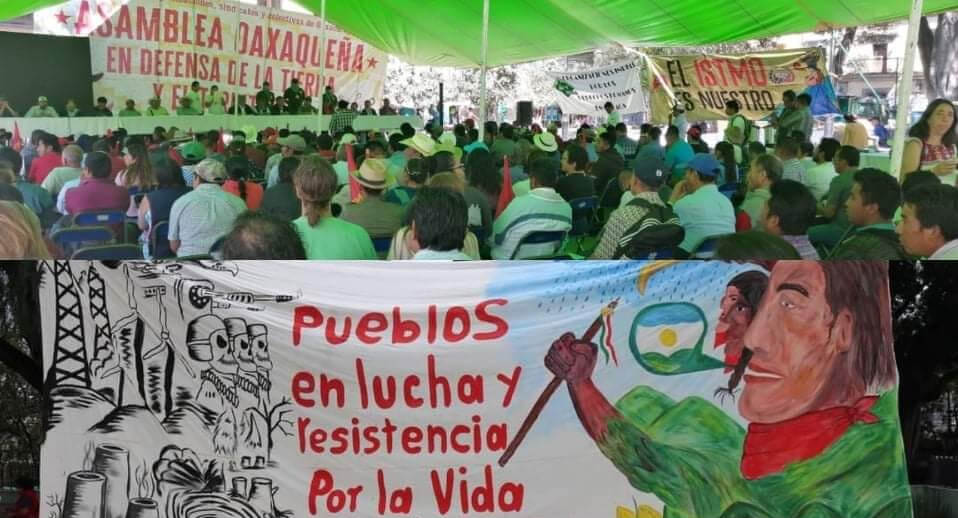
The following is a statement from the Oaxacan Assembly in Defense of Land and Territory, translated by Scott Campbell, regarding the launch of a new permanent campaign against extractivist, neoliberal megaprojects.

Launch of the Campaign: “It’s Not Development – It’s Dispossession!”

We, the communities and organizations that have joined together since 2019 as the Oaxacan Assembly in Defense of Land and Territory, today, November 20, 2021, on the 111th anniversary of the Mexican Revolution, declare the following:

Thanks to the long struggles of our ancestors against the conquistadores, colonizers and invaders who for centuries tried to dispossess us of everything that gives us life and sustenance, the First Peoples of Oaxaca still retain our communal and ejidal lands, as well as our territories and autonomy as communities and municipalities. We are still here as Afro-Mexican, Amuzgo, Binizaa, Chatino, Chinanteco, Chocholteco, Chontal, Cuicateco, Ikoots, Ixcateco, Mazateco, Mixe, Mixteco, Náhuatl, Tacuate, Triqui, Zapoteco y Zoque peoples, and all the men, women, and others who have their blood in our veins and maintain their culture in our daily lives. We inhabit and work our ancestral territories, developing our own forms of knowledge and at the same time enriching the world with them, in a reciprocal and respectful manner. Thanks to this connection to territory, Oaxaca and all of Mexico has great cultural and ecological richness and diversity that those who seek to harm us so often boast about.

The peoples of Mexico today commemorate the invaluable struggle of our general Emiliano Zapata, speaker of the Nahuatl language and son of the people of Morelos, and our immortal Ricardo Flores Magón, Oaxacan and son of the Mazateco people, who together with thousands of Mexicans gave their lives for justice and for a dignified life for the peasants, the workers, the dispossessed, the Indigenous peoples of Mexico.

Continue reading

Indigenous Women Begin Hunger Strike Demanding Freedom for Political Prisoners in Oaxaca

Originally posted on It’s Going Down.

The following piece by Erika Lozano, published by Desinformémonos and translated by Scott Campbell, discusses the hunger strike started by women from Eloxochitlán de Flores Magón, Oaxaca, demanding the release of seven political prisoners from the community.

Mazatec women encamped in front of the Federal Judiciary Council in Mexico City to demand the release of their relatives after seven years in prison. Argelia Betanzos, Bertha Reynosa and Carmela Bonfil, from Eloxochitlán, Oaxaca, demanded a meeting with the president of the council, Arturo Zaldívar Lelo de Larrea.

“What brings us here is desperation, since the innocence of our family members has been proven by legal evidence, as has the fabrication of the crimes of which they are accused,” explained Betanzos during an interview. She is the daughter of prisoner Jaime Betanzos Fuentes, and she started a hunger strike on Tuesday, May 25, stating she will not leave until she has an answer. She also denounced that “using the pandemic as a pretext,” there has been no progress in the case on the part of Oaxacan authorities.

Continue reading

Brutal State Violence Against Students in Chiapas Inspires Widespread Protests

Original posted on It’s Going Down.

By Scott Campbell

On Tuesday, May 18, around 120 students from the Mactumactzá Rural Normal School blockaded the Chiapa de Corzo-San Cristóbal highway in Chiapas, Mexico. The students were protesting changes to the admissions process to the school that would disadvantage working class, rural and Indigenous students. Seen as an attempt to change the makeup of the student body or as a step towards closing the school (which has already been closed four times by the Mexican state), students took to the streets, along with others who joined in solidarity.

In response, Chiapas State Police brutally attacked the blockade, firing tear gas and beating students with batons. In total, 95 people were arrested, 74 women and 19 men, all but two of them students. All 95 were moved to the high-security prison of El Amate. During the course of the arrests and transfer, the women students were forced to strip naked and were sexually assaulted by police. All those arrested are facing charges of rioting with a gang enhancement, violent robbery, damages, and attacks on the public peace and the bodily and cultural integrity of the state.

Continue reading

Support the upcoming book “Teaching Resistance: Radicals in the Classroom”

Teaching Resistance: Radicals, Revolutionaries, and Cultural Subversives in the Classroom is an impressive anthology coming out next month from PM Press incorporating a wide variety of voices examining the practice of radical education both inside and outside the classroom. I’m honored to have a piece included in the collection that chronicles and analyzes the militant 2016 teachers’ strike in Mexico which occurred across several states, was met with severe state repression, and led to broader popular rebellion, particularly in Oaxaca. (Here’s a piece from 2016 providing a brief snapshot of some of the events of that struggle.)

In order to print and distribute as many copies as possible, PM Press is running a Kickstarter campaign through which folks can pre-order the book. There are ten days left on the campaign and I encourage you to support it if you’re able and please help spread the word. Here’s more info on the book:

Teaching Resistance: Radicals, Revolutionaries, and Cultural Subversives in the Classroom is a collection of the voices of fierce, activist educators from around the world with a focus on those in and around DIY/punk subculture who engage inside and outside the classroom from pre-kindergarten to university.

More than just a book for teachers, Teaching Resistance is for anyone who wants to explore new ways to subvert educational systems and institutions, collectively transform (and re-imagine) educational spaces, and empower students and other teachers to fight for genuine change. Topics include community self-defense, Black Lives Matter and critical race theory, intersections between punk/DIY subculture and teaching, ESL, anarchist education, Palestinian resistance, trauma, working-class education, prison teaching, the resurgence of (and resistance to) the Far Right, special education, antifascist pedagogies, and more.

Thanks for supporting radical education and radical publishing!

Call for the Global Campaign: The Isthmus is Ours

Originally posted on It’s Going Down

From El Istmo es Nuestro
Translated by Scott Campbell

#ElIstmoEsNuestro
Isthmus of Tehuantepec
June 2019

The Isthmus of Tehuantepec is a region of Mexico shared by the states of Oaxaca and Veracruz. It is the narrowest part of the country between two oceans: the Pacific to the south and the Atlantic to the north (better known as the Gulf of Mexico), and a meeting point between flora and fauna from the north and south. These characteristics make the Isthmus the most biologically diverse area of the country, an invaluable richness of life concentrated on the territories of 11 different Indigenous peoples. Eight with ancestral lands (Zapotec, Mixe, Ikoots, Zoque/Chimalapa, Zoque Popoluca, Chontal, Chochoco and Nahua) and three peoples who migrated due to displacement and forced relocation (Chinanteco, Mixtec, and Tsotsil). Indigenous peoples who to this day have resolutely protected the natural wealth of our territories.

Facing the imminent threat of the Fourth Transformation government and President Andrés Manuel López Obrador (AMLO) to impose on the peoples of the Isthmus of Tehuantepec, the people of Mexico, and the nation itself, the so-called “Integral Development Plan for the Isthmus of Tehuantepec – Interoceanic Train” (popularly known since 1996 as the “Isthmus Megaproject”), and considering that:

Continue reading