Insumisión: Reclaiming Life in a Panorama of Death

IMG_1318

Originally posted on It’s Going Down
By Scott Campbell

As the violence and repression instigated, permitted and perpetrated by the Mexican State continues to grow, it can become overwhelming to summarize it in these pages in a way that does justice to the victims and survivors of state terror and impunity. Yet as the grim tallies multiply and impact more and more lives, so does the clarity that what the state offers even in its best moments is no solution at all, and from that point resistance flourishes. The sparks of refusal and defiance despite the odds ignite around the country, making meaning out of that which seems so senseless, breathing reclaimed life into a panorama of death. As América del Valle of Atenco said earlier this month, “Even with everything they did to us, we don’t come here today as martyrs. We don’t come to cry…We’ve come here to say NO!” Lxs insumxs. Let’s see what they’ve been up to over the past two weeks.

Continue reading

Insumisión: The State Responds with Force

xochicuautlaOriginally posted to It’s Going Down.
By Scott Campbell

Several victories for social movements in Mexico were recounted in the Insumisión posted on March 17. This edition focuses on the state’s response, which in the first part of April has been expressed through two of the state’s inherent qualities: force and coercion.

One of the victories mentioned was that of the Otomí community of San Francisco Xochicuautla in the State of Mexico. After years of organizing, in February a court suspended the expropriation decree issued by the federal government for a highway to be built through their forest and town. The community celebrated, but in a case of foreshadowing, said they would not rest until the entire highway project was canceled. The state emphatically made clear that the project was still on, when on April 11th it besieged and invaded the town with 800 to 1,000 riot police. In complete disregard for the court ruling, the police escorted in heavy machinery belonging to Grupo Higa (the owner of which is a close friend of Mexican President Enrique Peña Nieto), that began clearing land for the highway and also demolished the home of one of the movement’s leaders. The solidarity extended to Xochicuautla was powerful and immediate, which included the Zapatistas and the National Indigenous Congress issuing a “Maximum Alert” both for Xochicuautla and Ostula in Michoacán, due to an ambush against the Community Police of that autonomous Nahua community, which killed one. This seemed to catch the state off-guard, as on April 13 they ordered the construction be stopped and promised to pay for the damages. But they also said they would be leaving a number of state police nearby to guard the machinery in the meantime. In response, the community has organized 24-hour patrols in case of renewed construction, and the situation remains tense.

Continue reading

Insumisión: Victories Don’t Slow the Struggle

Originally posted on It’s Going Down.

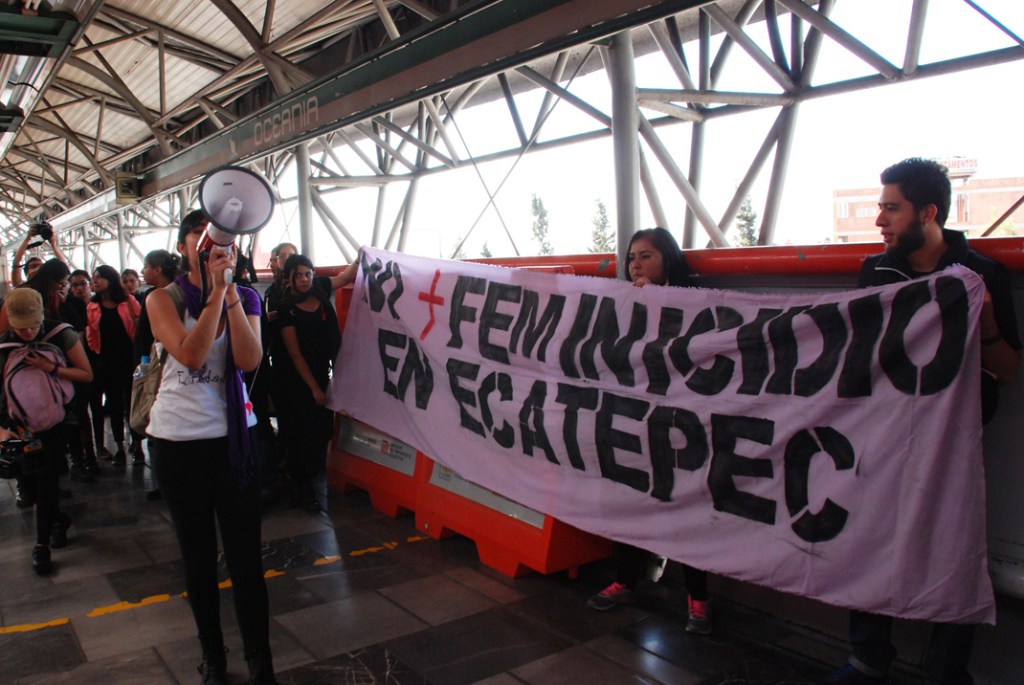
femicide-ecatepec-mexicoIn the past two weeks, social movements in Mexico racked up significant victories while continuing to organize in the face of constant state repression. Detractors will point to the several successes won in the courts as examples of the reasonableness and functionality of a democratic government. Those on the ground know that it was not due to a wise and benevolent judiciary that they won, but through years of organization, mobilization and struggle that forced the state’s hand. Even in victory they remain on guard, knowing that the state cannot be trusted and these battles are part of a larger war. That war rages daily as neoliberal capitalism, racism and patriarchy continue to plunder the peoples and territories of Mexico and beyond.

Readers may have heard of the assassination of indigenous land and water defender Berta Cáceres in Honduras on March 3. Wounded during the attack was Gustavo Castro Soto, a member of Otros Mundos from Chiapas. Fearing for his safety, he attempted to leave Honduras only to be detained by authorities and ordered to remain in the country for 30 days. A few days later on March 14 movements around Mexico participated in the International Day of Action Against Dams and in Defense of Rivers. The Chiapan Front in Defense of Water, Land and Life held an action in the state capital of Tuxtla Gutiérrez, while the Mexican Movement of those Affected by Dams and in Defense of Rivers (MAPDER) released a map documenting the 40 people from Mexico to Colombia killed since 2005 for organizing against dam construction. The map quickly became outdated the following day when Nelson García, a member of the Civic Council of Popular and Indigenous Organizations of Honduras (COPINH) – the same group Berta Cáceres belonged to – was assassinated.

Continue reading

Insumisión: Resistance and Repression in Mexico

Originally posted on It’s Going Down, below is the first entry of what will be a regular column I’m writing for that site, providing new and analysis of social movements and struggles in Mexico. Esta nota también está disponible en español en El Enemigo Común.

unam-che-yorch-barricadas

Welcome to the first edition of “Insumisión,” a new regular column here on It’s Going Down, bringing you news and analysis from social movements and struggles in the territory referred to as Mexico. Let’s get started.

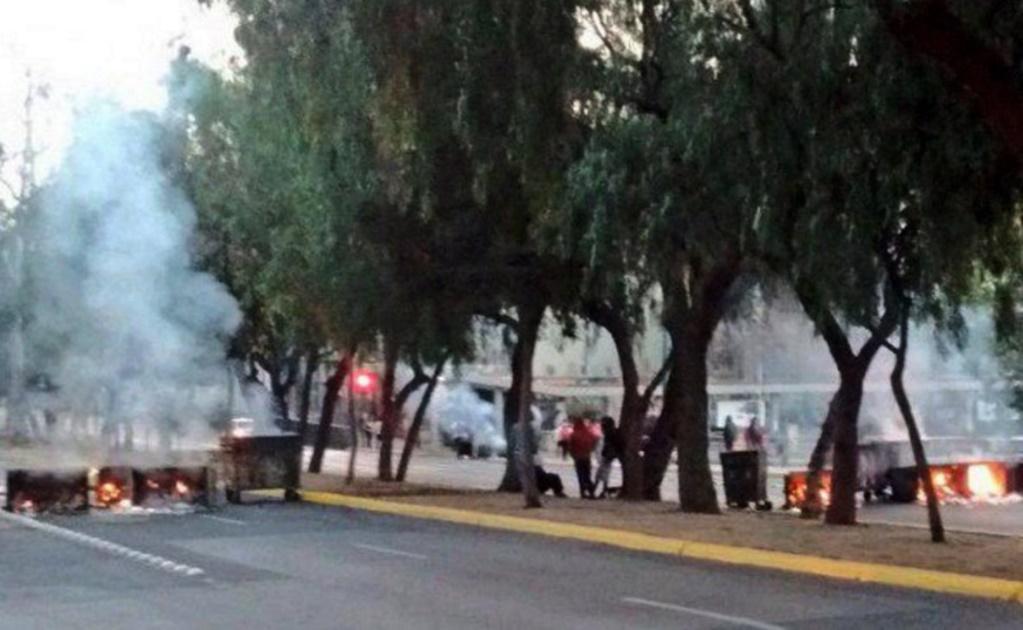
As readers of It’s Going Down might already be aware, in Mexico City last Wednesday, Yorch, a member of Okupa Che, was kidnapped by police in the latest round of repression to face the autonomous, anti-authoritarian space on the campus of the National Autonomous University of Mexico, held since the 1999-2000 student strike. Police planted a backpack full of drugs on Yorch, who is now captive in a federal prison in Sonora. The morning after the arrest, compañerxs blockaded access to UNAM with burning dumpsters, and Molotov cocktails were unleashed on the UNAM Campus Security offices and patrol cars. The clamor to evict Okupa Che has steadily grown since Yorch’s arrest. Okupa Che released a statement, calling for solidarity and for people to be on alert to respond to any eviction attempt. Anarchist political prisoner Fernando Bárcenas (who received acts of solidarity from Tijuana to Bloomington earlier this year) sent an open letter in solidarity with Yorch, which reads in part:

It is not my intention to send a message of sympathy or pity, on the contrary, I intend to send a message of war, insurrectionary love and solidarity…In the streets or in the jail, we have to do nothing more than keep moving forward until all are free…Although along the way we stumble upon death…Unconditional and revolutionary solidarity with compa Yorch, prisoner of war…

Continue reading

Oaxaca, the fight for the air

Originally posted on El Enemigo Común

radio-oaxacaBy Jaime Quintana Guerrero
January 20, 2016
Desinformémonos
Translated by Scott Campbell

Bi, in the Binnizaá or Zapotec language, means “air”, means “spirit.” “For us, air not only represents life, it also carries loved ones who have died. When one dies, their spirit becomes air and returns to the people.”

The struggles against the wind farms that abound throughout the state also, then, contain this element: “They want to change the path of the wind, of the air, of our spirits, of our loved ones.”

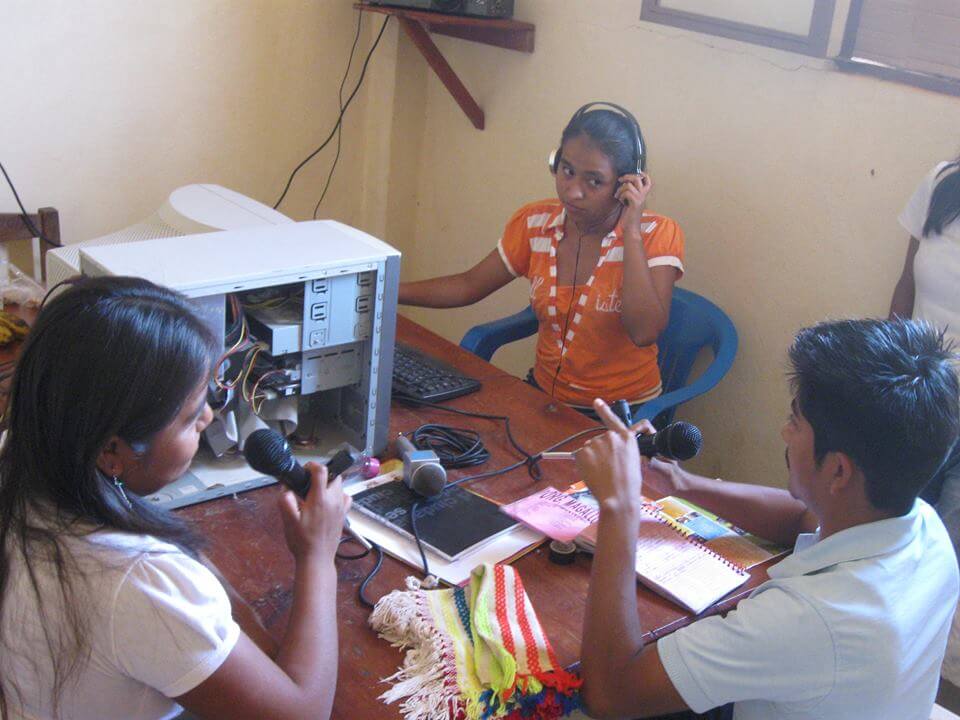
Carlos Martínez Fuentes, a member of Radio Totopo in Juchitán, Oaxaca, is the one who explained the above. Radio Totopo, with its nine years transmitting together with the spirits in the air, also belongs to the Popular Assembly of the Juchitecan People.

The emergence of the radio was a result of sheer necessity. On the one hand, as a tool in the resistance struggle to Plan Puebla Panama, which includes the wind farm system being put into place between those two locations.

As well, because the tradition of the indigenous peoples of Oaxaca (as with most) is oral. The radio fits perfectly, then. “In Oaxaca, 16 different languages are spoken. The indigenous oral tradition is the key reason behind the existence of community radio stations and community assemblies, their main supporters,” explains José Juan Cárdenas, member of the Integral Community Communication organization.

Continue reading