Update on Yorch: Saying Goodbye

Translated from the Spanish-language post on the Auditorio Che Facebook page.
Learn more about Mexican anarchist political prisoner Jorge “Yorch” Esquivel here.

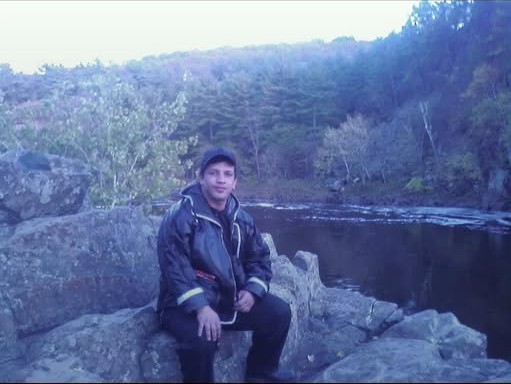
UPDATE: At 11:30am on Tuesday, December 9, 2025, beloved compa Jorge “Yorch” Esquivel passed on. More information will be made available in time.

December 6, 2025, 3:40pm

Dear family, compas, friends, and community:

Thank you very much for all your letters, love, and solidarity with our beloved Yorch. We have read each and every one of your messages and we are very grateful because we know that he hears us and knows that he is not alone.

We want to share with you that our compañero’s health has become more delicate every day. Even with the dignified attention that he is finally receiving and the enormous and loving efforts made by doctors and hospital personnel charged with his treatment, due to the advanced state of deterioration he was in upon arriving at the hospital – where he is now – it has been very complex attending to his urgent condition. After the long period of medical neglect, the effects of the damned prison on all facets of prisoners’ health – and more in this case, where the violence of the State and UNAM orchestrated repression against him – and his prior medical issues which themselves paint a picture of potential complications due to his hospitalization, multiple surgeries, and irreversible damage suffered in 2019 when Yorch survived appendicitis that was not treated in time.

Sadly, our compañero now does not have the possibility of recovering a dignified quality of life and he has a very high probability of remaining in the state he is in now and due to the risks presented by the procedures and treatments indicated by his clinical state in the coming days. During recent weeks, Yorch was wandering from site to site without precise information. We did not receive clear news regarding his condition, treatment, or anything else. The prison authorities and those of the various hospitals where he has been this past month did not inform us of the severity of his condition until he arrived at the current hospital and we learned minutes before they had to intubate him – due to neurological failures that don’t allow for him to breathe unaided – that this was just a small part of the series of complications he has. The situation took us completely by surprise.

Continue reading

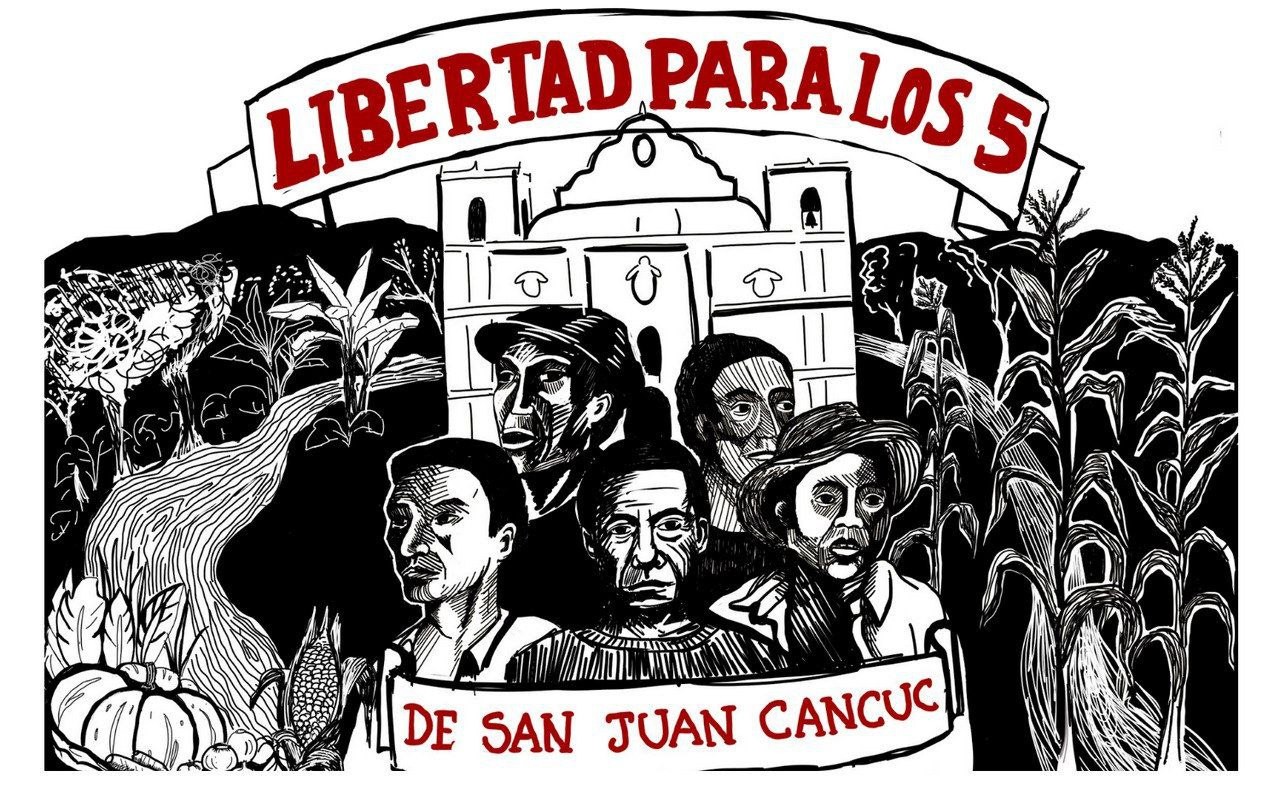
The San Juan Cancuc Five are free!

A statement from the Grupo de Trabajo No Estamos Todxs, originally published in Spanish and translated by Scott Campbell, on the release of the five Tzeltal political prisoners from San Juan Cancuc, Chiapas. Read more about their case here.

Valle de Jovel, November 21, 2025, from the territory called Mexico.

To all the compas that have accompanied the fight for the freedom of our imprisoned compañeros from San Juan Cancuc.

To their relatives and our five formerly imprisoned compañeros from San Juan Cancuc, to them above all.

For more than three years, we have had the enormous opportunity to accompany our imprisoned compañeros. Years of talks, of hugs, of seeing them and knowing them, of their dreams and their hopes. Above all, of their dignified demand for justice and freedom.

Today, in this land where injustice has become the norm, but resistance and dignified rage have also become a permanent condition. Today, dawn brought with it a rumor that turned into a cry and then a song: our five compañeros from San Juan Cancuc are free.

Free, but not due to the goodwill of the bad government, but due to the dignified stubbornness of their families, of their community, and of all the hands and hearts that, from so many corners of the world, did not stop fighting against the machinery that manufactures guilt.

Continue reading

Ayotzinapa and Palestine bleed on the same map

Originally published on It’s Going Down.

September 26, 2025, marks 11 years since the State attack on students from the Ayotzinapa Rural Normal School in Iguala, Guerrero, during which six people were killed, 25 wounded, and 43 students disappeared. The following is the transcript of a Spanish-language audio segment produced by Radio Cósmica Libre in collaboration with the efforts of Communicators for Palestine. It is based on information provided by Eduardo Ibañez from the Mexico City Encampment for the 43. It has been translated into English by Scott Campbell.

Mexico, September 26, 2014. Palestine, July 2014. Two dates that seem unrelated but that resonate with a shared echo.

That night in Iguala, 43 campesino students were uprooted from their dormitories, from their classrooms, from their dreams. That summer in Gaza, more than 2,000 Palestinian lives were taken in a matter of weeks by the military machinery of Israel. What connects a young normalista from Guerrero with a Palestinian girl who will never become a teenager? The answer is in the language of State violence, in the economy of death that connects the Mexican narco-state with Israeli necropolitics.

It is a long story. In Mexico, the rural normal schools emerged in the 1930s to educate the children of poor campesinos and to train teachers committed to their communities. In Palestine, the Nakba of 1948 inaugurated a life under occupation, dispossession, and forced displacement.

Two processes that appear distinct but that share the experience of peoples who were denied the right to exist in conditions of dignity. In 2014, the stories intersected. While Gaza suffered bombardments during July and August, students from the Ayotzinapa rural normal school went out into the streets of Mexico to protest in solidarity.

Just one month later, they themselves were victims of forced disappearance and murder in Iguala. The disappearance did not just erase bodies, it also condemned mothers, sisters, and wives to a life of interminable searching. State violence produces widows, orphans, mutilated families, communities condemned to permanent mourning.

State crime has no passport. Governments that kill in the name of security learn from one another. Necropolitics speaks many languages, but death always says the same thing: “You don’t matter.”

Continue reading

Freedom for the prisoners from San Juan Cancuc, Chiapas

Originally posted on It’s Going Down.

UPDATE: On November 21, 2025, a court ordered the immediate release of the five imprisoned compañeros from San Juan Cancuc. Read a statement regarding their release here.

The text below provides an overview of the case of five imprisoned Tzeltal land defenders from San Juan Cancuc, Chiapas, and how they can be supported during a crucial moment in the fight for their freedom.

The Context

San Juan Cancuc is an Indigenous Tzeltal municipality in the highlands of Chiapas located about halfway between the popular tourist destinations of San Cristóbal de Las Casas and the Cascadas de Agua Azul. For more than 20 years, the federal and state governments have been attempting to “develop” the region via the construction of a superhighway, called the Highway of Cultures. This highway would connect the coast of Chiapas in the west – where the Interoceanic Corridor will pass – with the highlands and jungle regions of the east – where they Maya Train will pass. With neoliberal development comes militarization, and attempts have been underway to construct a National Guard base near San Juan Cancuc. Since coming to power in 2018, the MORENA party has accelerated these projects.

The proposed Highway of Cultures is to pass through San Juan Cancuc and the State has put pressure on the municipality to agree to the construction – including withholding social programs. In repeated community assemblies, the residents of the municipality and neighboring communities have rejected both construction of the superhighway and the National Guard base.

Continue reading

In Memory of Carolina Saldaña

En español a continuación.

On August 1, I was looking for resources to share about Black August and naturally thought of Carolina. She’d written a book on it in Spanish, after all. For many years, she had organized events in Mexico commemorating Black August, seeking to lift up the legacy and ongoing struggle of the Black liberation movement and its political prisoners and prisoners of war. While I didn’t end up using any of her work that day in what I shared, remembering her called forth a wave of fond recollections. I made a mental note to reach out to her, as we hadn’t been in touch in a couple of years. Sadly, a few hours later, I heard from compas in Mexico that she passed away that morning.

Common adjectives that have been used to remember Carolina Saldaña include relentless, tireless, and unceasing. They are all accurate and true. Carolina was truly a force, guided by a commitment and passion for solidarity and freedom that compelled her work over the years that I had the honor to know her. We first connected in 2008, when I began working with the now-defunct website El Enemigo Común. Carolina was already involved – unsurprisingly – as she seemed to be active with most independent media projects in Mexico. Our communication originated over email until we had the opportunity to meet in person a couple of years later during one of my trips to Mexico.

Continue reading

Fighting against forgetting

At the invitation of Mirtha Pérez, the mother of Nadia Vera, I prepared this short piece on grief and collective memory ten years after the Narvarte murders. It was originally published in Spanish on Memorial Narvarte.

I did not know Alejandra, Mile, Nadia, Rubén or Yesenia. I only learned of their existence after their deaths. It is a double loss to realize the lives one might have encountered had they not been stolen so abruptly and so cruelly. Despite not knowing them in life, I have had the honor to participate in a very small way in trying to maintain their memories and presences over the past ten years.

It began when I read Mirtha’s letter-poem to her daughter, Nadia, marking one year after her murder. Working with independent media outlets in what is called the United States, I translated her letter, published it online, and shared it among friends, comrades, and on social media. As a result, a dear compa who was editing an anthology on collective grief and mourning asked to include the translation in the volume, along with a brief introduction written by me.

Continue reading

Marking 10 years since the Narvarte murders: Justice, struggle, and memory

Originally posted on It’s Going Down.

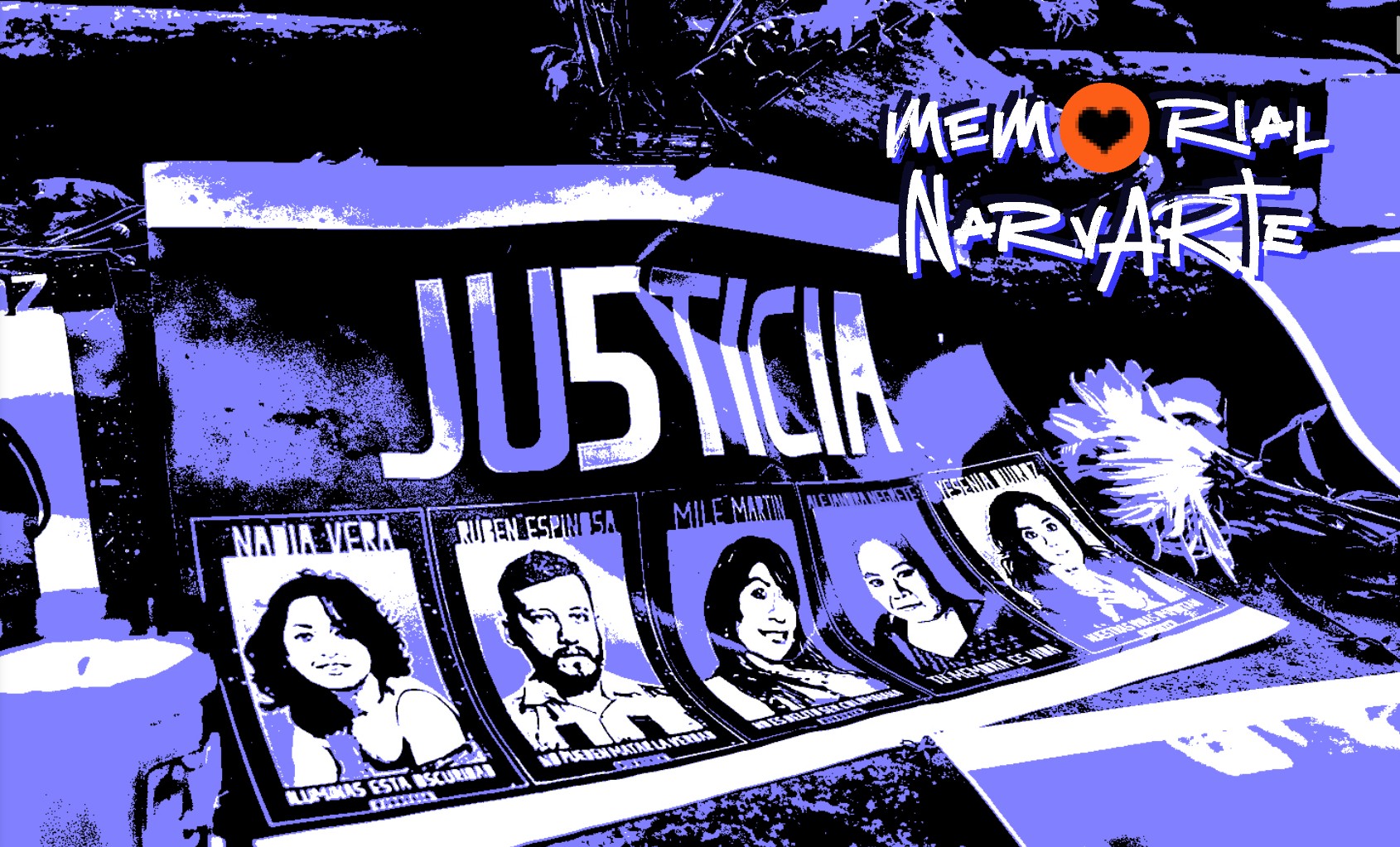
On July 31, 2015, Alejandra Negrete, Mile Martín, Nadia Vera, Rubén Espinosa and Yesenia Quiroz were murdered in an apartment in the Narvarte neighborhood of Mexico City. In the ten years since, their family members, friends, and comrades have been demanding justice and struggling to keep their memories alive. While three people have been detained for the killings, evidence ignored by the Mexico City prosecutor’s office implicates former officials of that office in the killings. It has also refused to investigate the role of the administration of Javier Duarte, former governor of Veracruz, from where Nadia, a radical activist, and Rubén, a journalist, fled fearing for their safety after receiving threats. To mark ten years, those accompanying the families in their search for truth and justice have created a digital common archive: Memorial Narvarte. Below is a text announcing the archive along with a piece by Mirtha Luz Pérez Robledo, the mother of Nadia Vera. Both were translated by Scott Campbell.


Memorial Narvarte: An Archive for the Future

Ten years after Alejandra Negrete, Mile Martín, Nadia Vera, Rubén Espinosa and Yesenia Quiroz were taken from us, we continue putting faith in collective memory.

After the multi-femicide and homicide that occurred on July 31, 2015, in an apartment at 1909 Luz Saviñón Street in the Narvarte neighborhood of Mexico City, authorities tried to create a “historical truth,” to shelve the case without considering that Nadia and Rubén fled from threats in Veracruz, and without following the different lines of investigation linked to Nadia’s activism and Rubén’s journalism. What followed would be a demand for justice in the face of criminalization, revictimization, xenophobia, and discrimination against the 5; as well as a collective demonstration of resistance and living memory.

Over the course of this decade, together with their families and allied organizations, we made space amid State neglect and abandonment. We want to continue building a dissident common sense to the hegemonic narratives regarding the recent history of our country and the acts that mark us. That is why we are building a common archive, a space of digital memory to remember them: memorialnarvarte.org.

Continue reading

Manifesto of the Feminist Anti-Carceral Network of Latin America

Originally published on It’s Going Down.

The following manifesto documents the formation, organization, politics, and methodologies of the Feminist Anti-Carceral Network of Latin America. Originally published in Spanish on Desinformémonos, it was translated by Scott Campbell.

Faced with the globalization of patriarchal and racist capitalism’s fascist project of death, which has used penal states to criminalize poor and racialized populations, to destroy their communal fabric, and to enable the dispossession of their resources and territories, we decided to join our struggles and strategies of resistance together with the creation in 2020 of the Feminist Anti-Carceral Network of Latin America. While our primary spaces of resistance and community building are the women’s prisons of the continent, our struggle is against the patriarchal penal States that function at the service of capital and that have historically used the force of law to facilitate and justify the exploitation and control of impoverished and racialized populations.

Although this politics of death was already being confronted locally by our organizations, it was in the context of the health and humanitarian crisis caused by the SARS COV 2 virus that we decided to unite our struggles. The pandemic revealed how the preexisting conditions of vulnerability and violence had differentiated and disproportionate impacts on certain groups, profoundly affecting women deprived of freedom. COVID 19 made plain the carceral crisis that has existed in Latin America for several decades, which our organizations have been denouncing. The overcrowded conditions, the lack of health services, the punitive nature of the prison systems, the long pretrial detention processes, the lack of alternatives to incarceration all exploded in the face of the health crisis. This context gave us the possibility of not only making carceral violence visible, but to document and show how prisons are part of a broader apparatus of death that destroys communal fabrics and facilitates dispossession and the advance of capital. Although each of our organizations carries out its work in different territories, under the control of different penal States, the violences we face have many similarities and come together in a civilizing project of death marked by militarism, of which prisons are one more link.

Continue reading

Marco Antonio Suástegui: The Warrior Lineage of the Yopes

Originally published on It’s Going Down.

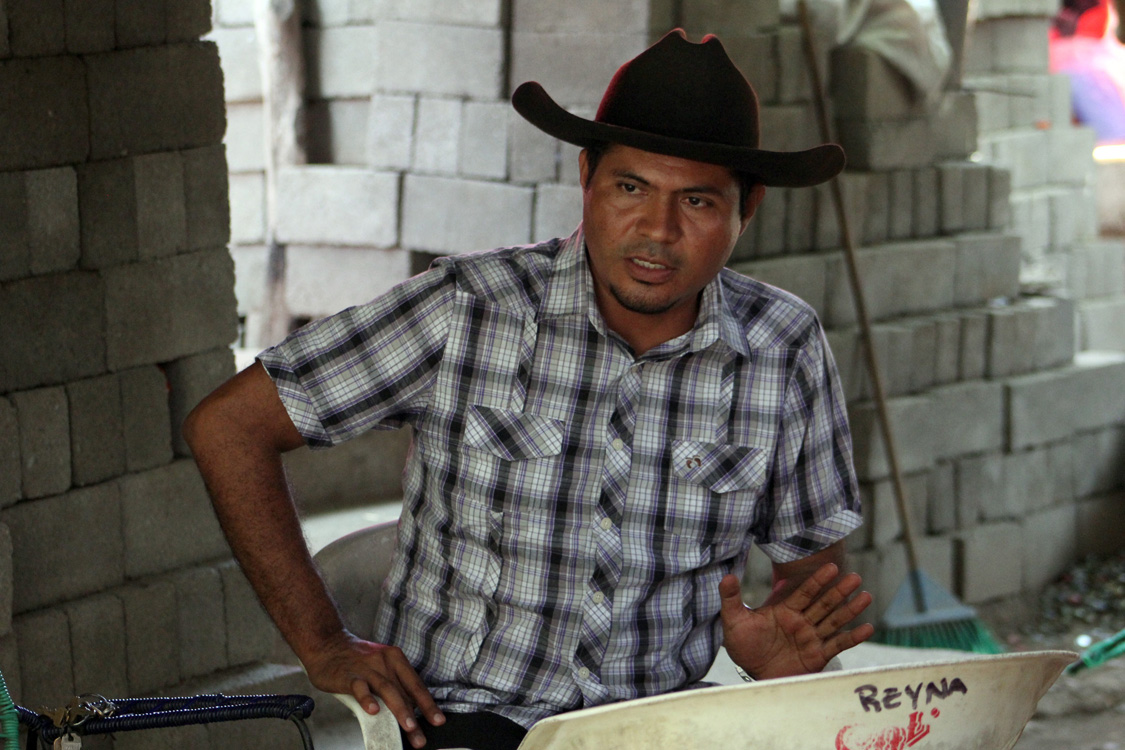
The following article by Vidulfo Rosales Sierra, translated by Scott Campbell, pays tribute to Marco Antonio Suástegui, a longtime and well-respected community organizer in Guerrero, Mexico, who played a key role in the defeat of the neoliberal La Parota dam project. He was targeted by a gunman and shot eight times on April 18, passing away on April 25.

Marco Antonio Suástegui Muñoz, son of Pedro Suástegui Valeriano and Noelia Muñoz Rodríguez, campesinos from La Parota. The Suásteguis are the founders of the communal nucleus of Cacahuatepec, they and other families fought for the creation of communally held property. Later, other leaders would be coopted by the PRI members of the National Campesino Confederation (CNC), one of the cacique figures was Eduardo Valente Navidad. These corrupt leaders handed out commission positions and sold lands to the highest bidder.

In 2000, the federal government began to talk about several large-scale infrastructure projects. Airports and large dams to generate energy and provide water to cities and towns would be built. One of these was to be in Guerrero. It was La Parota hydroelectric dam. It would cover an area of 17,000 hectares and would be 190 meters high. It would cover the municipalities of Acapulco, San Marcos, and Juan R. Escudero. The reservoir would be used as a lake for ecotourism. The bay of Acapulco would be joined with La Parota dam.

In 2003, with René Juárez as governor, engineers from the Federal Electricity Commission (CFE) began to build wells and sample houses, heliports, and other basic works, without consulting the community. The campesinos became concerned and obtained information about the damage caused by the work.

The communities of Garrapatas, Arroyo Verde, and San José would be buried under water. This worried them and, in their assemblies, they decided to set up an encampment in El Fraile to block the passage of machinery and CFE personnel. The campesinos went to see Marco Antonio and Felipe Flores for advice and to strengthen the movement. Marco Antonio did not hesitate for a moment. He went to the encampment. Together with Felipe Flores, they began to organize the struggle, traveling through various communities with communal lands, the ejidos of Dos Arroyos and Los Huajes.

Continue reading

Statement on the Occasion of the 15th Anniversary of the Murder of Bety Cariño and Jyri Jaakkola

Originally posted on It’s Going Down.

On April 27, 2010, a solidarity and mutual aid caravan to the besieged autonomous Triqui municipality of San Juan Copala left the city of Oaxaca. Along the way, it was ambushed by government-backed paramilitaries belonging to UBISORT (Union for the Social Well-Being of the Triqui Region). The paramilitaries killed Mixtec organizer Bety Cariño and Finnish solidarity activist Jyri Jaakkola and wounded several others. The following statement marks 15 years since the murders. It was translated by Scott Campbell.

To the media
To national and international public opinion
To social, solidarity, and human rights organizations
To the National Indigenous Congress and the Indigenous Governing Council
To the Zapatista Army of National Liberation
To the Indigenous peoples of Mexico and the world

On the occasion of the 15th anniversary of the murder of Bety Cariño and Jyri Jaakkola:

Today marks 15 years of impunity. Fifteen years since the murder of Bety and Jyri. And, faithful to custom – and the necessary stubbornness of keeping memory alive – we return to this date with the same wounded but unshakeable dignity.

In this digital era, our compañeros have been converted into a QR code, a WhatsApp message, an app, a song, a video that travels the world, a worn photo, a graphic exhibition. But they are not only that: they are a voice that resists in time, in the memory of those of us who refuse to forget.

In these 15 years, we have traveled the entire alphabet – from A to Z – going to every corner where it was possible for us to be, asking for justice. Sometimes we found a warm space, a friendly face that knew how to listen to what should be Justice; but most of the time we only found the eternal bureaucracy, the lie, the indifference. The sidewalks were our place of dialogue, our classrooms, our public plazas: in hunger strikes, in marches, in blockades, in endless waits before public officials and “authorities” of any level. We never expected anything from them. And time has only confirmed that institutional justice in Mexico is a failure.

Continue reading