Update on Yorch: Saying Goodbye

Translated from the Spanish-language post on the Auditorio Che Facebook page.
Learn more about Mexican anarchist political prisoner Jorge “Yorch” Esquivel here.
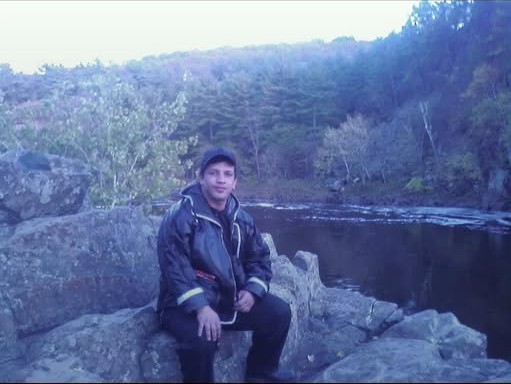
UPDATE: At 11:30am on Tuesday, December 9, 2025, beloved compa Jorge “Yorch” Esquivel passed on. More information will be made available in time.

December 6, 2025, 3:40pm

Dear family, compas, friends, and community:

Thank you very much for all your letters, love, and solidarity with our beloved Yorch. We have read each and every one of your messages and we are very grateful because we know that he hears us and knows that he is not alone.

We want to share with you that our compañero’s health has become more delicate every day. Even with the dignified attention that he is finally receiving and the enormous and loving efforts made by doctors and hospital personnel charged with his treatment, due to the advanced state of deterioration he was in upon arriving at the hospital – where he is now – it has been very complex attending to his urgent condition. After the long period of medical neglect, the effects of the damned prison on all facets of prisoners’ health – and more in this case, where the violence of the State and UNAM orchestrated repression against him – and his prior medical issues which themselves paint a picture of potential complications due to his hospitalization, multiple surgeries, and irreversible damage suffered in 2019 when Yorch survived appendicitis that was not treated in time.

Sadly, our compañero now does not have the possibility of recovering a dignified quality of life and he has a very high probability of remaining in the state he is in now and due to the risks presented by the procedures and treatments indicated by his clinical state in the coming days. During recent weeks, Yorch was wandering from site to site without precise information. We did not receive clear news regarding his condition, treatment, or anything else. The prison authorities and those of the various hospitals where he has been this past month did not inform us of the severity of his condition until he arrived at the current hospital and we learned minutes before they had to intubate him – due to neurological failures that don’t allow for him to breathe unaided – that this was just a small part of the series of complications he has. The situation took us completely by surprise.

Continue reading
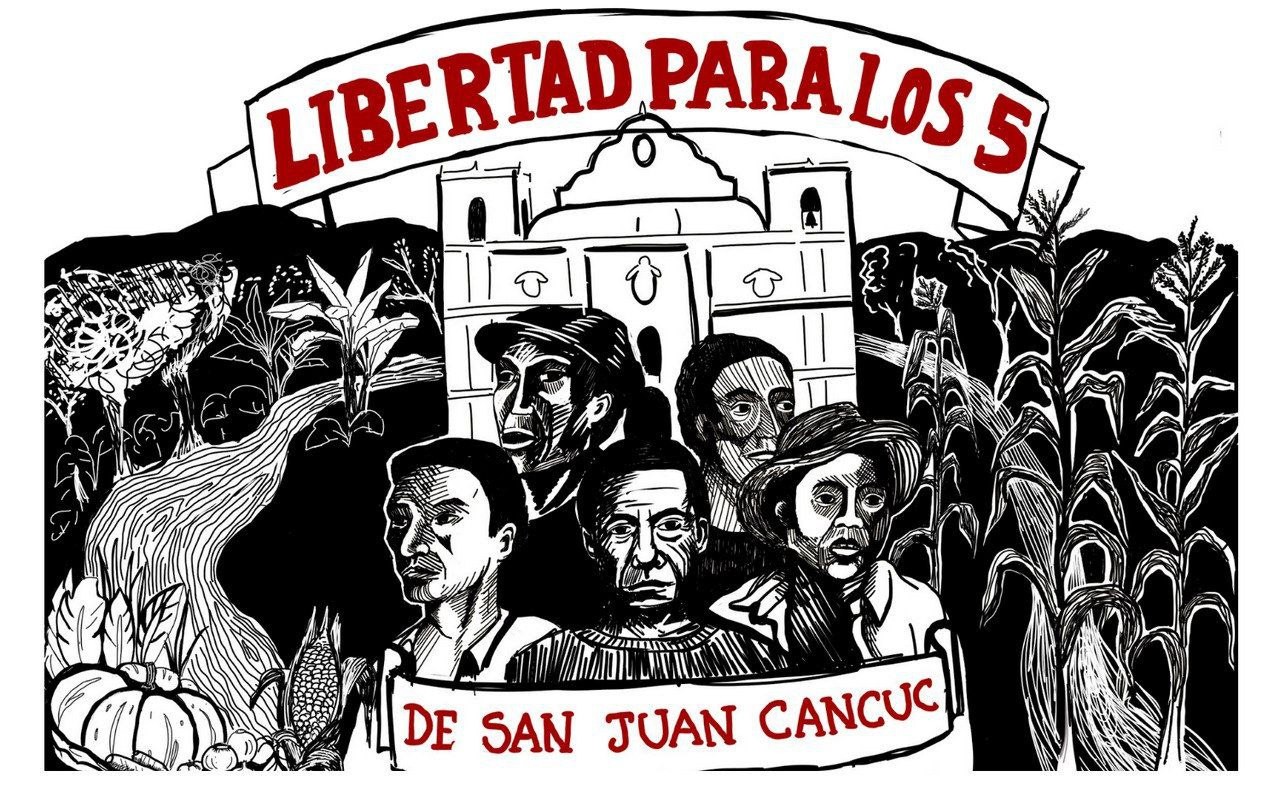
The San Juan Cancuc Five are free!

A statement from the Grupo de Trabajo No Estamos Todxs, originally published in Spanish and translated by Scott Campbell, on the release of the five Tzeltal political prisoners from San Juan Cancuc, Chiapas. Read more about their case here.

Valle de Jovel, November 21, 2025, from the territory called Mexico.

To all the compas that have accompanied the fight for the freedom of our imprisoned compañeros from San Juan Cancuc.

To their relatives and our five formerly imprisoned compañeros from San Juan Cancuc, to them above all.

For more than three years, we have had the enormous opportunity to accompany our imprisoned compañeros. Years of talks, of hugs, of seeing them and knowing them, of their dreams and their hopes. Above all, of their dignified demand for justice and freedom.

Today, in this land where injustice has become the norm, but resistance and dignified rage have also become a permanent condition. Today, dawn brought with it a rumor that turned into a cry and then a song: our five compañeros from San Juan Cancuc are free.

Free, but not due to the goodwill of the bad government, but due to the dignified stubbornness of their families, of their community, and of all the hands and hearts that, from so many corners of the world, did not stop fighting against the machinery that manufactures guilt.

Continue reading

Freedom for the prisoners from San Juan Cancuc, Chiapas

Originally posted on It’s Going Down.

UPDATE: On November 21, 2025, a court ordered the immediate release of the five imprisoned compañeros from San Juan Cancuc. Read a statement regarding their release here.

The text below provides an overview of the case of five imprisoned Tzeltal land defenders from San Juan Cancuc, Chiapas, and how they can be supported during a crucial moment in the fight for their freedom.

The Context

San Juan Cancuc is an Indigenous Tzeltal municipality in the highlands of Chiapas located about halfway between the popular tourist destinations of San Cristóbal de Las Casas and the Cascadas de Agua Azul. For more than 20 years, the federal and state governments have been attempting to “develop” the region via the construction of a superhighway, called the Highway of Cultures. This highway would connect the coast of Chiapas in the west – where the Interoceanic Corridor will pass – with the highlands and jungle regions of the east – where they Maya Train will pass. With neoliberal development comes militarization, and attempts have been underway to construct a National Guard base near San Juan Cancuc. Since coming to power in 2018, the MORENA party has accelerated these projects.

The proposed Highway of Cultures is to pass through San Juan Cancuc and the State has put pressure on the municipality to agree to the construction – including withholding social programs. In repeated community assemblies, the residents of the municipality and neighboring communities have rejected both construction of the superhighway and the National Guard base.

Continue reading

In Memory of Carolina Saldaña

En español a continuación.

On August 1, I was looking for resources to share about Black August and naturally thought of Carolina. She’d written a book on it in Spanish, after all. For many years, she had organized events in Mexico commemorating Black August, seeking to lift up the legacy and ongoing struggle of the Black liberation movement and its political prisoners and prisoners of war. While I didn’t end up using any of her work that day in what I shared, remembering her called forth a wave of fond recollections. I made a mental note to reach out to her, as we hadn’t been in touch in a couple of years. Sadly, a few hours later, I heard from compas in Mexico that she passed away that morning.

Common adjectives that have been used to remember Carolina Saldaña include relentless, tireless, and unceasing. They are all accurate and true. Carolina was truly a force, guided by a commitment and passion for solidarity and freedom that compelled her work over the years that I had the honor to know her. We first connected in 2008, when I began working with the now-defunct website El Enemigo Común. Carolina was already involved – unsurprisingly – as she seemed to be active with most independent media projects in Mexico. Our communication originated over email until we had the opportunity to meet in person a couple of years later during one of my trips to Mexico.

Continue reading

Raffle in Solidarity with Indigenous Anarchist Miguel Peralta

For more information about Miguel Peralta and the persecution he has been facing for the past decade, read this update from his support group.

Note: If you are located in what is called the United States and would like to participate in the raffle, Miguel’s support crew welcomes your participation! Please contact me for more information. The suggested price of the raffle ticket is $50 MXN ($2.50 USD), but you are welcome to contribute more if you would like. Prize winners will be responsible for covering shipping costs and will not be eligible for prizes that contain perishable items. A continually updated list of prizes can be found on the event’s Facebook page.

As you know, the case of Miguel Peralta Betanzos and the persecution and repression that his community, Eloxochitlán de Flores Magón, is experiencing, have been going on for more than ten years.

After years of imprisonment, hunger strikes, legal games, going back and forth in court at different judicial levels, etc., Miguel Peralta’s case reached the Supreme Court, which represented the possibility of putting an end to his persecution and obtaining his full and absolute freedom. However, things were not as favorable as one might think, and on November 6, the Supreme Court issued a resolution in which it limited itself to recommending that the Collegiate Court of the City of Oaxaca make review of Miguel’s case from an intercultural perspective. With this, the case returned to those instances, which are far from his community, family, legal team and support group.

Continue reading

Building support for anarchist political prisoner Jorge “Yorch” Esquivel and Okupa Che

Originally published on It’s Going Down.

On this episode of the It’s Going Down podcast, IGD contributor Scott Campbell speaks with Flor, a compa in so-called Mexico actively involved in supporting anarchist political prisoner Jorge “Yorch” Esquivel. They speak about Okupa Che, an autonomous, self-managed space on the campus of the National Autonomous University of Mexico (UNAM), a project where Yorch has been a long-term participant. They then talk about the various charges and legal battles Yorch has faced since 2016, his ongoing imprisonment since December 8, 2022, and his recent sentence of seven years and six months. Flor also provides information on how folks can act in solidarity with Yorch and discusses the cases of other political prisoners in Mexico.

For more information about Yorch and Okupa Che, check out the following resources:

Amid the Electoral Farce, Capitalist War Against the Peoples

Originally posted on It’s Going Down.

The following statement provides an overview of some of the current struggles in so-called Mexico in the lead up to the June 2 presidential elections and was translated by Scott Campbell.

To the CCRI-CG EZLN
To the Zapatista Army of National Liberation, EZLN
To the Sixth Commission of the EZLN
To the National Indigenous Congress, CNI
To the Indigenous Governing Council, CIG
To Ma. de Jesús Patricio Martínez, Spokeswoman of the CNI-CIG
To the People, Tribes, Nations, Communities, and First Neighborhoods that were never conquered
To the National and International Sexta
To the Networks of Resistance and Rebellion
To the Insubordinate, Dignified and Rebel Europe
To those that signed the Declaration for Life
To the free, independent, alternative, or whatever they’re called media…

Siblings All

With the arrival of the “Fourth Transformation,” [1] its governing policies increased the militarization of Indigenous peoples and communities, especially in Zapatista territory. Paramilitary groups and organized crime operate with total impunity as guarantors of the imposition of not just megaprojects of death such as the Maya Train, the Interoceanic Corridor, and the Morelos Integral Project; they are at the service of the state and big capital to carry out the displacement of territory, Mother Earth, and life.

Amid its “ELECTORAL FARCE,” we see that, in recent weeks, nothing matters but votes, polls, debates, numbers, and electoral preferences; but, above all, its strategy to attack and discredit its enemies as a campaign strategy.

This June 2, a “democracy” is not in dispute, much less a leftist one. What is really in dispute is an economic and political power that seeks to sustain itself with militarization, with impunity, and with the accumulation of wealth in the hands of a few in the service of large transnationals. Their plan is to sustain this “Fourth Transformation” with a CAPITALIST WAR against Indigenous peoples and communities.

Continue reading

A specter is haunting Mexico

I have been thinking a lot about grief, about mourning. Unsure what to do with it, I have done nothing. I have also been working on a project about José Revueltas and came across the following piece, beautiful, if flawed, which I felt called to translate. Perhaps someone else’s words, from some other time, can do better than mine in speaking to the present moment. I don’t know. Yet here they are.

These were written in Mexico in 1968. In July of that year, a massive student movement erupted, shutting down numerous universities and bringing hundreds of thousands into the streets. A movement that was crushed with overwhelming force on October 2, when the army and a paramilitary battalion opened fire on a student gathering in the Three Cultures Plaza in Tlatelolco, Mexico City, killing hundreds.

José Revueltas, a self-taught professor at the National Autonomous University of Mexico (UNAM), was involved in the movement from the very start. An award-winning novelist and heterodox communist militant with, I propose, more anarchistic leanings than he would care to admit, Revueltas was painted by the Mexican state as the intellectual leader of the student movement. At the time that he wrote this, he was underground, moving from house to house in Mexico City. He would be arrested on November 16, 1968, charged with innumerable crimes, and become a political prisoner for the fourth time in his life, released from Lecumberri Prison as part of an amnesty in 1971. These words were initially written in his journal, then published in two outlets in 1969. They can be found in the 1978 text México 68: juventud y revolución, on pages 79-83, as Un fantasma recorre México.

A specter is haunting Mexico
By José Revueltas
Translated by Scott Campbell

I begin writing these notes in an ample room, orderly, in some house somewhere in the city, today, Tuesday, October 29. A house, a refuge of a friend who I will call Cronos. Cronos smiles with his eyes, he’s a wry and very good person. He’s left me alone to write. To write… The very act of writing is strange, uncanny. One doesn’t know what it means, what is this thing of joining together words, in a world, in an unbreathable emptiness where they all appear to have been broken and not daring to say what happened, what they mean: it’s not the horror but this emptiness, this orphanhood, so many dead that they surround us. In reality, I started making notes in the beginning of May, before the Movement. One day or another I’ll reconstruct them, in the ever-new light – new every minute, every hour – of this dizzying, changing, intangible life, where something that had an enormous or distressing importance in the moment, later appears unreal to us, dreamy, implausibly lived, as if we ourselves were our own story, our own distant tale told by other people.

Continue reading

The Blue Agave Revolution – Book Release from Oso Blanco

I’m honored to be participating in this upcoming event, speaking on Magonismo in the context of the Mexican Revolution and its legacy. See the full post on Philly ABC’s site for info on how to attend in person or remotely. Hope to see you there!

Join us at 3:30pm ET on Sunday, January 28th at Iffy Books for the premier release of freshly published The Blue Agave Revolution: Poetry of the Blind Rebel. Collaboratively written by indigenous anarchist political prisoner Oso Blanco and Michael Novick, The Blue Agave Revolution is a joint work of speculative/magical realist fiction containing tales of the Mexican Revolution, analyses of contemporary Indigenous struggle, engagement with the work of other political prisoners including Leonard Peltier, Mumia Abu-Jamal, and Jessica Reznicek, art, poetry, and meditations about what struggles for freedom may look like in the future.

Continue reading

Colonialism and Yaqui Resistance

Family members of ten community members of Loma de Bácum who were disappeared on July 14, 2021, hold up images of their missing loved ones.

The following is an English-language translation of a brief essay I wrote for a course I am taking called Epistemologías del Sur. As I dislike the academic practice of creating work that doesn’t go beyond the classroom, I’m publishing it here in case it might be of any use or interest. For the latest information on Fidencio Aldama and his case, see this recently published statement.

For the past several years, part of my work has been as a member of the Fidencio Aldama Support Group. A small, binational collective of individuals in what they call the United States and Mexico, we work through a variety of means to advocate for the immediate release of Yaqui political prisoner Fidencio Aldama and to support him and his family during his imprisonment. Currently serving a 14-year sentence for a homicide he did not commit, Fidencio’s incarceration is rooted in his and his community of Loma de Bácum’s steadfast resistance to the imposition of a natural gas pipeline through their territory. Echoes of the arguments put forward by the epistemologies from the South in this course can be easily identified through the lenses of Fidencio’s case and the centuries-long tradition of Yaqui resistance and self-defense.

Continue reading