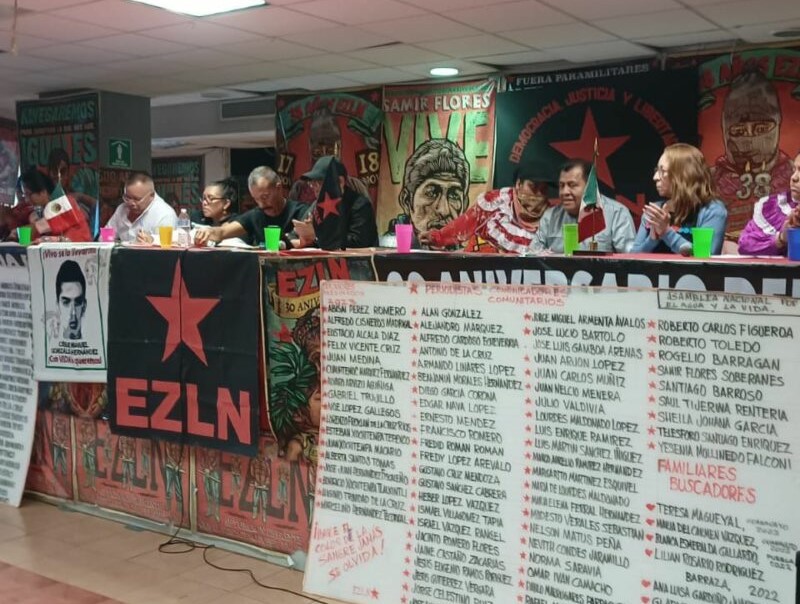
Update on Yorch: Saying Goodbye

Translated from the Spanish-language post on the Auditorio Che Facebook page.
Learn more about Mexican anarchist political prisoner Jorge “Yorch” Esquivel here.
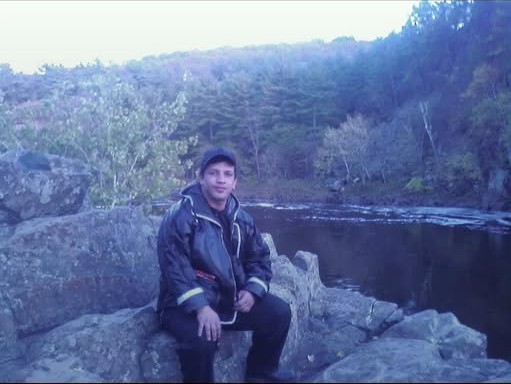
UPDATE: At 11:30am on Tuesday, December 9, 2025, beloved compa Jorge “Yorch” Esquivel passed on. More information will be made available in time.

December 6, 2025, 3:40pm

Dear family, compas, friends, and community:

Thank you very much for all your letters, love, and solidarity with our beloved Yorch. We have read each and every one of your messages and we are very grateful because we know that he hears us and knows that he is not alone.

We want to share with you that our compañero’s health has become more delicate every day. Even with the dignified attention that he is finally receiving and the enormous and loving efforts made by doctors and hospital personnel charged with his treatment, due to the advanced state of deterioration he was in upon arriving at the hospital – where he is now – it has been very complex attending to his urgent condition. After the long period of medical neglect, the effects of the damned prison on all facets of prisoners’ health – and more in this case, where the violence of the State and UNAM orchestrated repression against him – and his prior medical issues which themselves paint a picture of potential complications due to his hospitalization, multiple surgeries, and irreversible damage suffered in 2019 when Yorch survived appendicitis that was not treated in time.

Sadly, our compañero now does not have the possibility of recovering a dignified quality of life and he has a very high probability of remaining in the state he is in now and due to the risks presented by the procedures and treatments indicated by his clinical state in the coming days. During recent weeks, Yorch was wandering from site to site without precise information. We did not receive clear news regarding his condition, treatment, or anything else. The prison authorities and those of the various hospitals where he has been this past month did not inform us of the severity of his condition until he arrived at the current hospital and we learned minutes before they had to intubate him – due to neurological failures that don’t allow for him to breathe unaided – that this was just a small part of the series of complications he has. The situation took us completely by surprise.

Continue reading
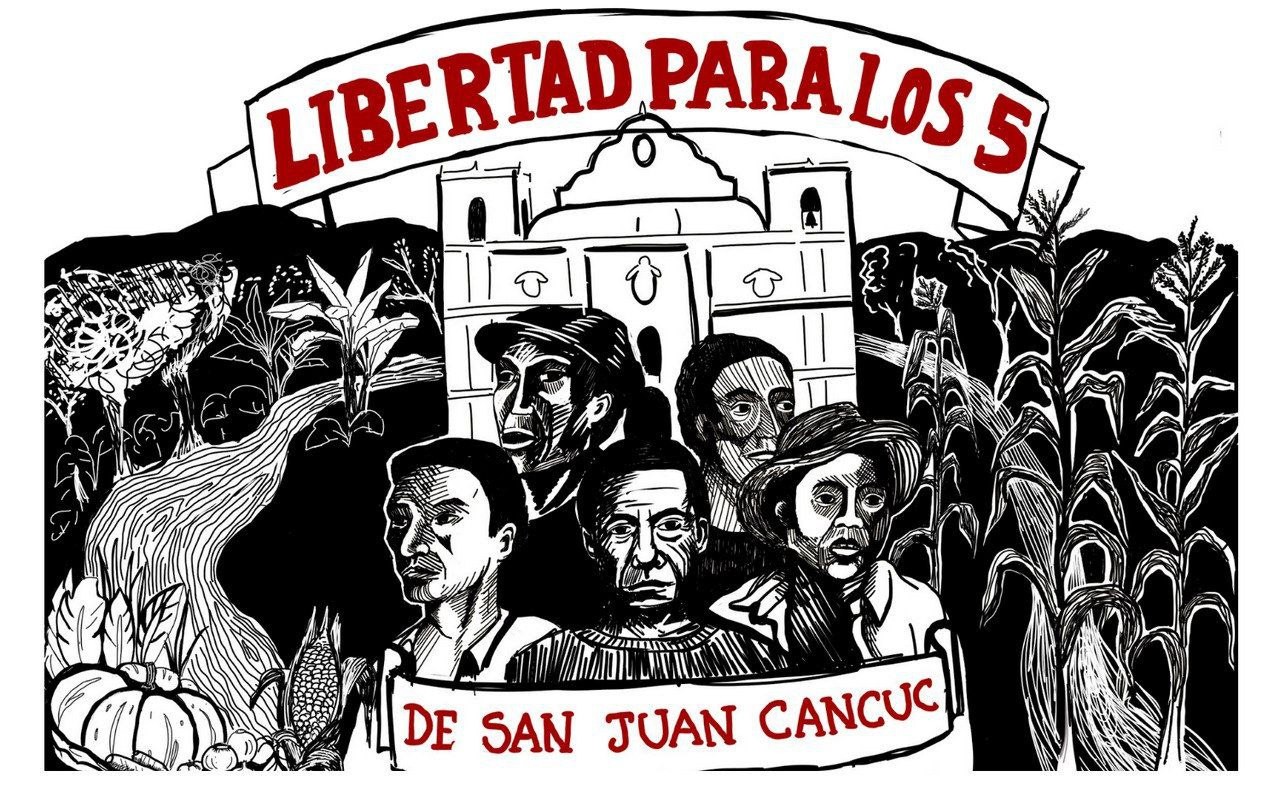
The San Juan Cancuc Five are free!

A statement from the Grupo de Trabajo No Estamos Todxs, originally published in Spanish and translated by Scott Campbell, on the release of the five Tzeltal political prisoners from San Juan Cancuc, Chiapas. Read more about their case here.

Valle de Jovel, November 21, 2025, from the territory called Mexico.

To all the compas that have accompanied the fight for the freedom of our imprisoned compañeros from San Juan Cancuc.

To their relatives and our five formerly imprisoned compañeros from San Juan Cancuc, to them above all.

For more than three years, we have had the enormous opportunity to accompany our imprisoned compañeros. Years of talks, of hugs, of seeing them and knowing them, of their dreams and their hopes. Above all, of their dignified demand for justice and freedom.

Today, in this land where injustice has become the norm, but resistance and dignified rage have also become a permanent condition. Today, dawn brought with it a rumor that turned into a cry and then a song: our five compañeros from San Juan Cancuc are free.

Free, but not due to the goodwill of the bad government, but due to the dignified stubbornness of their families, of their community, and of all the hands and hearts that, from so many corners of the world, did not stop fighting against the machinery that manufactures guilt.

Continue reading

Freedom for the prisoners from San Juan Cancuc, Chiapas

Originally posted on It’s Going Down.

UPDATE: On November 21, 2025, a court ordered the immediate release of the five imprisoned compañeros from San Juan Cancuc. Read a statement regarding their release here.

The text below provides an overview of the case of five imprisoned Tzeltal land defenders from San Juan Cancuc, Chiapas, and how they can be supported during a crucial moment in the fight for their freedom.

The Context

San Juan Cancuc is an Indigenous Tzeltal municipality in the highlands of Chiapas located about halfway between the popular tourist destinations of San Cristóbal de Las Casas and the Cascadas de Agua Azul. For more than 20 years, the federal and state governments have been attempting to “develop” the region via the construction of a superhighway, called the Highway of Cultures. This highway would connect the coast of Chiapas in the west – where the Interoceanic Corridor will pass – with the highlands and jungle regions of the east – where they Maya Train will pass. With neoliberal development comes militarization, and attempts have been underway to construct a National Guard base near San Juan Cancuc. Since coming to power in 2018, the MORENA party has accelerated these projects.

The proposed Highway of Cultures is to pass through San Juan Cancuc and the State has put pressure on the municipality to agree to the construction – including withholding social programs. In repeated community assemblies, the residents of the municipality and neighboring communities have rejected both construction of the superhighway and the National Guard base.

Continue reading

Raffle in Solidarity with Indigenous Anarchist Miguel Peralta

For more information about Miguel Peralta and the persecution he has been facing for the past decade, read this update from his support group.

Note: If you are located in what is called the United States and would like to participate in the raffle, Miguel’s support crew welcomes your participation! Please contact me for more information. The suggested price of the raffle ticket is $50 MXN ($2.50 USD), but you are welcome to contribute more if you would like. Prize winners will be responsible for covering shipping costs and will not be eligible for prizes that contain perishable items. A continually updated list of prizes can be found on the event’s Facebook page.

As you know, the case of Miguel Peralta Betanzos and the persecution and repression that his community, Eloxochitlán de Flores Magón, is experiencing, have been going on for more than ten years.

After years of imprisonment, hunger strikes, legal games, going back and forth in court at different judicial levels, etc., Miguel Peralta’s case reached the Supreme Court, which represented the possibility of putting an end to his persecution and obtaining his full and absolute freedom. However, things were not as favorable as one might think, and on November 6, the Supreme Court issued a resolution in which it limited itself to recommending that the Collegiate Court of the City of Oaxaca make review of Miguel’s case from an intercultural perspective. With this, the case returned to those instances, which are far from his community, family, legal team and support group.

Continue reading

Amid the Electoral Farce, Capitalist War Against the Peoples

Originally posted on It’s Going Down.

The following statement provides an overview of some of the current struggles in so-called Mexico in the lead up to the June 2 presidential elections and was translated by Scott Campbell.

To the CCRI-CG EZLN
To the Zapatista Army of National Liberation, EZLN
To the Sixth Commission of the EZLN
To the National Indigenous Congress, CNI
To the Indigenous Governing Council, CIG
To Ma. de Jesús Patricio Martínez, Spokeswoman of the CNI-CIG
To the People, Tribes, Nations, Communities, and First Neighborhoods that were never conquered
To the National and International Sexta
To the Networks of Resistance and Rebellion
To the Insubordinate, Dignified and Rebel Europe
To those that signed the Declaration for Life
To the free, independent, alternative, or whatever they’re called media…

Siblings All

With the arrival of the “Fourth Transformation,” [1] its governing policies increased the militarization of Indigenous peoples and communities, especially in Zapatista territory. Paramilitary groups and organized crime operate with total impunity as guarantors of the imposition of not just megaprojects of death such as the Maya Train, the Interoceanic Corridor, and the Morelos Integral Project; they are at the service of the state and big capital to carry out the displacement of territory, Mother Earth, and life.

Amid its “ELECTORAL FARCE,” we see that, in recent weeks, nothing matters but votes, polls, debates, numbers, and electoral preferences; but, above all, its strategy to attack and discredit its enemies as a campaign strategy.

This June 2, a “democracy” is not in dispute, much less a leftist one. What is really in dispute is an economic and political power that seeks to sustain itself with militarization, with impunity, and with the accumulation of wealth in the hands of a few in the service of large transnationals. Their plan is to sustain this “Fourth Transformation” with a CAPITALIST WAR against Indigenous peoples and communities.

Continue reading

Mexico: Feminist Political Prisoners Magda Soberanes and Karla Tello Released from Prison

Originally published on It’s Going Down.


A brief update from Radio Zapote, translated by Scott Campbell, on the release from prison of Magda Soberanes and Karla Tello, who had been held since April 15, 2022, following a police raid on the Okupa Cuba.

The young social activists and feminists, Magda Soberanes and Karla Tello, were released from prison on February 23, and will be allowed to continue their legal proceedings in freedom. This joyous day comes after they had been held for almost a year in connection with the Okupa Cuba.

A movement for the immediate release of both women led to this victory against the injustice that is the Mexican justice system.

Continue reading

“Autonomy is Everything”: Interview with Indigenous Political Prisoner José Antonio Arreola of Nahuatzen

Originally posted on It’s Going Down.

La versión original de esta entrevista en español puede encontrarse aquí.

The following is an interview with Indigenous political prisoner José Antonio Arreola Jiménez, one of three political prisoners from the P’urhépecha community of Nahuatzen, Michoacán, currently serving seven-year sentences based on trumped-up charges. The interview was conducted in late November by IGD contributor Scott Campbell.

Can you introduce yourself and tell us a little about yourself?

Yes, my name is José Antonio Arreola Jiménez. I’m from the Indigenous community of Nahuatzen, Michoacán. Nahuatzen is an Indigenous community nestled in the heart of the Meseta Purépecha. I have my wife and five children.

Can you share with us some details about Nahuatzen, its struggle, and your role in that struggle?

The struggle in Nahuatzen began in 2015, when the last municipal president was imposed on us by the state government, by [then-governor] Silvano Aureoles Conejo. Then, this Miguel Prado Morales, which is his name, arrived with more than twenty or thirty armed individuals from outside the community, claiming to be his private police, his bodyguard. We, as community members, thought this was bad, because within the town there is no need to bring weapons, we’re not people who fight, we’re not armed people. We’re working people, peaceful people. So that was, more than anything else, the main issue.

Then, one day we asked for a meeting with the municipal president, which was granted, and we told him that we wanted his police to leave the community of Nahuatzen. It turns out that he said yes, but later on he didn’t want to. The next day, he summoned us in front of his police, and we were attacked by them, his entire family, the entire town government. So, there was a revolt, there was a conflict, there were people who had their heads cracked open and people who were beaten. But at that moment, the community decided to hold a meeting, a general assembly, and to remove recognition of the town government. So, in a public meeting in the main plaza, we held this assembly.

Continue reading

To Dismantle a Gas Pipeline and Sell it as Scrap Metal: A Story of Yaqui Women

The following article, translated partially by me from the Spanish version on Pie de Página, looks at the women-led struggle against the passing of a U.S. company’s gas pipeline through Yaqui territory in so-called Mexico. It also touches on the case of Yaqui political prisoner Fidencio Aldama, serving a 15+ year sentence related to resistance to the pipeline. For more information on Fidencio, visit fidencioaldama.org.

Text: Daliri Oropeza and Reyna Haydee Ramirez
Photos: Daliri Oropeza

The gas pipeline was already a foregone conclusion, at least that’s what the company, the subsidiary, and the government of Sonora thought. They were wrong. Yaqui women narrate how they have stopped this project.

Loma de Bácum, Sonora: A gigantic metal pipe can be seen at the bottom of a hole in the earth. The family of Carmen García look into the hole which was dug by the people of Loma de Bácum to remove the gas pipeline.

The people used an excavator they seized from the company IEnova, affiliate of the United States transnational, Sempra Energy. The company was building the gas pipeline without the approval of those who live there. A consultation was never carried out. So, after an assembly, the entire community went to where the pipeline was being laid. There, they excavated and cut out with a blowtorch nearly ten kilometers of pipeline, which they then took to Ciudad Obregón to sell as scrap metal.

Continue reading

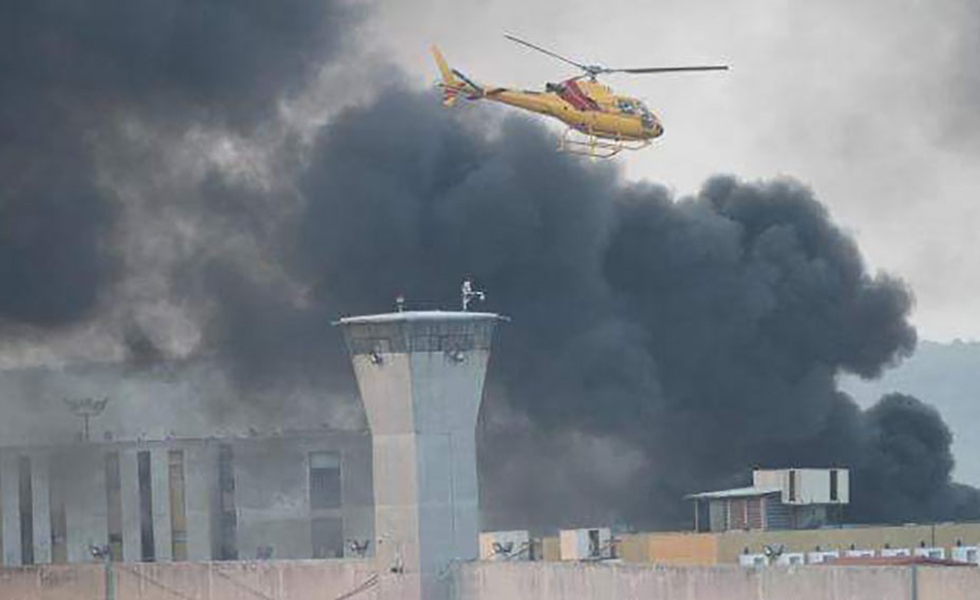
Cadereyta Prison Riot: Chronicle of a Preannounced Massacre

Originally posted on It’s Going Down

Editor’s note: On October 9th, a riot occurred at the Cadereyta Social Reintegration Center (CERESO), a state prison in Nuevo León, Mexico, in which 18 prisoners were killed and more than 30 wounded.

By Miguel María Vidal, Centro de Medios Libres
Translated by Scott Campbell

Callousness kills better than a R15 to silence the cries of protest…”

That Monday…at night while I checked my notifications, I noticed a few that said “something” was happening at the Cadereyta CERESO. That phrase “something is happening” brought up memories of recent tragic events in Monterrey, for example natural disasters, massacres, and riots like the ones that happened previously at the Apodaca CERESO and Topo Chico Prison. Given the evident spread of this rumor, I decided to turn on the television to see the news, in search of corroborating it and being certain about what was happening. On the news programs – on Monday night and Tuesday morning – the first things I heard were statements from authorities who at that moment said it was just a fight among people deprived of freedom. Hours later I would realize that these initial statements were an attempt to dismiss what was actually occurring. Time, valuable time, that could be used to resolve the situation unfolding inside the CERESO.

Continue reading

Writings Available in Print

Recently, a few pieces of writing I’ve done have become available in printed form. In the interest of propagandizing, I’m sharing them here.


Earlier this year, I wrote two articles for It’s Going Down critiquing the eco-extremist group Individualists Tending Toward the Wild (ITS) and their supporters. They caused a bit of an uproar in one corner of the internet and led to numerous other articles, statements, podcasts, and death threats. The two pieces have since been put together in a zine that can be found here.


At the end of last year, I conducted a podcast interview with Sofi, an anarchist compañera from Mexico City deeply involved in solidarity work with anarchist prisoners in Mexico. The interview covers a lot of ground, discussing various prisoners, conditions inside Mexican prisons, and the incredible autonomous organizing prisoners and their supporters are carrying out on both the inside and outside. The translated transcript has been made into a zine. Check it out here.


Last month, the anthology Rebellious Mourning: The Collective Work of Grief, edited by Cindy Milstein, was published by AK Press. As they describe it:

We can bear almost anything when it is worked through collectively. Grief is generally thought of as something personal and insular, but when we publicly share loss and pain, we lessen the power of the forces that debilitate us, while at the same time building the humane social practices that alleviate suffering and improve quality of life for everyone. Addressing tragedies from Fukushima to Palestine, incarceration to eviction, AIDS crises to border crossings, and racism to rape, the intimate yet tenacious writing in this volume shows that mourning can pry open spaces of contestation and reconstruction, empathy and solidarity.

With each passing day, it feels like a volume such as this is increasingly necessary and urgent. Alongside powerful works addressing a variety of subjects, both inspiring and heartrending, I’m honored to have a few words of my own included that introduce the translation of a letter by Mirtha Luz Pérez Robledo. The letter was written on the one-year anniversary of the murder of her daughter, social justice organizer Nadia Vera. Nadia was killed along with four others in 2015, in all likelihood by the state, in what is known as the Narvarte Massacre. Mirtha’s words weave an aching portrait of personal and collective loss within a context of pervasive injustice and impunity. I encourage readers to pick up a copy of the book in order to engage with them and the other resonant contributions found within.