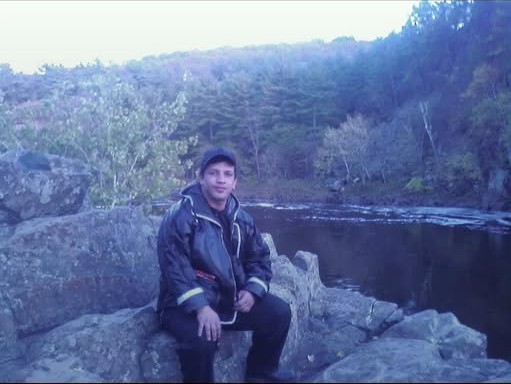
Update on Yorch: Saying Goodbye

Translated from the Spanish-language post on the Auditorio Che Facebook page.
Learn more about Mexican anarchist political prisoner Jorge “Yorch” Esquivel here.

UPDATE: At 11:30am on Tuesday, December 9, 2025, beloved compa Jorge “Yorch” Esquivel passed on. More information will be made available in time.

December 6, 2025, 3:40pm

Dear family, compas, friends, and community:

Thank you very much for all your letters, love, and solidarity with our beloved Yorch. We have read each and every one of your messages and we are very grateful because we know that he hears us and knows that he is not alone.

We want to share with you that our compañero’s health has become more delicate every day. Even with the dignified attention that he is finally receiving and the enormous and loving efforts made by doctors and hospital personnel charged with his treatment, due to the advanced state of deterioration he was in upon arriving at the hospital – where he is now – it has been very complex attending to his urgent condition. After the long period of medical neglect, the effects of the damned prison on all facets of prisoners’ health – and more in this case, where the violence of the State and UNAM orchestrated repression against him – and his prior medical issues which themselves paint a picture of potential complications due to his hospitalization, multiple surgeries, and irreversible damage suffered in 2019 when Yorch survived appendicitis that was not treated in time.

Sadly, our compañero now does not have the possibility of recovering a dignified quality of life and he has a very high probability of remaining in the state he is in now and due to the risks presented by the procedures and treatments indicated by his clinical state in the coming days. During recent weeks, Yorch was wandering from site to site without precise information. We did not receive clear news regarding his condition, treatment, or anything else. The prison authorities and those of the various hospitals where he has been this past month did not inform us of the severity of his condition until he arrived at the current hospital and we learned minutes before they had to intubate him – due to neurological failures that don’t allow for him to breathe unaided – that this was just a small part of the series of complications he has. The situation took us completely by surprise.

Continue reading

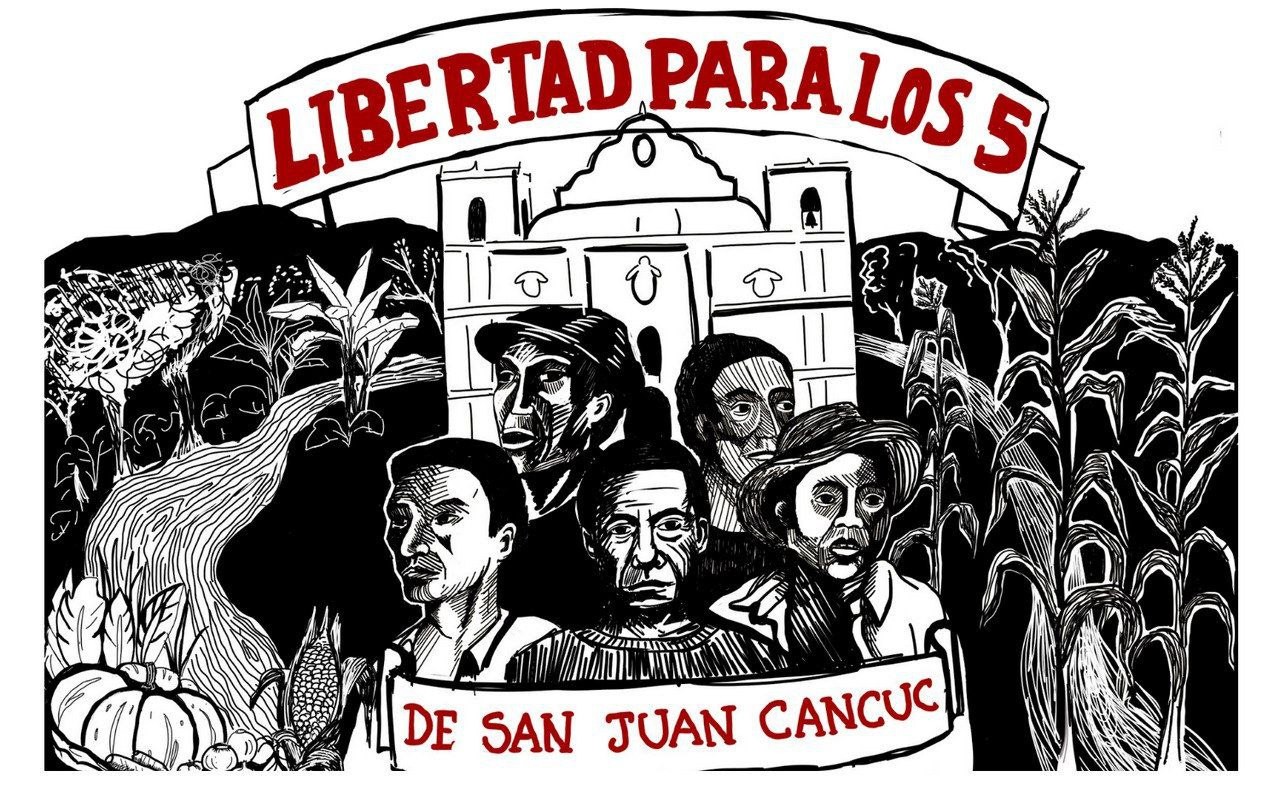
Freedom for the prisoners from San Juan Cancuc, Chiapas

Originally posted on It’s Going Down.

UPDATE: On November 21, 2025, a court ordered the immediate release of the five imprisoned compañeros from San Juan Cancuc. Read a statement regarding their release here.

The text below provides an overview of the case of five imprisoned Tzeltal land defenders from San Juan Cancuc, Chiapas, and how they can be supported during a crucial moment in the fight for their freedom.

The Context

San Juan Cancuc is an Indigenous Tzeltal municipality in the highlands of Chiapas located about halfway between the popular tourist destinations of San Cristóbal de Las Casas and the Cascadas de Agua Azul. For more than 20 years, the federal and state governments have been attempting to “develop” the region via the construction of a superhighway, called the Highway of Cultures. This highway would connect the coast of Chiapas in the west – where the Interoceanic Corridor will pass – with the highlands and jungle regions of the east – where they Maya Train will pass. With neoliberal development comes militarization, and attempts have been underway to construct a National Guard base near San Juan Cancuc. Since coming to power in 2018, the MORENA party has accelerated these projects.

The proposed Highway of Cultures is to pass through San Juan Cancuc and the State has put pressure on the municipality to agree to the construction – including withholding social programs. In repeated community assemblies, the residents of the municipality and neighboring communities have rejected both construction of the superhighway and the National Guard base.

Continue reading

Accountable to history

Photo by Al Benoit on Unsplash

When I was very young, I used to believe that my parents were omniscient and infallible. They knew everything and were never wrong. As I aged, I of course realized the faults of my assumptions. Being a parent now myself, I especially realize how absurd that notion was. We make it up as we go along, doing the best we can with the information we have at hand. Mistakes are part of the practice.

Part of my younger beliefs was that my parents were responsible for or had control over worldly developments. They were adults, they had agency that I did not. I am sure there is some psychological term for this, but, likely for the sake of simplicity, I subordinated systems of authority and power into the hands of those I was most familiar with who also had such seemingly tremendous power and authority – my parents.

Again, this belief waned as I grew, but it became replaced by a perhaps more right-sized view of accountability and action in the world. Rather than holding the expectation that my parents could control everything, I was interested in what they contributed to change and making the world a better place, broadly speaking. As my worldview became explicitly infused with politics during my adolescence and its accompanying arrogance, I more specifically wanted to know what they did that was in accord with my view of what they should have done.

Continue reading

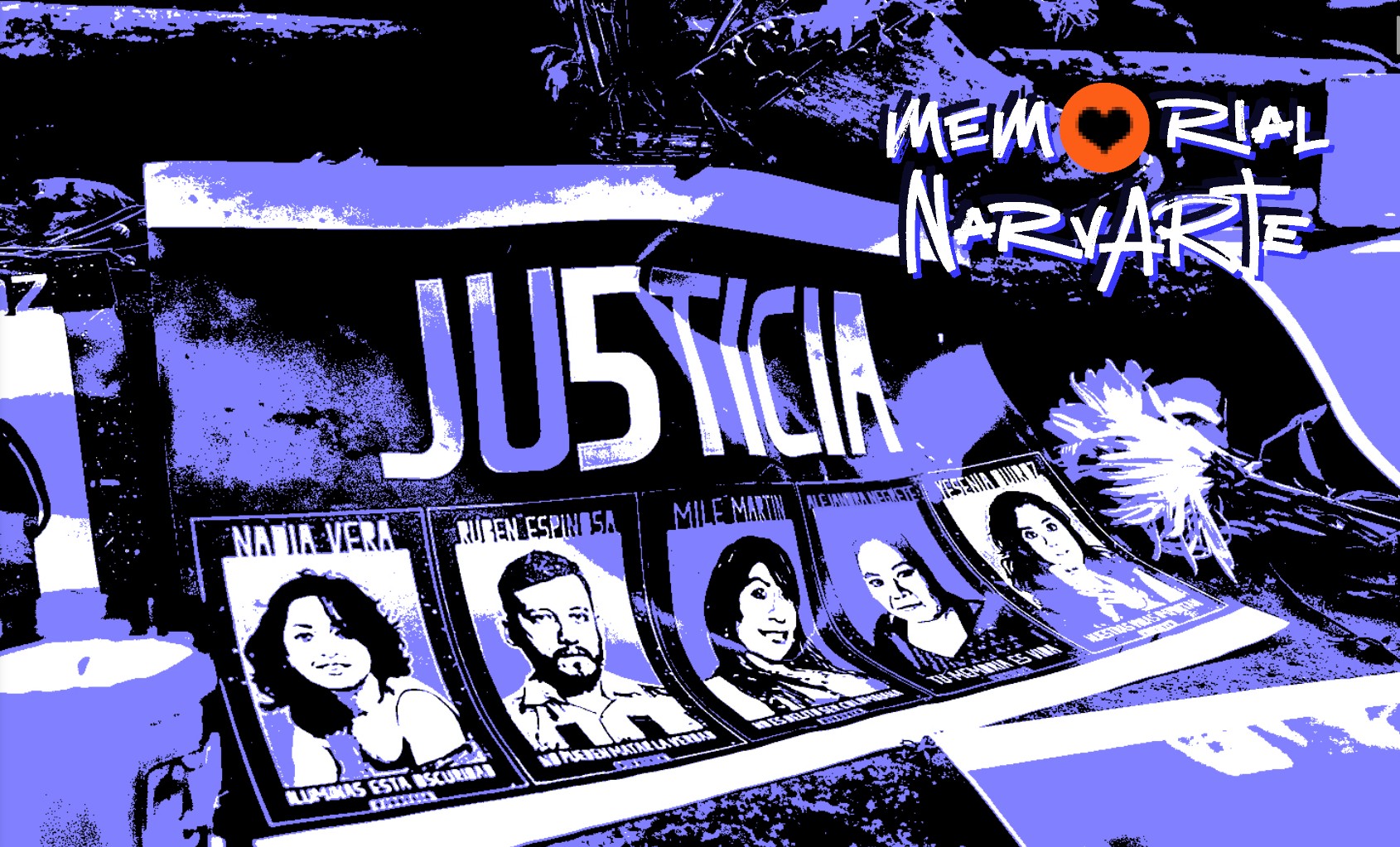
Marking 10 years since the Narvarte murders: Justice, struggle, and memory

Originally posted on It’s Going Down.

On July 31, 2015, Alejandra Negrete, Mile Martín, Nadia Vera, Rubén Espinosa and Yesenia Quiroz were murdered in an apartment in the Narvarte neighborhood of Mexico City. In the ten years since, their family members, friends, and comrades have been demanding justice and struggling to keep their memories alive. While three people have been detained for the killings, evidence ignored by the Mexico City prosecutor’s office implicates former officials of that office in the killings. It has also refused to investigate the role of the administration of Javier Duarte, former governor of Veracruz, from where Nadia, a radical activist, and Rubén, a journalist, fled fearing for their safety after receiving threats. To mark ten years, those accompanying the families in their search for truth and justice have created a digital common archive: Memorial Narvarte. Below is a text announcing the archive along with a piece by Mirtha Luz Pérez Robledo, the mother of Nadia Vera. Both were translated by Scott Campbell.


Memorial Narvarte: An Archive for the Future

Ten years after Alejandra Negrete, Mile Martín, Nadia Vera, Rubén Espinosa and Yesenia Quiroz were taken from us, we continue putting faith in collective memory.

After the multi-femicide and homicide that occurred on July 31, 2015, in an apartment at 1909 Luz Saviñón Street in the Narvarte neighborhood of Mexico City, authorities tried to create a “historical truth,” to shelve the case without considering that Nadia and Rubén fled from threats in Veracruz, and without following the different lines of investigation linked to Nadia’s activism and Rubén’s journalism. What followed would be a demand for justice in the face of criminalization, revictimization, xenophobia, and discrimination against the 5; as well as a collective demonstration of resistance and living memory.

Over the course of this decade, together with their families and allied organizations, we made space amid State neglect and abandonment. We want to continue building a dissident common sense to the hegemonic narratives regarding the recent history of our country and the acts that mark us. That is why we are building a common archive, a space of digital memory to remember them: memorialnarvarte.org.

Continue reading

Marco Antonio Suástegui: The Warrior Lineage of the Yopes

Originally published on It’s Going Down.

The following article by Vidulfo Rosales Sierra, translated by Scott Campbell, pays tribute to Marco Antonio Suástegui, a longtime and well-respected community organizer in Guerrero, Mexico, who played a key role in the defeat of the neoliberal La Parota dam project. He was targeted by a gunman and shot eight times on April 18, passing away on April 25.

Marco Antonio Suástegui Muñoz, son of Pedro Suástegui Valeriano and Noelia Muñoz Rodríguez, campesinos from La Parota. The Suásteguis are the founders of the communal nucleus of Cacahuatepec, they and other families fought for the creation of communally held property. Later, other leaders would be coopted by the PRI members of the National Campesino Confederation (CNC), one of the cacique figures was Eduardo Valente Navidad. These corrupt leaders handed out commission positions and sold lands to the highest bidder.

In 2000, the federal government began to talk about several large-scale infrastructure projects. Airports and large dams to generate energy and provide water to cities and towns would be built. One of these was to be in Guerrero. It was La Parota hydroelectric dam. It would cover an area of 17,000 hectares and would be 190 meters high. It would cover the municipalities of Acapulco, San Marcos, and Juan R. Escudero. The reservoir would be used as a lake for ecotourism. The bay of Acapulco would be joined with La Parota dam.

In 2003, with René Juárez as governor, engineers from the Federal Electricity Commission (CFE) began to build wells and sample houses, heliports, and other basic works, without consulting the community. The campesinos became concerned and obtained information about the damage caused by the work.

The communities of Garrapatas, Arroyo Verde, and San José would be buried under water. This worried them and, in their assemblies, they decided to set up an encampment in El Fraile to block the passage of machinery and CFE personnel. The campesinos went to see Marco Antonio and Felipe Flores for advice and to strengthen the movement. Marco Antonio did not hesitate for a moment. He went to the encampment. Together with Felipe Flores, they began to organize the struggle, traveling through various communities with communal lands, the ejidos of Dos Arroyos and Los Huajes.

Continue reading

Statement on the Occasion of the 15th Anniversary of the Murder of Bety Cariño and Jyri Jaakkola

Originally posted on It’s Going Down.

On April 27, 2010, a solidarity and mutual aid caravan to the besieged autonomous Triqui municipality of San Juan Copala left the city of Oaxaca. Along the way, it was ambushed by government-backed paramilitaries belonging to UBISORT (Union for the Social Well-Being of the Triqui Region). The paramilitaries killed Mixtec organizer Bety Cariño and Finnish solidarity activist Jyri Jaakkola and wounded several others. The following statement marks 15 years since the murders. It was translated by Scott Campbell.

To the media
To national and international public opinion
To social, solidarity, and human rights organizations
To the National Indigenous Congress and the Indigenous Governing Council
To the Zapatista Army of National Liberation
To the Indigenous peoples of Mexico and the world

On the occasion of the 15th anniversary of the murder of Bety Cariño and Jyri Jaakkola:

Today marks 15 years of impunity. Fifteen years since the murder of Bety and Jyri. And, faithful to custom – and the necessary stubbornness of keeping memory alive – we return to this date with the same wounded but unshakeable dignity.

In this digital era, our compañeros have been converted into a QR code, a WhatsApp message, an app, a song, a video that travels the world, a worn photo, a graphic exhibition. But they are not only that: they are a voice that resists in time, in the memory of those of us who refuse to forget.

In these 15 years, we have traveled the entire alphabet – from A to Z – going to every corner where it was possible for us to be, asking for justice. Sometimes we found a warm space, a friendly face that knew how to listen to what should be Justice; but most of the time we only found the eternal bureaucracy, the lie, the indifference. The sidewalks were our place of dialogue, our classrooms, our public plazas: in hunger strikes, in marches, in blockades, in endless waits before public officials and “authorities” of any level. We never expected anything from them. And time has only confirmed that institutional justice in Mexico is a failure.

Continue reading

UNAM seeks to demobilize students, but protests continue

Originally published on It’s Going Down.

A short text by Camilo Ocampo, published on Pie de Página and translated by Scott Campbell, that looks at recent developments at the National Autonomous University of Mexico. Since the publishing of this article, the struggle has spread throughout UNAM, with reports of five departments on “total strike” as of Wednesday, April 9, 2025. Those are Social and Political Sciences, Arts and Design, Engineering, Chemistry, and Architecture; with a partial strike in the Economy Department.

In the midst of a politically tense atmosphere within UNAM, the University Council, the highest governing body, approved a change in Article 15 of the University Tribunal Regulations, which seeks to implement the suspension or expulsion of students and academics who engage in “acts of vandalism” on the institution’s campuses, as well as those who participate in drug dealing.

Students, workers, academics and even part of the University Council warn that this measure violates the freedom to protest, given the lack of clarity distinguishing between what is considered an act of vandalism and the right to protest.

Continue reading

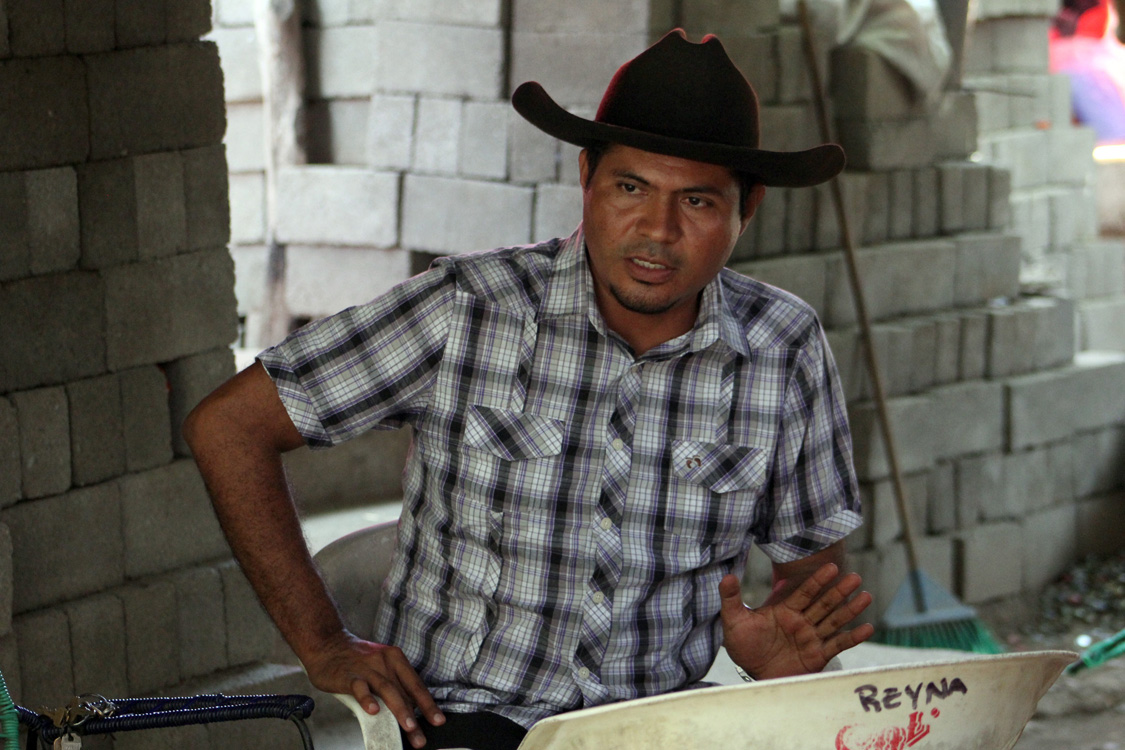
Raffle in Solidarity with Indigenous Anarchist Miguel Peralta

For more information about Miguel Peralta and the persecution he has been facing for the past decade, read this update from his support group.

Note: If you are located in what is called the United States and would like to participate in the raffle, Miguel’s support crew welcomes your participation! Please contact me for more information. The suggested price of the raffle ticket is $50 MXN ($2.50 USD), but you are welcome to contribute more if you would like. Prize winners will be responsible for covering shipping costs and will not be eligible for prizes that contain perishable items. A continually updated list of prizes can be found on the event’s Facebook page.

As you know, the case of Miguel Peralta Betanzos and the persecution and repression that his community, Eloxochitlán de Flores Magón, is experiencing, have been going on for more than ten years.

After years of imprisonment, hunger strikes, legal games, going back and forth in court at different judicial levels, etc., Miguel Peralta’s case reached the Supreme Court, which represented the possibility of putting an end to his persecution and obtaining his full and absolute freedom. However, things were not as favorable as one might think, and on November 6, the Supreme Court issued a resolution in which it limited itself to recommending that the Collegiate Court of the City of Oaxaca make review of Miguel’s case from an intercultural perspective. With this, the case returned to those instances, which are far from his community, family, legal team and support group.

Continue reading

The Watermelon Scare: Attacks on Palestine Solidarity Are Aimed At Silencing the Anti-War Movement

Originally published on It’s Going Down.

By Scott Campbell

On October 15th, the Samidoun Palestinian Prisoner Solidarity Network was labeled a “terrorist entity” by Canada and subjected to sanctions by the United States. These designations follow a previous ban in Germany and the labeling of Samidoun as a “terrorist organization” by Israel. The U.S. claims Samidoun is a “sham fundraiser whose efforts have supported terrorism” by the Popular Front for the Liberation of Palestine (PFLP), a Marxist-Leninist Palestinian political party also labeled as a “Foreign Terrorist Organization” by the U.S. For its part, Samidoun states it “does not have any material or organizational ties to entities listed on the terrorist lists of the United States, Canada or the European Union.”

Two days later, Republican Senator Marco Rubio sent a letter to the U.S. Attorney General requesting he “immediately open a domestic terrorism investigation” into the popular pro-Palestine website and social media account, Unity of Fields, known for posting anonymous reports of direct actions. In a statement, the group said it is “an anti-imperialist propaganda front…we don’t do actions, we only report on them and receive anonymous submissions.”

As the Civil Liberties Defense Center (CLDC) recently noted, Rubio also pushed the Attorney General to charge four activists in Florida who were arrested for writing pro-choice graffiti following the fall of Roe v Wade for “terrorism.” One activist was sentenced to a year in prison by the Middle District of Florida, the same court that recently awarded only 8 months to a man convicted of literally firebombing a Planned Parenthood clinic.

Likewise, while Rubio is trying to claim that an Instagram account is terrorism, he has of course stayed quiet while his own party works overtime to spread rampant misinformation in the wake of two devastating hurricanes hitting his state and about the upcoming election – to say nothing of members of his own party regularly attending neo-Nazi gatherings and increasing aligning with white nationalists.

One may disagree with Samidoun and Unity of Fields on their specific political positions, but the entire movement against the ongoing war and genocide in Gaza should be concerned with the state’s move to target them. In no way can Samidoun be understood as a “sham charity” or “terrorist entity,” nor a media project like Unity of Fields as responsible for “domestic terrorism.” Even if one were to accept the legitimacy of power to deploy a subjective term such as “terrorism,” in reality, the extent of Samidoun’s work is posting statements, organizing public educational and political events, and pushing online action campaigns, while Unity of Fields maintains a counter-info website and social media accounts.

Continue reading

Building support for anarchist political prisoner Jorge “Yorch” Esquivel and Okupa Che

Originally published on It’s Going Down.

On this episode of the It’s Going Down podcast, IGD contributor Scott Campbell speaks with Flor, a compa in so-called Mexico actively involved in supporting anarchist political prisoner Jorge “Yorch” Esquivel. They speak about Okupa Che, an autonomous, self-managed space on the campus of the National Autonomous University of Mexico (UNAM), a project where Yorch has been a long-term participant. They then talk about the various charges and legal battles Yorch has faced since 2016, his ongoing imprisonment since December 8, 2022, and his recent sentence of seven years and six months. Flor also provides information on how folks can act in solidarity with Yorch and discusses the cases of other political prisoners in Mexico.

For more information about Yorch and Okupa Che, check out the following resources: