When the horror comes to light again. March 15 in Mexico: National Mourning

Originally posted on It’s Going Down.
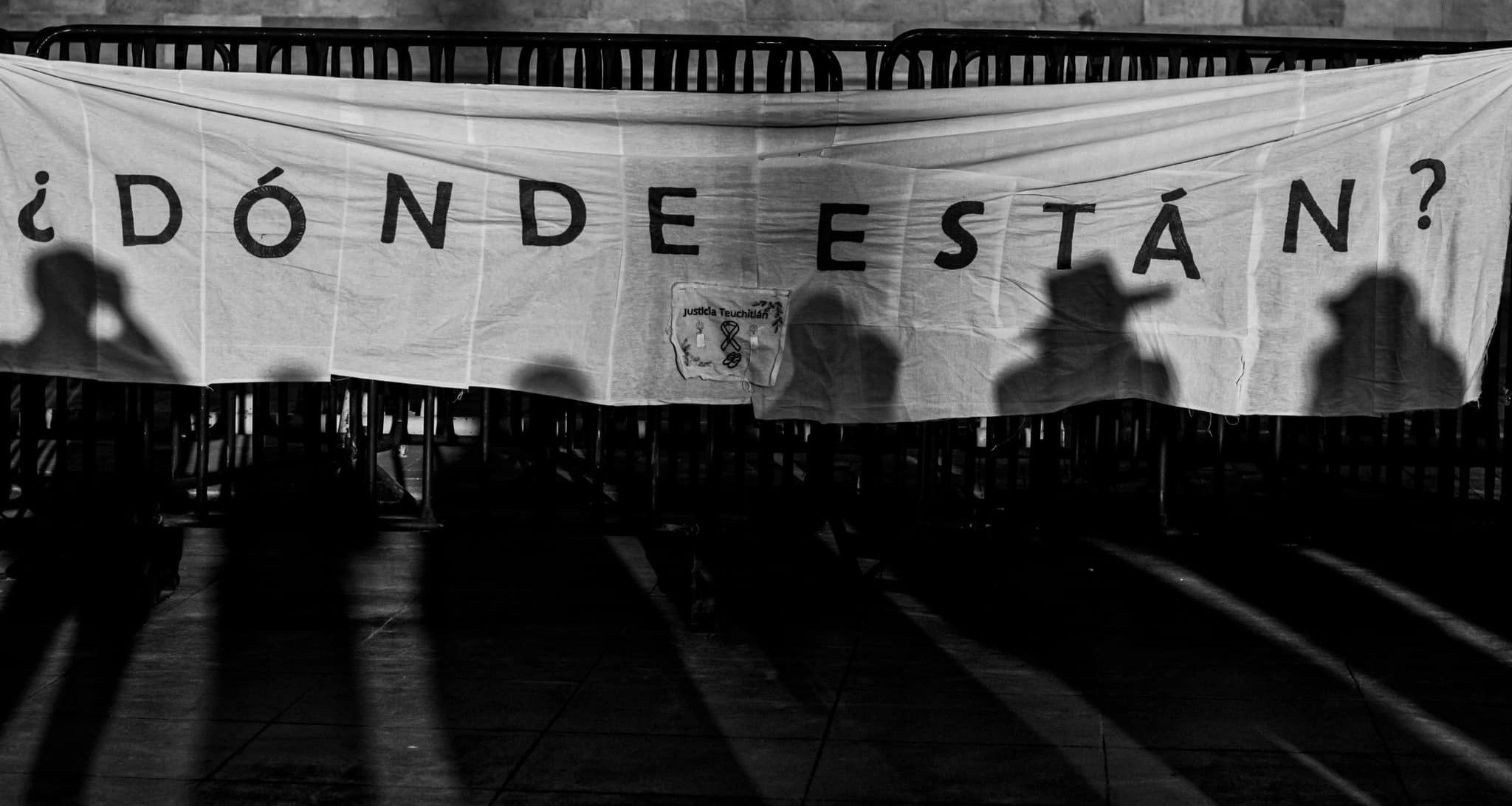
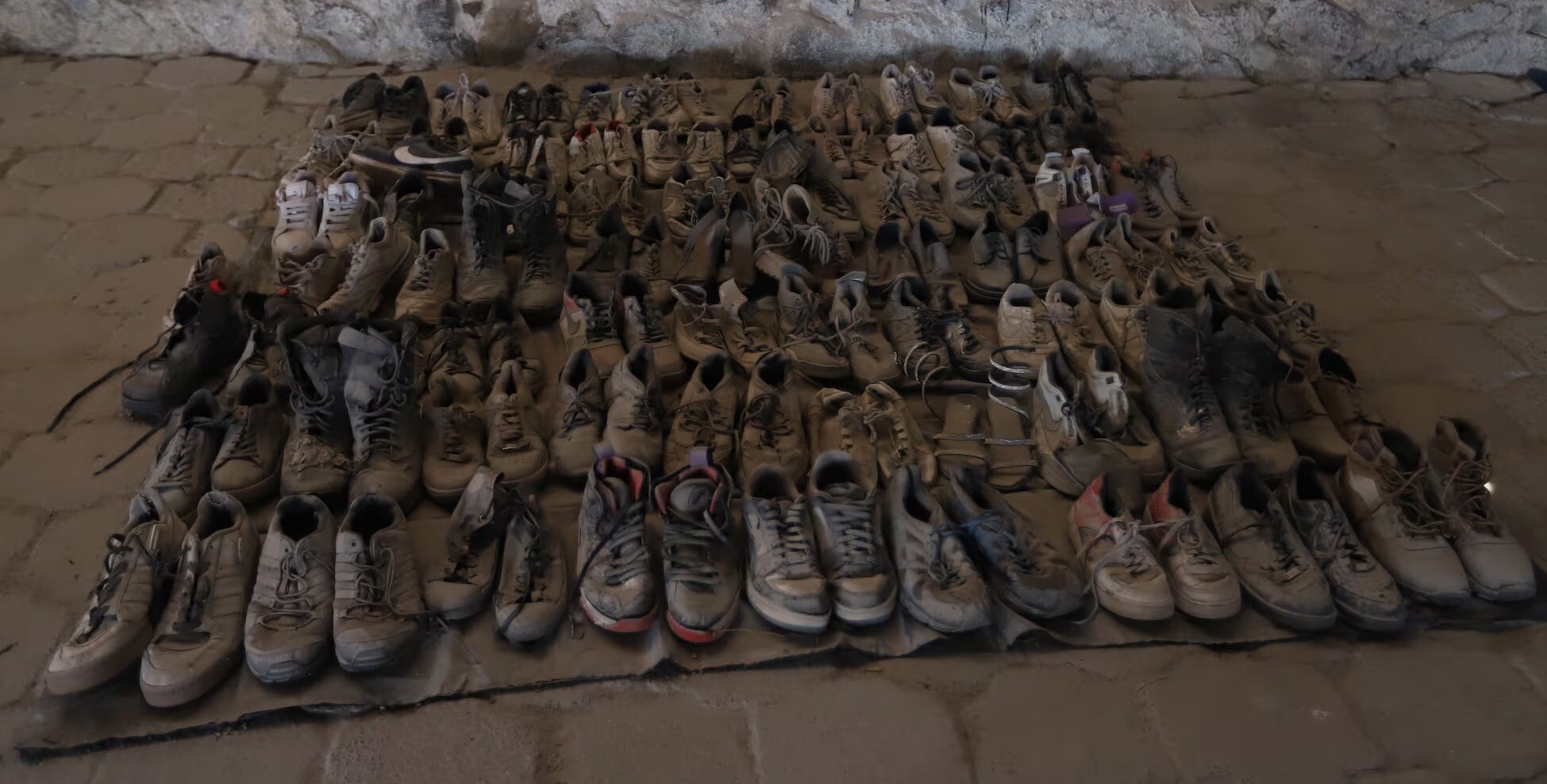
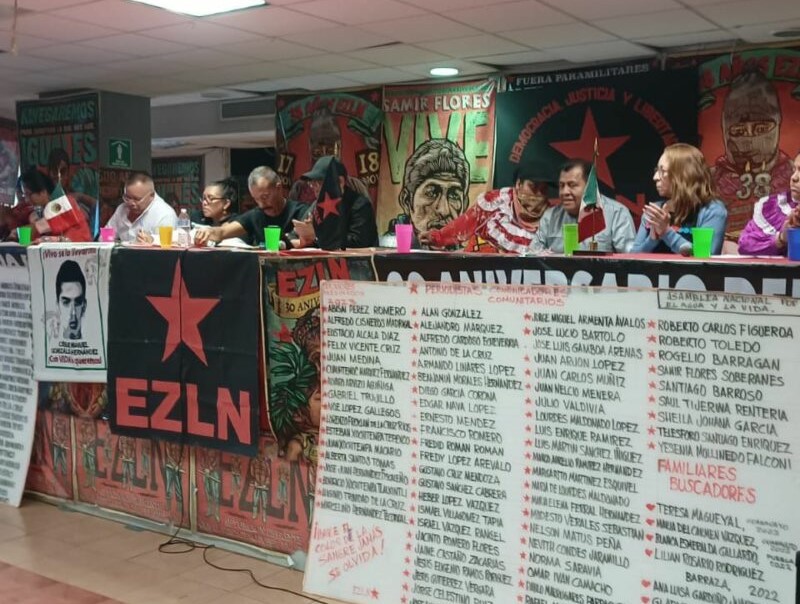
On March 5, the Warrior Searchers of Jalisco, a collective of family members of the disappeared, found a gruesome scene on a ranch in Teuchitlán, near Guadalajara, Jalisco. There, at a location supposedly searched by the state government in September 2024, they found three cremation ovens, clandestine graves, hundreds of human remains, and countless personal items and clothing, along with lists of names. The discovery of the forced recruitment and extermination camp run by the Jalisco New Generation Cartel (CJNG) has sent shockwaves throughout Mexico. It is a moment that makes plain the profound severity of the crisis gripping the country and the collective trauma endured after nearly twenty years of the so-called “drug war.” Civil society organizations have called for Saturday, March 15, to be a day of national mourning, with no place for politicians. The below text by Silvia L. Gil, published in Revista Común and translated by Scott Campbell, wrestles with the significance of what was found in Teuchitlán and what might be needed to counter the horror.

Several years ago, I heard a colleague say that in order to stop evil from reproducing itself, we had to stop denying it. She argued that our societies had put on a blindfold. Although this may be true in some parts of the world, it seemed to me that in Mexico what we needed was more of a truce, to stop staring horror in the face. That the problem was not exactly that we should look more or better, but that to survive in the face of what we already saw we should stop looking. At least for a while. This apparent paradox – pain surrounds us, but we cannot become so sensitized as we run the risk of being paralyzed – is very important in this time when violence and extreme precarity have intensified. There comes a point at which we are unable to assimilate all that we see in a world of injustice. If in other latitudes with this situation – which we can call a global war against life – an answer is sought to the initial question of how to not deny the pain that is spreading throughout the world, in Mexico, the question did a double somersault: once we have seen it all, once we have moved beyond any fictional scenario, what kind of deep transformation of the human do we need so that the horror never repeats itself again?

Continue reading

How many autonomies fit in a community?

The following text by Leonardo Toledo, translated by Scott Campbell, takes a critical look at various autonomous processes in so-called Chiapas, Mexico. The original Spanish-language article is accompanied by a photo essay by Isaac Guzmán.

What do we imagine when we say “autonomy”? There are many disparate possible scenes. From an official invoicing a table dance in the name of his autonomous organization to a community self-defense member ambushed by police, soldiers, narcos, and former self-defense members.

Another image of autonomy could be the man with three positions in autonomous institutions who telephones his best friend to make fun of the way a group of Indigenous people speak, but it can also be an Indigenous community meeting in assembly, deciding upon their next local government together.

Perhaps we imagine a prosecutor who, instead of solving pressing cases for society, dedicates his time to litigating against his own family and fighting for a prestigious state scholarship. Or perhaps an entire community that, after a thousand fiascos, decides to expel political parties from local government.

My favorite imaginary image of autonomy is that of a man who, from a cubicle in an autonomous university (which would collapse without public funding), writes an article arguing that autonomy for the people is only possible if they refuse to accept public funding.

Autonomy can be many things. Philosophers will tell us that its existence depends on the “categorical imperative,” sociology will unthinkingly turn to “agreement in assembly,” some lawyers will probably lecture us about the indivisibility of territorial sovereignty and the concurrence of the law, while anthropology will offer to walk with us to reflect together on justice and dignity. How, then, does one look at and live autonomy?

Let’s look at the autonomous experience of the peoples of Chiapas.

Continue reading

Amid the Electoral Farce, Capitalist War Against the Peoples

Originally posted on It’s Going Down.

The following statement provides an overview of some of the current struggles in so-called Mexico in the lead up to the June 2 presidential elections and was translated by Scott Campbell.

To the CCRI-CG EZLN
To the Zapatista Army of National Liberation, EZLN
To the Sixth Commission of the EZLN
To the National Indigenous Congress, CNI
To the Indigenous Governing Council, CIG
To Ma. de Jesús Patricio Martínez, Spokeswoman of the CNI-CIG
To the People, Tribes, Nations, Communities, and First Neighborhoods that were never conquered
To the National and International Sexta
To the Networks of Resistance and Rebellion
To the Insubordinate, Dignified and Rebel Europe
To those that signed the Declaration for Life
To the free, independent, alternative, or whatever they’re called media…

Siblings All

With the arrival of the “Fourth Transformation,” [1] its governing policies increased the militarization of Indigenous peoples and communities, especially in Zapatista territory. Paramilitary groups and organized crime operate with total impunity as guarantors of the imposition of not just megaprojects of death such as the Maya Train, the Interoceanic Corridor, and the Morelos Integral Project; they are at the service of the state and big capital to carry out the displacement of territory, Mother Earth, and life.

Amid its “ELECTORAL FARCE,” we see that, in recent weeks, nothing matters but votes, polls, debates, numbers, and electoral preferences; but, above all, its strategy to attack and discredit its enemies as a campaign strategy.

This June 2, a “democracy” is not in dispute, much less a leftist one. What is really in dispute is an economic and political power that seeks to sustain itself with militarization, with impunity, and with the accumulation of wealth in the hands of a few in the service of large transnationals. Their plan is to sustain this “Fourth Transformation” with a CAPITALIST WAR against Indigenous peoples and communities.

Continue reading

The Campus Movement and Academic Self-Management

Originally published on It’s Going Down.

As Israel’s brutal genocide against the Palestinian people and Palestine itself continues past the 200-day mark, students around the so-called United States have risen up and are carrying out occupations and erecting encampments on their campuses. These acts are extremely inspiring, militant, and hopeful – calling to mind the campus occupations from the early aughts, the student mobilizing against the war on Vietnam in the 1960s and protests against apartheid in South Africa in the 1980s. Breathless blather from politicians and the media have turned what are actions against genocide into a “controversy” that deftly manages to ignore the political content of what is currently unfolding across the country. As Samuel P. Catlin notes in his exceptional essay, “The Campus Does Not Exist”:

Campus panic is a sustained note in the American public conversation; from Vietnam to Gaza, it has never let up. Reliably, every few months something happens “on campus” that the media inflates to the status of a national emergency: a speaker is invited, a speaker is disinvited, a speaker is not disinvited, a professor teaches, a student complains, a protest takes place. The media offers these incidents as scandals so fascinating and disturbing that they eclipse even a genocide.

At the front of any conversation regarding what is happening on college campuses must be an acknowledgement of what the action is in response to: an ongoing, U.S.-facilitated genocide. It seems both absurd and necessary to note that what matters above all is the genocide. Students (and some faculty and staff) are taking tangible, direct action to pressure institutions complicit in the genocide into divesting and disassociating from that most atrocious of acts. That opposition to genocide has been successfully constructed as “controversial” in this country merely demonstrates the insipid nature of what passes for public discourse and the paucity of thought contained within it.

Continue reading

Our Affinity Is Our Manifesto: Interview with Mexico City-Based Feminist-Anarchist Affinity Group

Originally published on It’s Going Down, this is an extended interview with an unnamed feminist-anarchist affinity group based in Mexico City that I conducted and translated last year. An edited version of this text appears in the newly released anthology Constellations of Care: Anarcha-Feminism in Practice, edited by Cindy Barukh Milstein and published by Pluto Press. In that anthology I also have another translation of an incredible piece, “Communitarian Kitchens: Stoking the Flames of Memory and Rebellion,” written by Vilma Almendra. I encourage folks to pick up a copy if you’re able!

Lee la entrevista en español.

IGD: How would you like to introduce yourselves?

We should start by saying that we aren’t a collective or formal group. We see ourselves more as a small group of women and nonconforming folks who are united by love, friendship, and the struggle for freedom, autonomy, mutual aid, and life against the dynamics of the current patriarchal state.

We have known each other for several years and, amidst those, we have on several occasions been part of collectives or working groups, but we haven’t seen ourselves as needing to create a group as such. We come from different anarchist positions and we understand things differently in many cases, but we come together to do things jointly based on trust and the need to support our existence. We live in different parts of Mexico City where we carry out most of our struggles.

IGD: Can you elaborate on how you came to your anarcha-feminist positions, how you found one another, and how you decided to form an affinity group?

Not all of us conceive of ourselves as anarcha-feminists. We are all anarchists, anti-authoritarians, and anti-patriarchal, so we have never arrived at having a joint identity. We have come together based on the recognition that our own experiences have provided. We are a group that ranges from 20 to 40 years old. As such, we do not all have the same paths, trajectories, or positions.

All our stories are individual ones and each one took its time. For some, what was important was the break with those men who we believed to be compañeros and who betrayed, hurt, or snitched on us. With that we saw the crumbling of a discourse that was just that, a discourse. It did not delve deeply into how patriarchy runs through us. For others of us, the reality of being women and feminized bodies was always present, how we weren’t listened to or were made invisible in political anarchist spaces; that only masculine voices were respected, and that even when we sustained various activities and a large part of the anarchist movement in the city, we continued to be relegated and unheard. So we assumed a position of defense and necessary confrontation within the movement, which was exhausting, but that helped us to be in this place today, together.

Continue reading

Communal Government of Chilón, Chiapas: For the Defense of Life and Mother Earth

Originally posted on It’s Going Down.

A statement shared by the Communal Government of Chilón, Chiapas, following a march in the municipality, outlining their activities, concerns, and demands. It was published on Radio Zapatista and translated by Scott Campbell.

Chilón, Chiapas, on March 9, 2024

To the national and international organizations
To the original peoples of Mexico and the world
To the defenders of Indigenous and human rights
To the independent media
To the people in general 

We are the Communal Government of the municipality of Chilón, belonging to the original Tzeltal people. Our struggle began more than six years ago with the objective of creating an alternative path to that of the system of political parties. Today we conclude the visits to our 11 Attention Centers distributed throughout the municipality: Bachajpon, Palma Xanahil, Patwits, San Antonio Bulujib, Ch’ich’, Ahlan Sac Hun, Lázaro Cárdenas, Pamanabil, Sacun Palma, San Jerónimo T’ulih’a and Chilón, where we held 11 assemblies in which we had the opportunity to listen to our people and to inform them about our proposal for struggle and for life.

With pain and indignation, we listened to the various problems that the communities continue living through, and how our brothers and sisters are facing them. We note that the clandestine sale of alcohol and drugs has increased in the communities, which has caused the deaths of innocents and the destruction of families. We warn with concern about the increase in organized crimes cells and their collusion with the political party system. Election year has begun and the political campaigns have already shown their corrupt ways, going so far as to hand out alcohol at their events, intoxicating and manipulating the public. We said it from the start and we repeat it: political parties split, divide, and subjugate the people.

Continue reading

A specter is haunting Mexico

I have been thinking a lot about grief, about mourning. Unsure what to do with it, I have done nothing. I have also been working on a project about José Revueltas and came across the following piece, beautiful, if flawed, which I felt called to translate. Perhaps someone else’s words, from some other time, can do better than mine in speaking to the present moment. I don’t know. Yet here they are.

These were written in Mexico in 1968. In July of that year, a massive student movement erupted, shutting down numerous universities and bringing hundreds of thousands into the streets. A movement that was crushed with overwhelming force on October 2, when the army and a paramilitary battalion opened fire on a student gathering in the Three Cultures Plaza in Tlatelolco, Mexico City, killing hundreds.

José Revueltas, a self-taught professor at the National Autonomous University of Mexico (UNAM), was involved in the movement from the very start. An award-winning novelist and heterodox communist militant with, I propose, more anarchistic leanings than he would care to admit, Revueltas was painted by the Mexican state as the intellectual leader of the student movement. At the time that he wrote this, he was underground, moving from house to house in Mexico City. He would be arrested on November 16, 1968, charged with innumerable crimes, and become a political prisoner for the fourth time in his life, released from Lecumberri Prison as part of an amnesty in 1971. These words were initially written in his journal, then published in two outlets in 1969. They can be found in the 1978 text México 68: juventud y revolución, on pages 79-83, as Un fantasma recorre México.

A specter is haunting Mexico
By José Revueltas
Translated by Scott Campbell

I begin writing these notes in an ample room, orderly, in some house somewhere in the city, today, Tuesday, October 29. A house, a refuge of a friend who I will call Cronos. Cronos smiles with his eyes, he’s a wry and very good person. He’s left me alone to write. To write… The very act of writing is strange, uncanny. One doesn’t know what it means, what is this thing of joining together words, in a world, in an unbreathable emptiness where they all appear to have been broken and not daring to say what happened, what they mean: it’s not the horror but this emptiness, this orphanhood, so many dead that they surround us. In reality, I started making notes in the beginning of May, before the Movement. One day or another I’ll reconstruct them, in the ever-new light – new every minute, every hour – of this dizzying, changing, intangible life, where something that had an enormous or distressing importance in the moment, later appears unreal to us, dreamy, implausibly lived, as if we ourselves were our own story, our own distant tale told by other people.

Continue reading

Family Members Reveal New Evidence in Narvarte Multihomicide

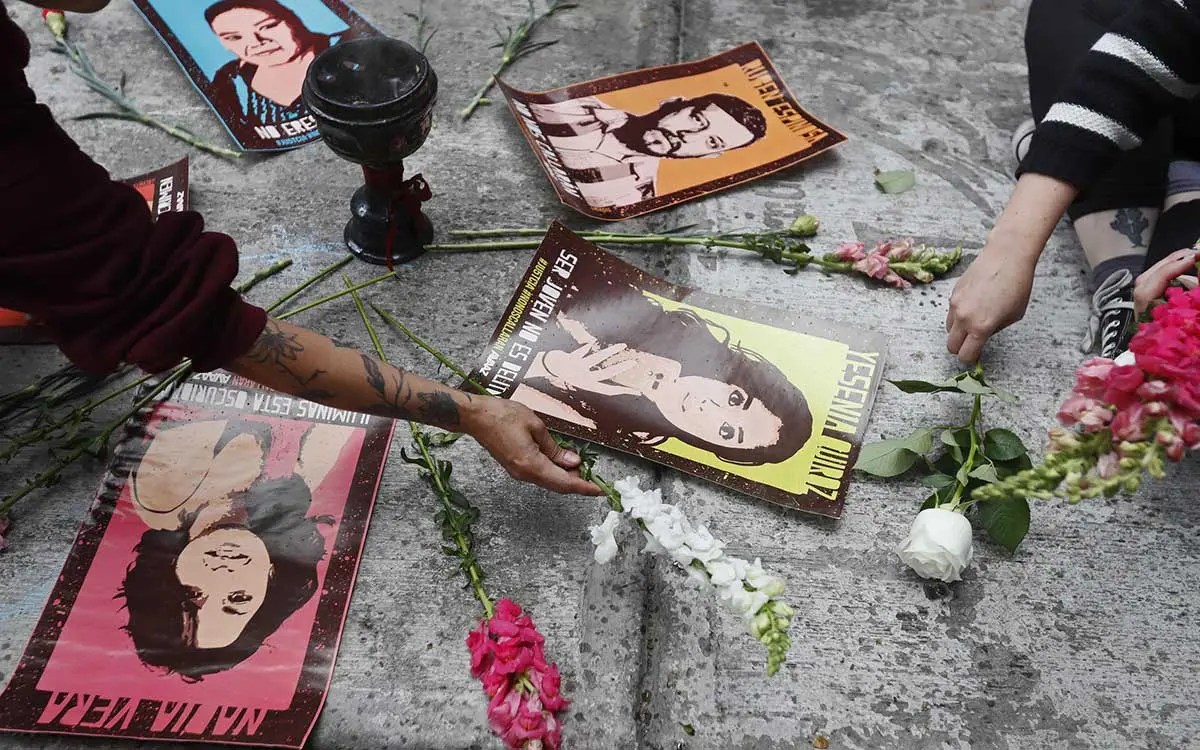
Translator’s note: Eight years ago, on July 31, 2015, Nadia Vera Pérez, Yesenia Quiroz Alfaro, Mile Virginia Martin, Alejandra Negrete Avilés, and Rubén Espinosa Becerril were murdered in an apartment in the Narvarte neighborhood of Mexico City. While three individuals have been sentenced, the identity of all those responsible, including the intellectual authors and their motives, remains unknown. Evidence points to the possible involvement of the then-government of Javier Duarte of Veracruz, as both Nadia and Rubén had fled Veracruz following threats for their work. The words of Mirtha Luz Pérez Robledo, mother of Nadia Vera, marking one year since the murder of her daughter can be found on this site here. That translation, along with an introduction, was later published in the anthology Rebellious Mourning: The Collective Work of Grief, edited by Cindy Milstein. The Narvarte killings are also the focus of the documentary In Broad Daylight: The Narvarte Case, available on Netflix. The below article discusses new information about the case brought forward this week by the family members of those killed.

By Aristegui Noticias, August 2, 2023
Translated by Scott Campbell

Patricia Espinosa, sister of photojournalist Rubén Espinosa, one of the five victims of the multihomicide in the Narvarte neighborhood in July 2015, said it was due to a statement of assets [1] that they could link Alejandro “N” [2] as being the son of an official in the Mexico City Attorney General’s Office (FGJCDMX), and that both could be related to the case.

In an interview with Aristegui en Vivo, Patricia explained that, according to police reports, they found that a cell phone associated with Alejandro “N” was located during and after the murders, and the cross-checking of information from a statement of assets identified Alejandro as the son of Luis Javier Garcia Saldaña, identified by the families as an agent of the Public Prosecutor’s Office of the FGJCDMX.

Neither of the two have been investigated, assured Patricia Espinosa.

Continue reading

Mexico: Feminist Political Prisoners Magda Soberanes and Karla Tello Released from Prison

Originally published on It’s Going Down.


A brief update from Radio Zapote, translated by Scott Campbell, on the release from prison of Magda Soberanes and Karla Tello, who had been held since April 15, 2022, following a police raid on the Okupa Cuba.

The young social activists and feminists, Magda Soberanes and Karla Tello, were released from prison on February 23, and will be allowed to continue their legal proceedings in freedom. This joyous day comes after they had been held for almost a year in connection with the Okupa Cuba.

A movement for the immediate release of both women led to this victory against the injustice that is the Mexican justice system.

Continue reading

Mexican officials announce bids for Interoceanic Corridor industrial zones

Originally published on Avispa Midia.

Indigenous Binniza residents of Puente Madera, in the municipality of San Blas Atempa, protest against the imposition of an industrial park on their communal lands.

By Ñaní Pinto
Translated by Scott Campbell

The Mexican government, through the Ministry of Economy, announced that the first tenders towards the creation of planned industrial zones in the Interoceanic Corridor of the Isthmus of Tehuantepec (CIIT), in Oaxaca, will be open for bids in February. 

“We hope that each development zone will generate investments of around one billion dollars,” said Raquel Buenrostro Sánchez, Minister of Economy, who anticipated that, in addition to government investment, resources from the United States government will be forthcoming.

At the end of 2022, the former head of the CIIT, Rafael Marín Mollinedo, announced that ten plots of land were ready for the construction of industrial parks. “At the beginning of the year, they will be opened for bidding so that developers can take charge and fill them with businesses,” he said in an interview with an infrastructure industry media outlet.

Continue reading