One of the most insidious aspects of addiction is that it’s a disease which convinces you that you don’t have it. It manifests in a powerful form of denial. Ask a person with addiction why they drink or use and the answer will rarely be, “Because I’m an addict.” Invariably the reply will pin the cause on a certain circumstance, person or event, or just “because I want to, I can stop anytime, leave me alone.” For the addict, the few times drinking or using didn’t lead to things getting out of control, or to a series of unintended consequences, are firmly grasped onto and elevated as proof that one doesn’t have a problem. The mountain of evidence to the contrary is swept out of mind. When things go awry they are presented as aberrations instead of what they are, which is the norm. Desperate to prove to ourselves and others that we’ve got things under control, we repeatedly pick up again, convinced that this time it will be different. It never is. And the cycle continues on its ruinous spiral.
Author: Scott Campbell
Insumisión: The State Responds with Force
Originally posted to It’s Going Down.
By Scott Campbell
Several victories for social movements in Mexico were recounted in the Insumisión posted on March 17. This edition focuses on the state’s response, which in the first part of April has been expressed through two of the state’s inherent qualities: force and coercion.
One of the victories mentioned was that of the Otomí community of San Francisco Xochicuautla in the State of Mexico. After years of organizing, in February a court suspended the expropriation decree issued by the federal government for a highway to be built through their forest and town. The community celebrated, but in a case of foreshadowing, said they would not rest until the entire highway project was canceled. The state emphatically made clear that the project was still on, when on April 11th it besieged and invaded the town with 800 to 1,000 riot police. In complete disregard for the court ruling, the police escorted in heavy machinery belonging to Grupo Higa (the owner of which is a close friend of Mexican President Enrique Peña Nieto), that began clearing land for the highway and also demolished the home of one of the movement’s leaders. The solidarity extended to Xochicuautla was powerful and immediate, which included the Zapatistas and the National Indigenous Congress issuing a “Maximum Alert” both for Xochicuautla and Ostula in Michoacán, due to an ambush against the Community Police of that autonomous Nahua community, which killed one. This seemed to catch the state off-guard, as on April 13 they ordered the construction be stopped and promised to pay for the damages. But they also said they would be leaving a number of state police nearby to guard the machinery in the meantime. In response, the community has organized 24-hour patrols in case of renewed construction, and the situation remains tense.
COPINH Statement on the Investigation, Leadership and Solidarity
COPINH
April 8, 2016
Translated by Scott Campbell
The Civic Council of Popular and Indigenous Organizations of Honduras (COPINH) reports, communicates and denounces the following:
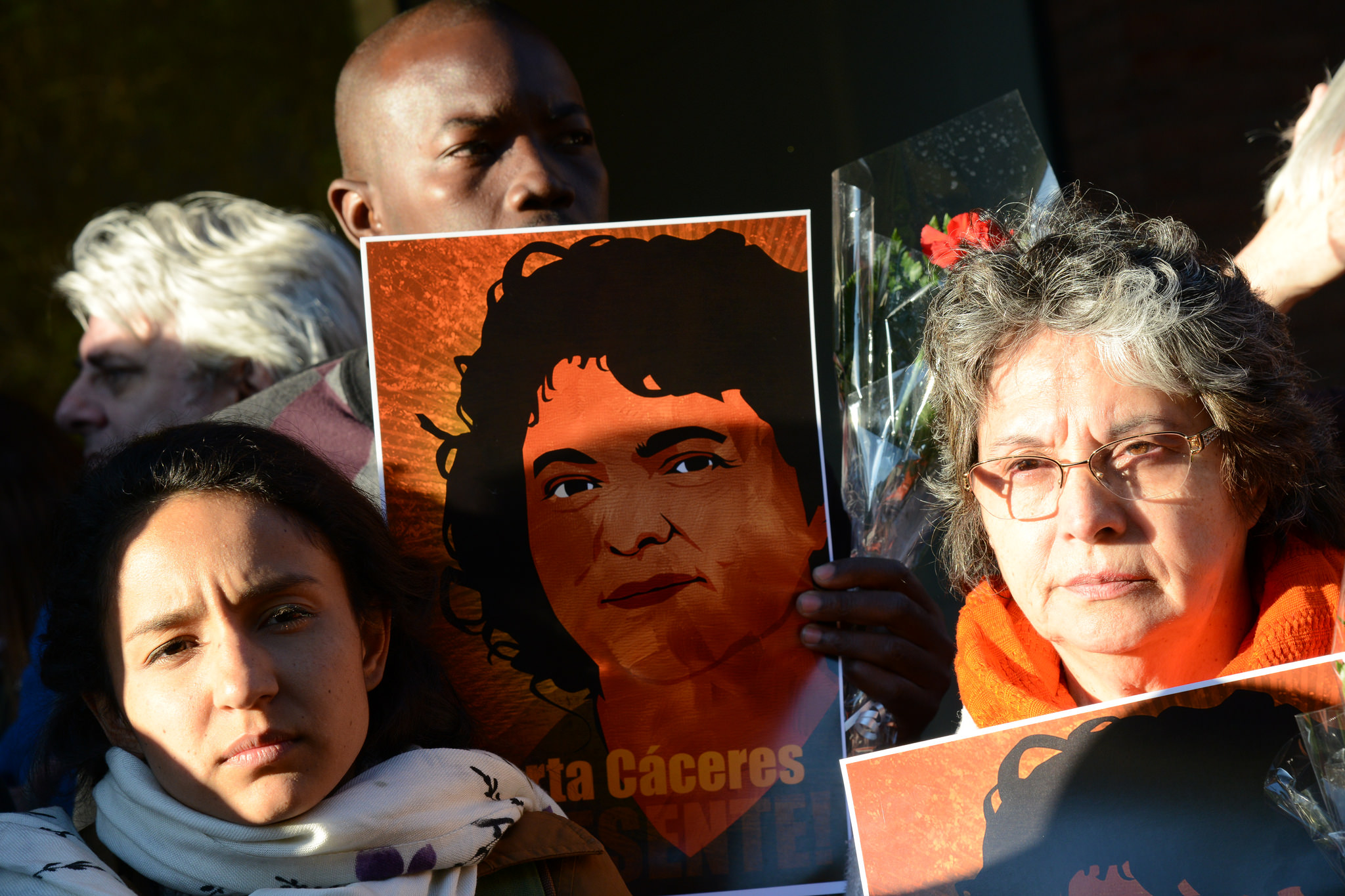
- We appreciate the national and international solidarity for an objective, impartial and non-racist investigation that clarifies the facts around the political assassination of our compañera and General Coordinator, Berta Cáceres, and leads to the truth and to justice, with the true material and intellectual authors of the murder being subjected to the law, as well as learning the facts and motives by which her murder was planned and carried out, however, we reiterate that the State of Honduras continues to fail to fulfill its obligations in this respect. Not accepting our requests, such as for an independent international investigative commission that has the trust of our organization, are the reasons for which we haven’t trusted, don’t trust and never will trust in the national laws and for which we denounce our country’s legal authorities’ manipulation of the investigation into the vile and horrendous murder of our compañera Berta Cáceres. And that Mr. Juan Orlando Hernandez has not shown the political will to speed up the investigative process and one month after the murder, neither the compañera’s relatives nor COPINH have received an official report on behalf of the government about how the investigation is proceeding into identifying the material and intellectual perpetrators.
Public Letter: We Have the Right to Think that You are Part of the Crime
Translator’s note: On April 1, Gustavo Castro was permitted by the Honduran government to leave the country and is now back in Mexico.
COPINH
March 29, 2016
Translated by Scott Campbell
Relatives of Berta Cáceres report that the Attorney General is protecting the murderers. There are economic ties between the coordinator of the prosecution and DESA’s lawyers [the company behind the Agua Zarca dam]. They claim that the Honduran State knew of the plan to murder indigenous leader Berta Cáceres.
Public Letter
President of the Republic, Juan Orlando Hernández,
Attorney General of the Republic, Oscar Chinchilla,
The relatives of Berta Cáceres, the COPINH [Civic Council of Popular and Indigenous Organizations of Honduras], the Platform of Social and Popular Movements of Honduras (PMSPH) and the Popular Coordination Berta Cáceres, for the ears of Honduran society and the international community, we are writing you to express and demand the following:
Insumisión: Winning Freedom, Building Autonomy
Originally posted on It’s Going Down.
We’ll start this look at the past two weeks in Mexico with some good news: people getting free. After seventeen months in prison and following a national and international campaign for her release, political prisoner Nestora Salgado was released from Tepepan prison in Mexico City on March 18. The commander of the Community Police in Olinalá, Guerrero, Salgado was charged with three counts of kidnapping. When those charges were dismissed, the state filed three more charges for kidnapping, theft and murder. Again, those charges were dismissed for lack of evidence. Upon exiting the prison, she was received by dozens of community police officers from Olinalá and other towns in Guerrero. Handed a rifle, she said, “We are going to keep struggling so they don’t keep repressing us. If this is needed [raising the rifle], then this is where we will go, but we won’t allow them to keep trampling on us.” At a press conference later in the day, she committed herself to fighting for the freedom of Mexico’s 500 political prisoners, in particular those jailed for carrying out their duties as community police. Joined by members from the People’s Front in Defense of the Land from Atenco, those resisting the construction of La Parota dam in Guerrero, and family members of the 43 disappeared students from Ayotzinapa, she led the count from 1 to 43. “I don’t represent any political party,” she said. “I only fight for my people. Sometimes they ask me if I’m afraid. And yes, I’m afraid, but I’ll die fighting for our people’s dignity. It doesn’t matter what I have to do, I am going to win freedom for our prisoners. I will be present in all of the struggles, as long as they need me.” She is calling for international mobilizations and actions on April 10, the anniversary of the assassination of Emiliano Zapata, to demand freedom for Mexico’s political prisoners.
“I was born to be free” – Nestora Salgado
Originally posted on El Enemigo Común.
Translator’s note: After seventeen months in prison and following a national and international campaign for her release, political prisoner Nestora Salgado was released from Tepepan prison in Mexico City on March 18, just days after the below essay was published. The commander of the Community Police in Olinalá, Guerrero, Salgado was charged with three counts of kidnapping. When those charges were dismissed, the state filed three more charges for kidnapping, theft and murder. Again, those charges were dismissed for lack of evidence.
Upon exiting the prison, she was received by dozens of community police officers from Olinalá and other towns in Guerrero. Handed a rifle and addressed as commander, she said, “We are going to keep struggling so they don’t keep repressing us. If this is needed [raising the rifle], then this is where we will go, but we won’t allow them to keep trampling on us.” At a press conference later in the day, she committed herself to fighting for the freedom of Mexico’s 500 political prisoners, in particular those jailed for carrying out their duties as community police. Joined by members from the Peoples Front in Defense of the Land from Atenco, those resisting the construction of the La Parota dam in Guerrero, and family members of the 43 disappeared students from Ayotzinapa, she led the count from 1 to 43. “I don’t represent any political party,” she said. “I only fight for my people. Sometimes they ask me if I’m afraid. And yes, I’m afraid, but I’ll die fighting for our people’s dignity. It doesn’t matter what I have to do, I am going to win freedom for our prisoners. I will be present in all of the struggles, as long as they need me.”
Enough! Second COPINH member assassinated in Honduras
March 15, 2016
COPINH
Translated by Scott Campbell
The Civic Council of Popular and Indigenous Organizations of Honduras (COPINH) calls public attention to today’s murder of our compañero Nelson García, from the Río Chiquito community in the Cortés Department, at the hands of two unknown persons.
We regrettably inform you that compañero Nelson García was murdered when he arrived at his mother-in-law’s house to have lunch, after spending all morning helping move the belongings of displaced families from the Río Chiquito community.
The murder occurred in the midst of an eviction carried out against the community of Río Chiquito in the Río Lindo area, in the Cortés Department, during which approximately 100 police officers, 20 military police officers, 10 soldiers and several people from the DGIC (General Criminal Investigations Administration) invaded the territory reclaimed by 150 families, on which more than 75 had built their houses with the materials and efforts at hand.
Insumisión: Victories Don’t Slow the Struggle
Originally posted on It’s Going Down.
In the past two weeks, social movements in Mexico racked up significant victories while continuing to organize in the face of constant state repression. Detractors will point to the several successes won in the courts as examples of the reasonableness and functionality of a democratic government. Those on the ground know that it was not due to a wise and benevolent judiciary that they won, but through years of organization, mobilization and struggle that forced the state’s hand. Even in victory they remain on guard, knowing that the state cannot be trusted and these battles are part of a larger war. That war rages daily as neoliberal capitalism, racism and patriarchy continue to plunder the peoples and territories of Mexico and beyond.
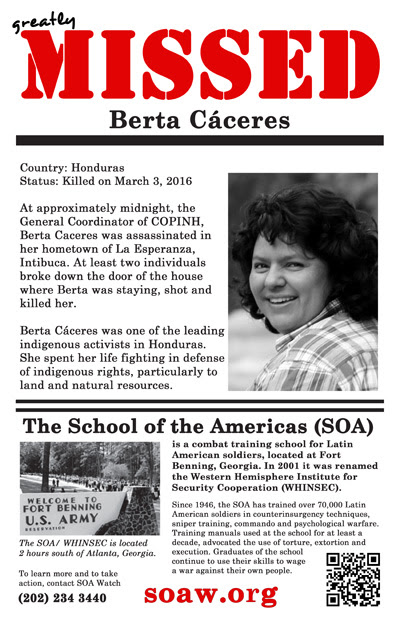
Readers may have heard of the assassination of indigenous land and water defender Berta Cáceres in Honduras on March 3. Wounded during the attack was Gustavo Castro Soto, a member of Otros Mundos from Chiapas. Fearing for his safety, he attempted to leave Honduras only to be detained by authorities and ordered to remain in the country for 30 days. A few days later on March 14 movements around Mexico participated in the International Day of Action Against Dams and in Defense of Rivers. The Chiapan Front in Defense of Water, Land and Life held an action in the state capital of Tuxtla Gutiérrez, while the Mexican Movement of those Affected by Dams and in Defense of Rivers (MAPDER) released a map documenting the 40 people from Mexico to Colombia killed since 2005 for organizing against dam construction. The map quickly became outdated the following day when Nelson García, a member of the Civic Council of Popular and Indigenous Organizations of Honduras (COPINH) – the same group Berta Cáceres belonged to – was assassinated.
Unyielding before power and its repression
Originally posted on It’s Going Down
Iconoc
lasia
February 26, 2016
Translated by Scott Campbell
On the repressive circus mounted by the Mexican State
…what is condemned about anarchists is not the violence, but their having transcended denunciations and conferences, bringing disobedience, insubordination and the capacity for revolt to this point. What is condemned is precisely the fact of their standing up and walking from the point of a radical critique of power and an intransigent ethic of freedom; and, moreover, to do so until the very end.
Daniel Barret (Rafael Spósito)
When the unyielding have declared war on power with their daily, consistent action, there is not much need for “pretexts” in order to attack the subversives. For power, the fact that anarchists are unyielding to power’s norms, that they can’t be corrupted and don’t make alliances, is enough of a reason to attack them. It’s true, many times those who rule the world have to carry out “criminalization” campaigns in order to attack various struggles, anarchists included. However, other times these campaigns are much more than a campaign to “discredit”; besides, who wants credit? Do we need it? The vast majority of the time, these campaigns are part of a strike of greater magnitude, form part of an overwhelming strike that the State plans to inflict. It is within this context one can place recent events, part of power’s repression of the local anarchist or libertarian landscape, that is to say, in the Federal District [Mexico City].
Insumisión: Resistance and Repression in Mexico
Originally posted on It’s Going Down, below is the first entry of what will be a regular column I’m writing for that site, providing new and analysis of social movements and struggles in Mexico. Esta nota también está disponible en español en El Enemigo Común.
Welcome to the first edition of “Insumisión,” a new regular column here on It’s Going Down, bringing you news and analysis from social movements and struggles in the territory referred to as Mexico. Let’s get started.
As readers of It’s Going Down might already be aware, in Mexico City last Wednesday, Yorch, a member of Okupa Che, was kidnapped by police in the latest round of repression to face the autonomous, anti-authoritarian space on the campus of the National Autonomous University of Mexico, held since the 1999-2000 student strike. Police planted a backpack full of drugs on Yorch, who is now captive in a federal prison in Sonora. The morning after the arrest, compañerxs blockaded access to UNAM with burning dumpsters, and Molotov cocktails were unleashed on the UNAM Campus Security offices and patrol cars. The clamor to evict Okupa Che has steadily grown since Yorch’s arrest. Okupa Che released a statement, calling for solidarity and for people to be on alert to respond to any eviction attempt. Anarchist political prisoner Fernando Bárcenas (who received acts of solidarity from Tijuana to Bloomington earlier this year) sent an open letter in solidarity with Yorch, which reads in part:
It is not my intention to send a message of sympathy or pity, on the contrary, I intend to send a message of war, insurrectionary love and solidarity…In the streets or in the jail, we have to do nothing more than keep moving forward until all are free…Although along the way we stumble upon death…Unconditional and revolutionary solidarity with compa Yorch, prisoner of war…