We once again repeat we will not ask their approval to be free

Originally posted on It’s Going Down.

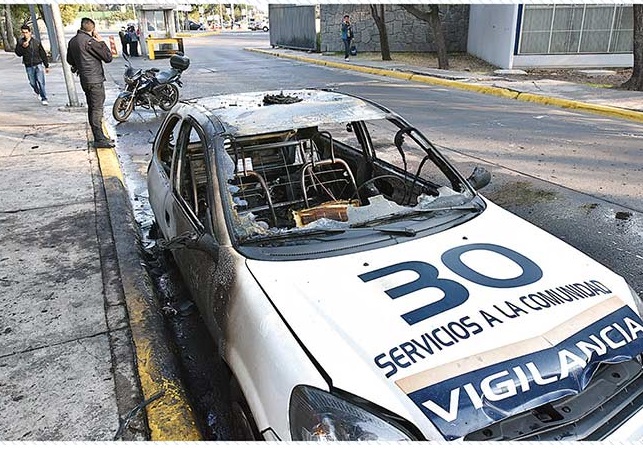
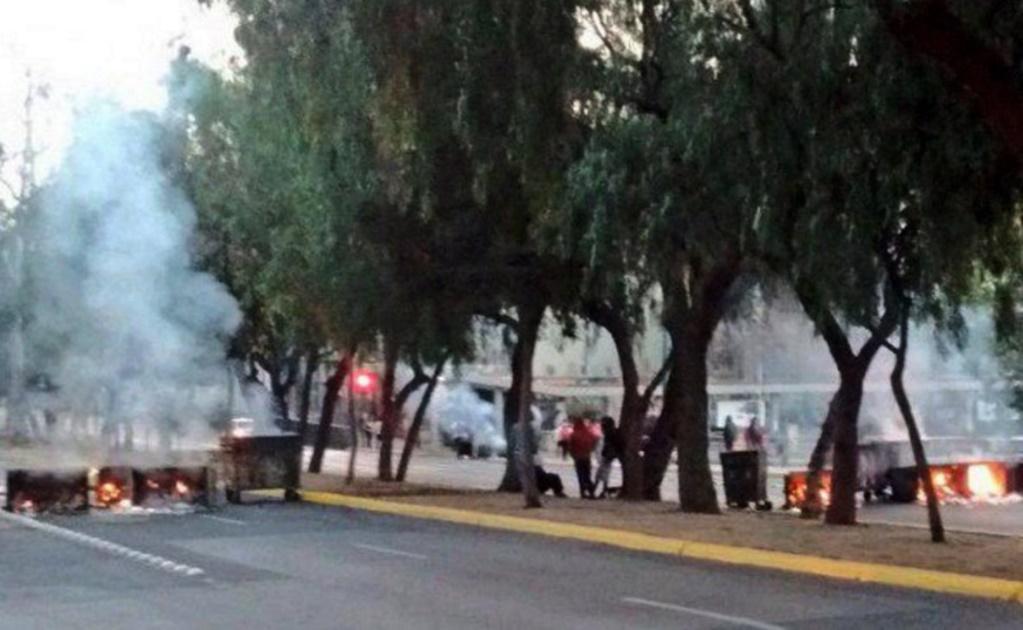
okupa-che-auditorio-unamTranslator’s note: The Okupa Che is an auditorium taken over during the 1999-2000 student strike at the National Autonomous University of Mexico, the largest university in Latin America. An autonomous, anti-authoritarian space, it has faced constant repression from state and university authorities. Yorch, a member of Okupa Che, was detained on Wednesday, when police planted a backpack on him containing large quantities of crack, clonazepam and marijuana. He is now being held in a federal prison in Hermosillo, Sonora. Regeneración Radio reports that there is a strong rumor the Federal Police are preparing to evict the Okupa. Several collectives have condemned Yorch’s arrest and the UNAM Academic University Assembly has issued a sign-on letter calling for Yorch’s freedom and an end to attacks on Okupa Che.

Okupa Che
February 25, 2016
Translated by Scott Campbell

To the independent media
To allied collectives and spaces
To the general public

For several years and in various ways we have been denouncing and exposing the campaign of vilification and harassment unleashed globally against the anarchist movement and Okupa Che in particular. No more than three months ago fake text messages directed at specific people in the name of the Office of the President threatened the violent eviction of the space and the possible location and detention of some of its “squatters.” Added to that, various hit pieces in the media have appeared in recent weeks making several claims that are supposedly related to the existence of the space. Periodicals complicit with UNAM’s Office of the President and with the State – La Razón and El Universal, for example – have thrown around conjectures and assumptions about business, drug trafficking and robbery, using the risky and premeditated theory that all of this is overseen by people connected to the squat.

Continue reading

Mexico: State Terrorism As Governance

Originally posted on El Enemigo Común. Esta nota también está disponible en español.

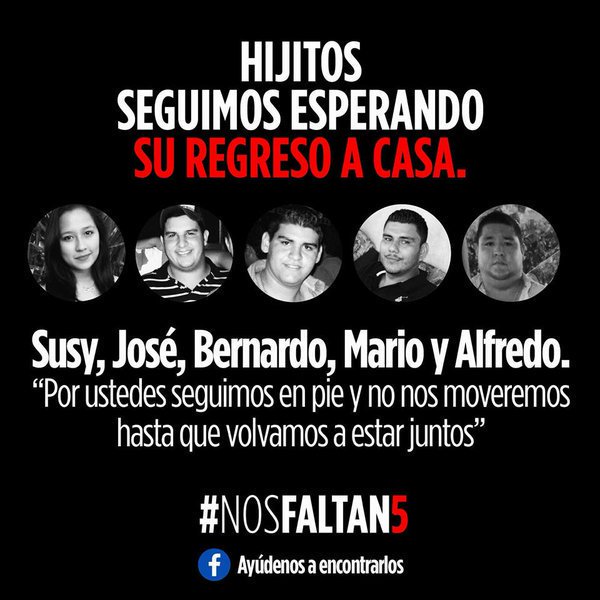
nos-faltan5-veracruzOn January 11, five young people returning home from a weekend birthday gathering were detained by police in Tierra Blanca, Veracruz, Mexico, where they had stopped to get something to eat. Susana Tapia Garibo, 16; José Benítez de la O, 24; Mario Orozco Sánchez, 27; José Alfredo González Díaz, 25; and Bernardo Benítez Arróniz, 25, can be seen on surveillance footage being taken into custody by members of the Veracruz State Police. Following their detention, nothing more was heard of them until Monday, February 8, when the burned remains of two of them, José Alfredo González Díaz and Bernardo Benítez Arróniz, were found on a ranch in Tlalixcoyan, 40 miles from Tierra Blanca.

Prior to finding the bodies, several members of the State Police were arrested, including Marcos Conde Hernández, the district chief for the area including Tierra Blanca. According to the government version, the police handed the youth over to the Cartel Jalisco Nueva Generación, some of whose members have also been detained.

Continue reading

“We tell ourselves stories in order to live”

story-book-lettersThere are few things better or more powerful in this world than a good story. The human capacities of communication, creativity and meaning-making allow for the transmission of individual narratives to be collectively experienced through the similarly remarkable capacities of empathy, identification and mirroring. These gifts can certainly be abused when directed in the service of hate or fear, but I am interested at the moment in the positive potential of the process when it invokes feelings of love and communion through the shared experience and recognition of beinghood. Emmanuel Levinas argued that what emerges through this intersubjective face-to-face encounter with the Other provides the basis for ethics, or as he pithily put it, “For others, in spite of myself, from myself.”

That every one of us can both tell and receive stories is a remarkable proposition. We each carry our own personal story and the longer our hearts beat, the more our stories integrate knowledge and experience, hopefully resulting in wisdom. Yet within the Cartesian paradigm, now manifesting through the hegemony of neoliberal capitalism, far too often the voices of wisdom are silenced by the privileged beneficiaries of the current system, who cloak their own self-interested rhetoric in the veneer of logic and rationality. Through the institutions at their disposal, they impose their worldview on others, coercing adaptation and assimilation. For the purposes of this piece, my concern here is how this worldview denies the validity of subjectivity, intersubjectivity and interiority, except when it can be commodified, tokenized or otherwise rendered impotent. Such is its insinuation in our lives that even disciplines dedicated to interiority, such as psychology, more often than not constitute colonized terrain.

Continue reading

Going to the source: Closing thoughts, for now, on an anarchism with principles

In June 2015, Perspectives on Anarchist Theory, a project of the Institute for Anarchist Studies, published an essay by Kevin Van Meter of the Team Colors Collective titled Freely Disassociating: Three Stories on Contemporary Radical Movements. Moved by his proposal for an anarchism with principles, I responded to Van Meter’s essay in July with Towards an Anarchism with Principles: A Response to ‘Freely Disassociating‘, also published on the IAS website.

In October, Van Meter offered a thoughtful reply to my piece, posted as a comment here. Shortly thereafter, IAS published another essay by Van Meter, Insurgent Islands: A Continuing Conversation on Anarchism with Principles, an impressive document that takes the discussion deeper and in new directions. Rather belatedly, today I put forward my closing thoughts – for now – in response to Van Meter’s reply. My response can be found below and also in the comments section on the IAS website. Reading what follows makes more sense in the context of the aforementioned essays. If you have the time and interest, I encourage you to read the pieces linked to above before proceeding to this last entry. I would like to thank Kevin Van Meter for his insightful work and for encouraging my thinking around these topics. Similarly, I thank the Institute for Anarchist Studies for making the space available to have this discussion.

Firstly, I would like to thank Kevin Van Meter for his thoughtful and constructive response and encourage readers to take in his article “Insurgent Islands: A Continuing Conversation on Anarchism with Principles.” Secondly, I apologize for my much-delayed reply. In it, I will comment on some of Van Meter’s points/critiques and hopefully refine some of my arguments from my initial response.

Continue reading

Oaxaca, the fight for the air

Originally posted on El Enemigo Común

radio-oaxacaBy Jaime Quintana Guerrero
January 20, 2016
Desinformémonos
Translated by Scott Campbell

Bi, in the Binnizaá or Zapotec language, means “air”, means “spirit.” “For us, air not only represents life, it also carries loved ones who have died. When one dies, their spirit becomes air and returns to the people.”

The struggles against the wind farms that abound throughout the state also, then, contain this element: “They want to change the path of the wind, of the air, of our spirits, of our loved ones.”

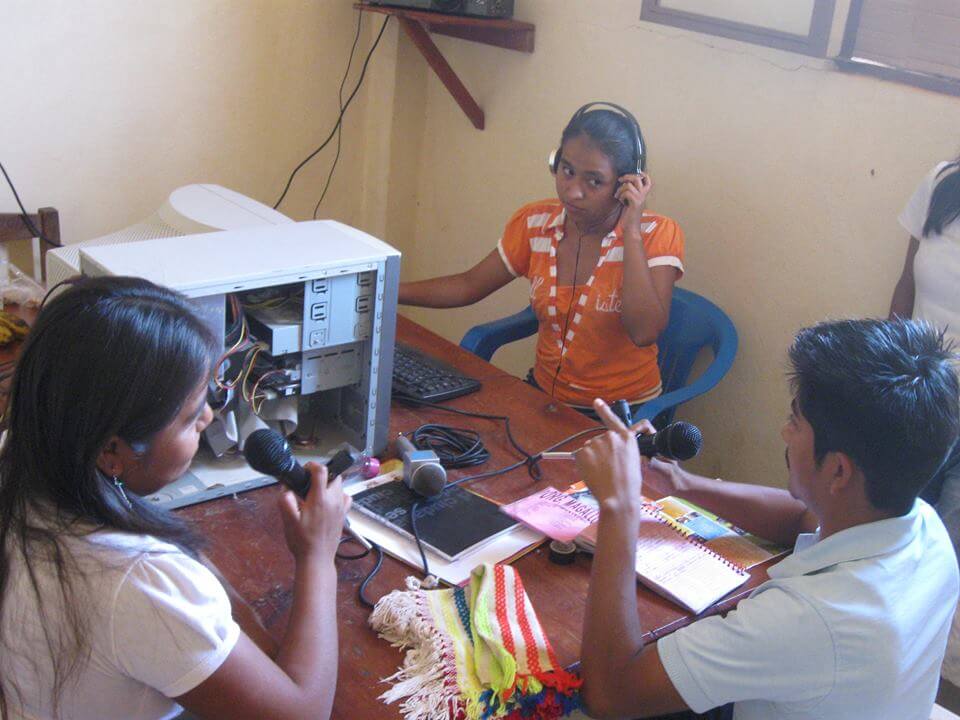
Carlos Martínez Fuentes, a member of Radio Totopo in Juchitán, Oaxaca, is the one who explained the above. Radio Totopo, with its nine years transmitting together with the spirits in the air, also belongs to the Popular Assembly of the Juchitecan People.

The emergence of the radio was a result of sheer necessity. On the one hand, as a tool in the resistance struggle to Plan Puebla Panama, which includes the wind farm system being put into place between those two locations.

As well, because the tradition of the indigenous peoples of Oaxaca (as with most) is oral. The radio fits perfectly, then. “In Oaxaca, 16 different languages are spoken. The indigenous oral tradition is the key reason behind the existence of community radio stations and community assemblies, their main supporters,” explains José Juan Cárdenas, member of the Integral Community Communication organization.

Continue reading

Thoughts on a short trip to Cuba

Mosaic by José Rodríguez Fuster.

Mosaic by José Rodríguez Fuster.

A gaggle of U.S. tourists enters the physical therapy room of a nursing home in Havana. I glance to my right and, catching my eyes, an elderly woman asks, “Do you speak Spanish?” I tell her that I do, and with hope in her voice she inquires, “Did they lift the blockade?” My heart drops a little. No, I lament, they haven’t. A change in U.S. law now allows U.S. citizens to legally travel to Cuba on cultural and educational trips, hence my presence in her home, but the embargo still stands. We discuss her son living in Florida, the high cost of medicine and the injustice of the embargo, and I depart.

“For what I’m saying to you, they could call me a counterrevolutionary and throw me in jail for ten years,” he tells me. Part of me wonders then as to the wisdom of his decision to open up to a relative stranger. But there is nothing particularly incendiary about his comments. Merely discussion about the economic situation. How one cannot make enough money to cover expenses, let alone save money. How the increase in tourism plus the policy of allowing family businesses to open that cater to tourists is creating a growing class divide. How the leaders are corrupt, or in his words, are “friends helping one another out” at the expense of the average Cuban.

I want to write about my recent trip to Cuba while acknowledging I am far from being an expert and was only there for eight days. Similarly, I seek to avoid generic platitudes about the pride or resilience of the Cuban people, or to lay blame for the current situation solely at the feet of either the U.S. or Cuban governments. Like Silvio above, I wonder what adjectives, harmonies and stories to use to do justice to describe the country.

Continue reading

This Week in the Prison Industrial Complex (August 18)

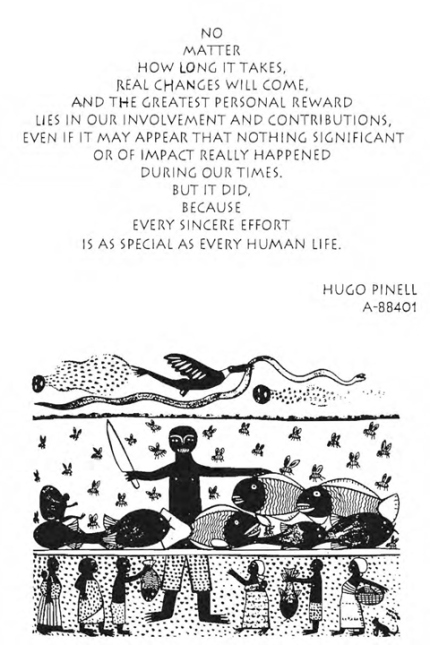
Hugo-Pinell-poemA short-lived experiment, this will be the final “This Week in the Prison Industrial Complex” entry. When it began, I suspected I may have assumed too intensive of a task. At present, it has turned out to be too difficult to maintain this weekly chronicle. I hope that it was helpful while it lasted. I will continue to examine the prison industrial complex (PIC) and related issues in other posts, as well as sharing more timely PIC news on Twitter.

  • A recent report by Canada’s prison ombudsman’s office found “admission to administrative segregation increased by 9 per cent between 2005 and 2015 [and that] the number of Black individuals in solitary has doubled over the past decade, rising by an alarming 100.4 per cent while Aboriginal individuals sent to solitary also disproportionately increased by 31.1 per cent. In contrast, admission to segregation for White individuals declined by 12.3 per cent.” Howard Saper, the Correctional Investigator, stated the report showed Canada’s use of solitary confinement was “out of control.”

Continue reading

A summer day’s thoughts on social change

cultivateLate one July afternoon, I sat next to a statue of Pan, playing his flute as an algae-filled fountain bubbled its tune to the tadpoles flitting about, their franticness matched only by the birds darting to and from their nests. At a weekend workshop which had concluded for the day, I felt buoyed by the waves of meaningful connections made. While at the same time, a pleasant weightiness attached itself to my limbs, that mental exhaustion which saps a body of its physical energy. Intense work had been done. We were excavating pasts to inform the present, traversing topographies of daylights and dreamscapes. I stand and sheepishly look around for a totem to serve as reminder and embodiment of the day. My eyes settle on a smooth, plain white rock. Reaching down, I pick it up and silently ask if I may bring the rock with me. I feel an unmistakable assent. Rolling the rock in my hand reveals its hidden underbelly, mica reflecting the warm, setting sun’s rays. Inhaling dusk air comprised of drought and ocean, I make some tea and head to my room. None of this makes sense and that is absolutely beautiful.

There I pick up a recently published book on social change and read how society is composed of basic functions and spheres where people matter due to the roles they fill and the mechanistic decisions they make. How to change society, we simply must realize it no longer fits our cost-benefit analysis and we will construct a new one based on a better rate of exchange.

Continue reading

This Week in the Prison Industrial Complex (August 11)

A weekly roundup of news and action alerts about political prisoners, prison struggles, and organizing against the prison industrial complex (PIC), both nationally and internationally. If you’ve got something you’d like to see included, leave a comment or send me an email.

  • U.S. political prisoner Abdullah Majid is requesting support in the form of donations to his legal defense fund.
  • The Industrial Workers of the World has published the second edition of The Incarcerated Worker, “featuring news on prisoner revolt, organizing on the inside, letters, and articles.”
  • Meanwhile, the second issue of Wildfire, an anarchist prison newsletter, has been published, with news and texts from anarchist prisoners around the world.

Continue reading

This Week in the Prison Industrial Complex (August 4)

Freedom for Political Prisoners

Freedom for Political Prisoners

A weekly roundup of news and action alerts about political prisoners, prison struggles, and organizing against the prison industrial complex (PIC), both nationally and internationally. If you’ve got something you’d like to see included, leave a comment or send me an email.

  • From July 15 to 29, Israeli occupation forces arrested 95 Palestinians, including 25 children and two women, in the occupied West Bank.
  • On August 7 and 8, organizations in Mexico will be holding the country’s first National Gathering for the Freedom of Political Prisoners, in the city of Puebla.
  • New York Times article featured a twenty-year-long study on the effects of solitary confinement at Pelican Bay State Penitentiary in California, finding that those isolated for such a long period undergo “social death.”

Continue reading