On this episode of the It’s Going Down podcast, IGD contributor Scott Campbell speaks with Flor, a compa in so-called Mexico actively involved in supporting anarchist political prisoner Jorge “Yorch” Esquivel. They speak about Okupa Che, an autonomous, self-managed space on the campus of the National Autonomous University of Mexico (UNAM), a project where Yorch has been a long-term participant. They then talk about the various charges and legal battles Yorch has faced since 2016, his ongoing imprisonment since December 8, 2022, and his recent sentence of seven years and six months. Flor also provides information on how folks can act in solidarity with Yorch and discusses the cases of other political prisoners in Mexico.
For more information about Yorch and Okupa Che, check out the following resources:
The following statement provides an overview of some of the current struggles in so-called Mexico in the lead up to the June 2 presidential elections and was translated by Scott Campbell.
To the CCRI-CG EZLN To the Zapatista Army of National Liberation, EZLN To the Sixth Commission of the EZLN To the National Indigenous Congress, CNI To the Indigenous Governing Council, CIG To Ma. de Jesús Patricio Martínez, Spokeswoman of the CNI-CIG To the People, Tribes, Nations, Communities, and First Neighborhoods that were never conquered To the National and International Sexta To the Networks of Resistance and Rebellion To the Insubordinate, Dignified and Rebel Europe To those that signed the Declaration for Life To the free, independent, alternative, or whatever they’re called media…
Siblings All
With the arrival of the “Fourth Transformation,” [1] its governing policies increased the militarization of Indigenous peoples and communities, especially in Zapatista territory. Paramilitary groups and organized crime operate with total impunity as guarantors of the imposition of not just megaprojects of death such as the Maya Train, the Interoceanic Corridor, and the Morelos Integral Project; they are at the service of the state and big capital to carry out the displacement of territory, Mother Earth, and life.
Amid its “ELECTORAL FARCE,” we see that, in recent weeks, nothing matters but votes, polls, debates, numbers, and electoral preferences; but, above all, its strategy to attack and discredit its enemies as a campaign strategy.
This June 2, a “democracy” is not in dispute, much less a leftist one. What is really in dispute is an economic and political power that seeks to sustain itself with militarization, with impunity, and with the accumulation of wealth in the hands of a few in the service of large transnationals. Their plan is to sustain this “Fourth Transformation” with a CAPITALIST WAR against Indigenous peoples and communities.
As Israel’s brutal genocide against the Palestinian people and Palestine itself continues past the 200-day mark, students around the so-called United States have risen up and are carrying out occupations and erecting encampments on their campuses. These acts are extremely inspiring, militant, and hopeful – calling to mind the campus occupations from the early aughts, the student mobilizing against the war on Vietnam in the 1960s and protests against apartheid in South Africa in the 1980s. Breathless blather from politicians and the media have turned what are actions against genocide into a “controversy” that deftly manages to ignore the political content of what is currently unfolding across the country. As Samuel P. Catlin notes in his exceptional essay, “The Campus Does Not Exist”:
Campus panic is a sustained note in the American public conversation; from Vietnam to Gaza, it has never let up. Reliably, every few months something happens “on campus” that the media inflates to the status of a national emergency: a speaker is invited, a speaker is disinvited, a speaker is not disinvited, a professor teaches, a student complains, a protest takes place. The media offers these incidents as scandals so fascinating and disturbing that they eclipse even a genocide.
At the front of any conversation regarding what is happening on college campuses must be an acknowledgement of what the action is in response to: an ongoing, U.S.-facilitated genocide. It seems both absurd and necessary to note that what matters above all is the genocide. Students (and some faculty and staff) are taking tangible, direct action to pressure institutions complicit in the genocide into divesting and disassociating from that most atrocious of acts. That opposition to genocide has been successfully constructed as “controversial” in this country merely demonstrates the insipid nature of what passes for public discourse and the paucity of thought contained within it.
I have been thinking a lot about grief, about mourning. Unsure what to do with it, I have done nothing. I have also been working on a project about José Revueltas and came across the following piece, beautiful, if flawed, which I felt called to translate. Perhaps someone else’s words, from some other time, can do better than mine in speaking to the present moment. I don’t know. Yet here they are.
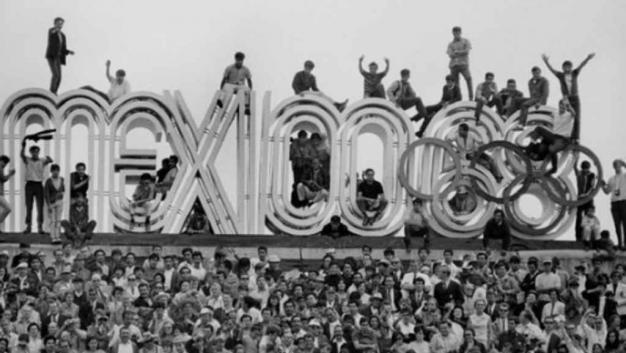
These were written in Mexico in 1968. In July of that year, a massive student movement erupted, shutting down numerous universities and bringing hundreds of thousands into the streets. A movement that was crushed with overwhelming force on October 2, when the army and a paramilitary battalion opened fire on a student gathering in the Three Cultures Plaza in Tlatelolco, Mexico City, killing hundreds.
José Revueltas, a self-taught professor at the National Autonomous University of Mexico (UNAM), was involved in the movement from the very start. An award-winning novelist and heterodox communist militant with, I propose, more anarchistic leanings than he would care to admit, Revueltas was painted by the Mexican state as the intellectual leader of the student movement. At the time that he wrote this, he was underground, moving from house to house in Mexico City. He would be arrested on November 16, 1968, charged with innumerable crimes, and become a political prisoner for the fourth time in his life, released from Lecumberri Prison as part of an amnesty in 1971. These words were initially written in his journal, then published in two outlets in 1969. They can be found in the 1978 text México 68: juventud y revolución, on pages 79-83, as Un fantasma recorre México.
A specter is haunting Mexico By José Revueltas Translated by Scott Campbell
I begin writing these notes in an ample room, orderly, in some house somewhere in the city, today, Tuesday, October 29. A house, a refuge of a friend who I will call Cronos. Cronos smiles with his eyes, he’s a wry and very good person. He’s left me alone to write. To write… The very act of writing is strange, uncanny. One doesn’t know what it means, what is this thing of joining together words, in a world, in an unbreathable emptiness where they all appear to have been broken and not daring to say what happened, what they mean: it’s not the horror but this emptiness, this orphanhood, so many dead that they surround us. In reality, I started making notes in the beginning of May, before the Movement. One day or another I’ll reconstruct them, in the ever-new light – new every minute, every hour – of this dizzying, changing, intangible life, where something that had an enormous or distressing importance in the moment, later appears unreal to us, dreamy, implausibly lived, as if we ourselves were our own story, our own distant tale told by other people.
Some quick, brief thoughts on the ongoing repression and resistance in occupied Palestine:
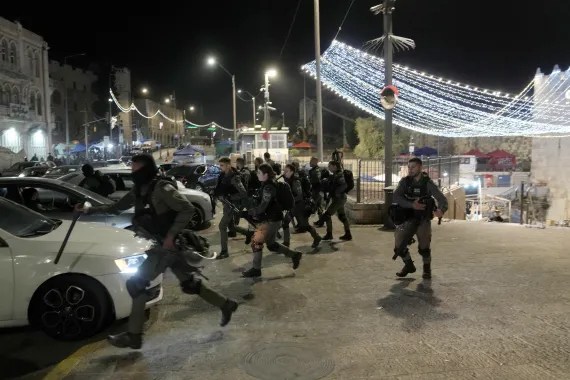
The consecutive brutal raids on al-Aqsa during Ramadan by the fascist government of Israel shouldn’t been seen as isolated incidents. Nearly 100 Palestinians have been killed so far this year by Israeli forces, including massacres in Jenin and Nablus. Harsher conditions have been imposed on thousands of Palestinian political prisoners. Laws from banning the flying of the Palestinian flag to allowing Israel to strip Palestinian citizens of Israel of citizenship have been passed.
Relatedly, other measures, such as the revocation of the 2005 law removing settlements from the northern West Bank, to the loosening of gun ownership regulations, to the creation of a National Guard specifically designed to target Palestinians and under the control of Kahanist Itamar Ben-Gvir, all point to a government desiring and planning for conflict and escalation as a means to continue the Zionist settler-colonial project.
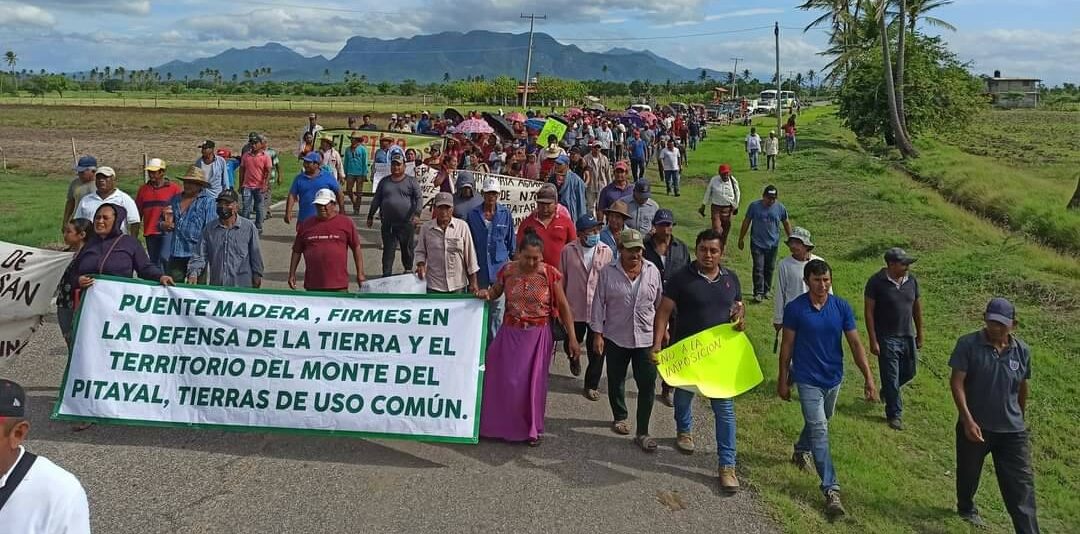
Indigenous Binniza residents of Puente Madera, in the municipality of San Blas Atempa, protest against the imposition of an industrial park on their communal lands.
The Mexican government, through the Ministry of Economy, announced that the first tenders towards the creation of planned industrial zones in the Interoceanic Corridor of the Isthmus of Tehuantepec (CIIT), in Oaxaca, will be open for bids in February.
“We hope that each development zone will generate investments of around one billion dollars,” said Raquel Buenrostro Sánchez, Minister of Economy, who anticipated that, in addition to government investment, resources from the United States government will be forthcoming.
At the end of 2022, the former head of the CIIT, Rafael Marín Mollinedo, announced that ten plots of land were ready for the construction of industrial parks. “At the beginning of the year, they will be opened for bidding so that developers can take charge and fill them with businesses,” he said in an interview with an infrastructure industry media outlet.
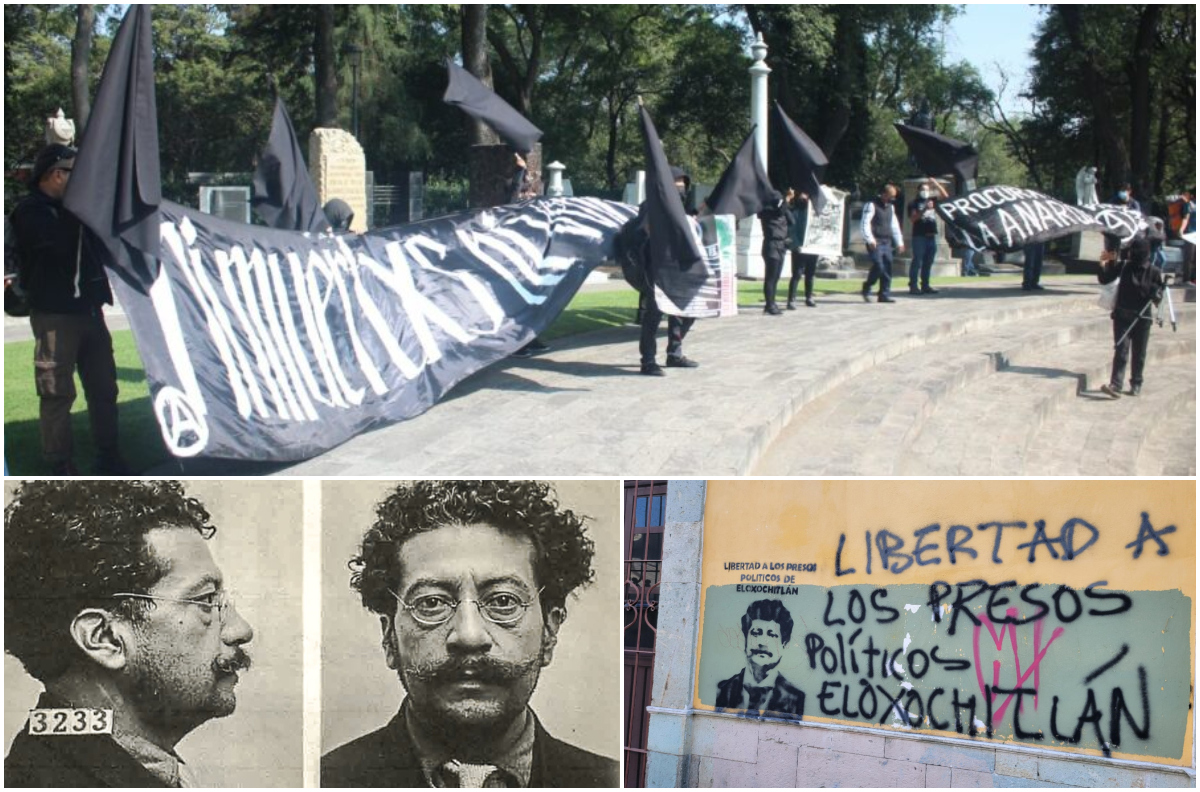
On November 21, 2022, one hundred years after his death, anarchists gathered at the tomb of Ricardo Flores Magón in Mexico City, where clashes ensued with members of the Regional Confederation of Mexican Workers (CROM), leaving several compañerxs injured. In December, IGD contributor Scott Campbell interviewed Jaime, one of the anarchists present that day. The interview covers not only the events of November 21, but the life and legacy of Ricardo Flores Magón, the state’s attempts to recuperate his memory, and more.
How would you like to introduce yourself?
My name is Jaime. I’ll be speaking on behalf of those who took part in the action [on November 21], but which is not a collective.
Can you speak to the importance of Ricardo Flores Magón? Who was he, what is the significance of his work and legacy?
Ricardo Flores Magón was an anarchist, born in Eloxochitlán de Flores Magón, Oaxaca, in 1873, and who, at a very early age, became aware of the political and economic situation in Mexico at that time. He had contact with anarchist and libertarian ideas; he read Bakunin, Kropotkin, and Malatesta. As well, his Indigenous Mazatec origin and the practices of Indigenous communities, such as solidarity and mutual aid, had a large influence on the formation of his thought and ideology. From a very young age, he began to fight, to combat, to organize against the dictatorship of Porfirio Díaz, which brought him persecution and repression. He, along with his brothers Jesús and Enrique, and people such as Juan Sarabia and others, founded a newspaper in 1900, called Regeneración, through the distribution of which a network of liberal groups was created that over the years evolved into an insurrectional network.
In 1905, the Regeneración group left Mexico for exile in the United States. By then, Ricardo Flores Magón and others had been imprisoned, had been persecuted, the Regeneración printing press had been confiscated, so they considered it unsustainable to continue the struggle in Mexico and went to the United States and settled in California. In 1905, they created the Organizing Junta of the Mexican Liberal Party (PLM), which is the political organization that guided or gave form to this organizational network. By 1906, it became an insurrectional network that encouraged and fomented armed uprisings in different parts of the country, primarily in Veracruz, in Chihuahua, in Acayucan, in Las Vacas, and so on. That is to say, Ricardo Flores Magón and others, such as Librado Rivera, Margarita Ortega, Jacinto Palomares, in short, a series of individuals, began to fight the dictatorship of Porfirio Díaz, but not to put an end to it and just install someone else as president.
Today, May 31, in Tuxtla Gutiérrez, Chiapas, students from the Mactumactzá Rural Normal School took over at least 11 commercial trucks and set up a blockade to the protest the May 18 state attack against them as they were protesting against changes to the school admissions process. During that previous attack, 95 people were arrested, women were subjected to sexual assault, and many were injured by police beatings. All 95 face serious charges, with 19 still being held in the high-security El Amate prison. Joining the students in protest both today and on May 18 were displaced Indigenous Tzotzil residents from Chenalhó, forced to flee their homes due to paramilitary violence.
On Tuesday, May 18, around 120 students from the Mactumactzá Rural Normal School blockaded the Chiapa de Corzo-San Cristóbal highway in Chiapas, Mexico. The students were protesting changes to the admissions process to the school that would disadvantage working class, rural and Indigenous students. Seen as an attempt to change the makeup of the student body or as a step towards closing the school (which has already been closed four times by the Mexican state), students took to the streets, along with others who joined in solidarity.
#Chiapas, Mexico. More than 200 students from the Rural Normal School #Mactumatzá were detained by state police this morning. Most of their whereabouts are still unknown. Students were protesting for better access to publc education! We’re calling for international solidarity! ❤️ pic.twitter.com/xoHPaQhqll
In response, Chiapas State Police brutally attacked the blockade, firing tear gas and beating students with batons. In total, 95 people were arrested, 74 women and 19 men, all but two of them students. All 95 were moved to the high-security prison of El Amate. During the course of the arrests and transfer, the women students were forced to strip naked and were sexually assaulted by police. All those arrested are facing charges of rioting with a gang enhancement, violent robbery, damages, and attacks on the public peace and the bodily and cultural integrity of the state.
For the indigenous peoples of Mexico, the winds of war today seem to be the same as those of previous governments. Andrés Manuel López Obrador’s (AMLO) government has been in power just four months and the imposition of development projects, dispossession, persecution, harassment, forced disappearances, and murders continue as before.
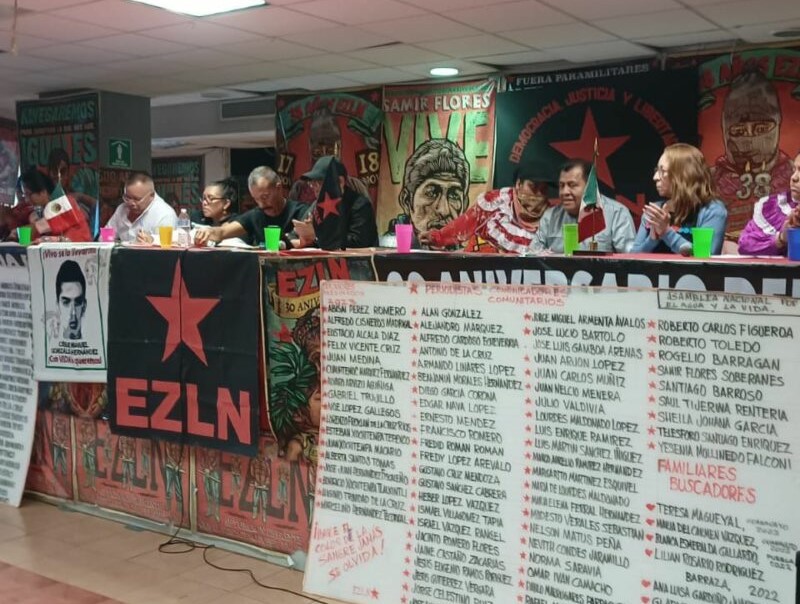
On May 4, in the southern Mexican state of Guerrero, indigenous Nahuas belonging to the Popular Indigenous Council of Guerrero – Emiliano Zapata (CIPOG-EZ), held a meeting to coordinate actions at state and federal agencies to pressure them into meeting their social and political demands that had been rejected by the three levels of government. At the end of the meeting, at approximately 6pm, an armed group in Chilapa, Guerrero, kidnapped and later murdered José Lucio Bartolo Faustino and Modesto Verales Sebastián, both members of the National Indigenous Congress (CNI).





 Falling Into Incandescence